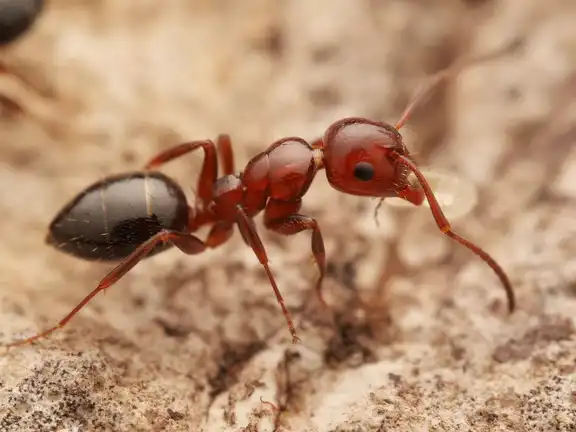
Camponotus lateralis
DifficultyBeginner · 4/7
Species comparison
Side by side: difficulty, size, growth, climate, hibernation and nuptial flights, from the data and sources of each species sheet.
| Camponotus lateralis | Fact | Crematogaster scutellaris |
|---|---|---|
| Keeping | ||
| Difficulty | ||
Easier4/7 Beginner | Difficulty | 6/7 Intermediate |
| Escape risk | ||
Medium | Escape risk | Medium |
| Diet | ||
SugarInsects | Diet | SugarInsects |
| Best nests | ||
Wooden nest · Ytong nest · Acrylic nest | Best nests | Wooden nest · Ytong nest · Acrylic nest |
| Colony | ||
| Growth | ||
Moderate | Growth | FasterVery fast |
| Colony size | ||
Reaches 1,000 workers | Colony size | Reaches 1,000 workers |
| Workers | ||
3–7 mm Many sizes | Workers | 3–5 mm All the same size |
| Queen | ||
8–10 mm | Queen | 7–9 mm |
| Colony founding | ||
Fully claustral One queen | Colony founding | Fully claustral One queen |
| Defense | ||
Bites · Sprays formic acid | Defense | Bites · Smears venom |
| Climate | ||
| Nest temperature | ||
21–27 °C | Nest temperature | 21–25 °C |
| Nest humidity | ||
40–60 % | Nest humidity | 50–60 % |
| Hibernation | ||
8–12 °C Nov – Feb | Hibernation | 8–12 °C Oct – Mar |
| Nuptial flights | ||
Apr – May Hot days · Calm weather | Nuptial flights | Aug – Oct |
| Native range | ||
Europe, North Africa, Middle East | Native range | Europe, North Africa |
Camponotus lateralis
Crematogaster scutellaris
Camponotus lateralis : Hibernation: Nov – Feb, Nuptial flights: Apr – May
Crematogaster scutellaris : Hibernation: Oct – Mar, Nuptial flights: Aug – Oct
Months for temperate Europe and the Mediterranean. The weather decides the exact days, so flights can come earlier or later where you live.
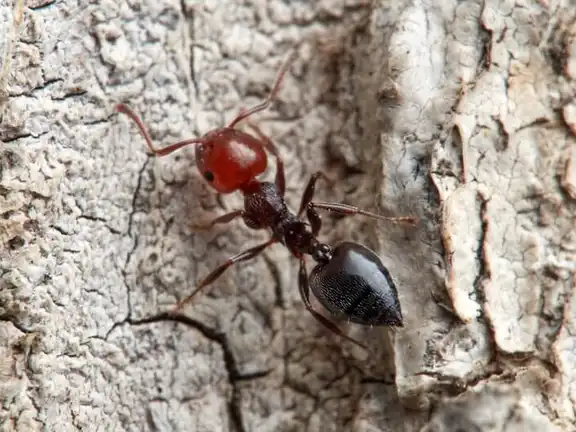
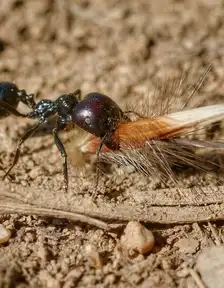
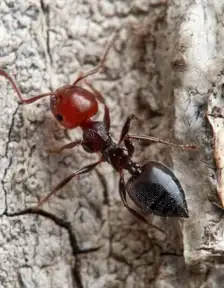
Small, slender workers with a reddish-brown head (sometimes the thorax too) and a black gaster with a pale yellow edge on each segment, in sizes that grade smoothly from minors to bigger majors. They imitate Crematogaster scutellaris but have a single waist segment instead of two, and since the group has several close look-alikes such as the glossy black Camponotus piceus, a colony sold under this name can turn out to be a close relative.
Workers with a red head, a dark body and a heart-shaped gaster that they lift above their head when disturbed. In the wild you will often find them in dead trees and old wood.
Take the 1-minute species finder quiz and get matched with the perfect species for your experience, your space and what you'd love to watch.