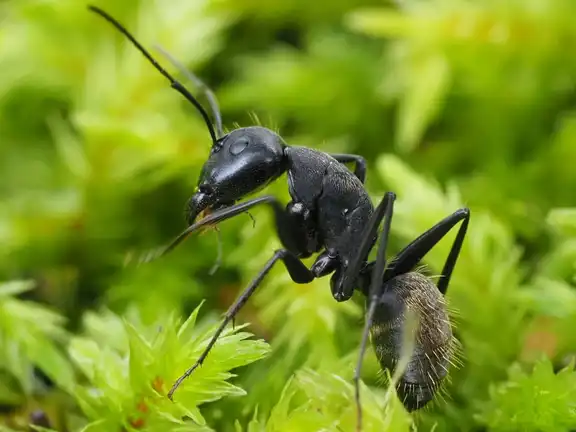
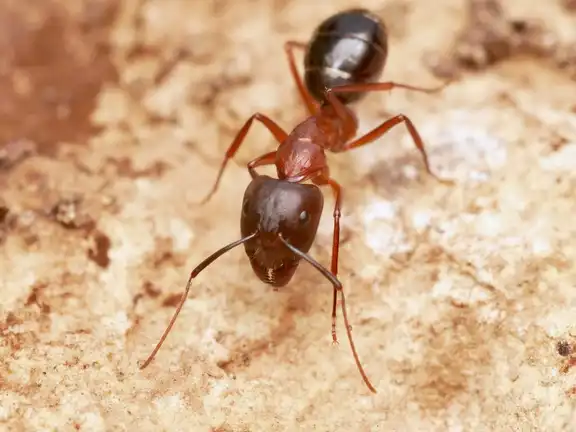
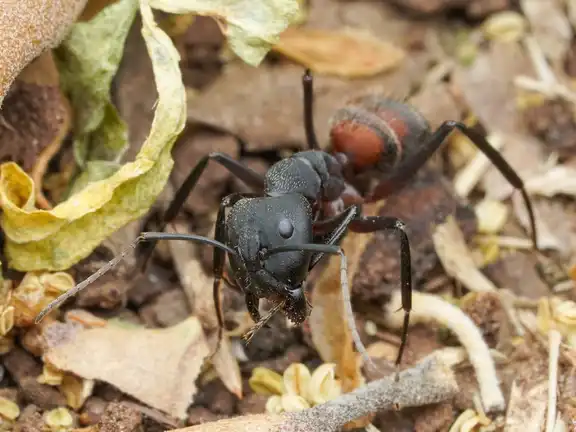
Camponotus lateralis
(Olivier, 1792)
A small, shy carpenter ant with a red head and a black gaster that passes itself off as an acrobat ant and shadows its trails to find food.
Compiled from published sources and keeper reports: I haven't kept this species myself, so treat the care values as starting points.
At a glance
- Nest temperature
- 21–27 °CIn the nest
- Nest humidity
- ≈ 40–60 %In the nest
- Hibernation
- ≈ 8–12 °CNov – Feb
- Nuptial flights
- Apr – MayAfternoon flights
- Workers
- ≈ 3–7 mmMany sizes
- Queen
- 8–10 mmOne queen
- Colony size
- ≈ Reaches 1,000 workersGrowth: Moderate
- Escape risk
- MediumKeep an escape barrier on the outworld
Year at a glance
Hibernation : Nov – Feb
Active season : Mar – Oct
Nuptial flights : Apr – May
- Afternoon flights
- Hot days
- Calm weather
Months for temperate Europe and the Mediterranean. The weather decides the exact days, so flights can come earlier or later where you live.
How to recognize it
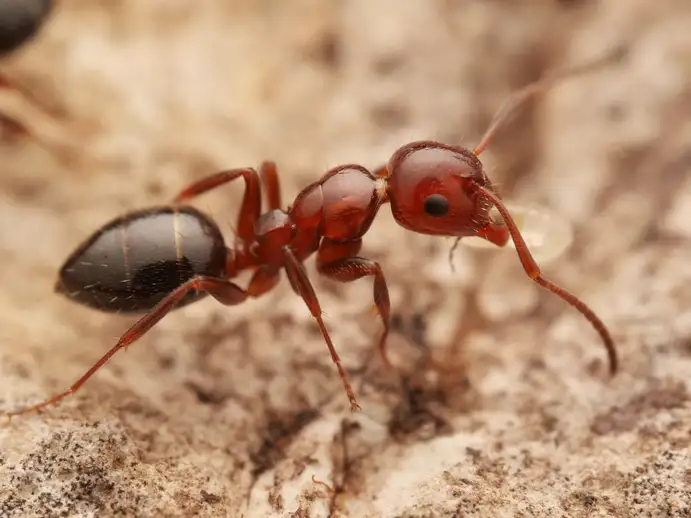
Small, slender workers with a reddish-brown head (sometimes the thorax too) and a black gaster with a pale yellow edge on each segment, in sizes that grade smoothly from minors to bigger majors. They imitate Crematogaster scutellaris but have a single waist segment instead of two, and since the group has several close look-alikes such as the glossy black Camponotus piceus, a colony sold under this name can turn out to be a close relative.
Often confused with
- Crematogaster scutellaris
- Camponotus piceus
- Camponotus fallax
- Workers3–7 mm
- Queen8–10 mm
mm
Biology
- Queens
- One queenEach colony has a single queen: never put two queens together once the first workers arrive.In the glossary
- Colony founding
- Fully claustralThe queen raises her first workers without eating, living off her wing muscles and fat reserves.In the glossary
- Workers
- Many sizesThe workers come in a continuous range of sizes, from small minors to large majors.In the glossary
- Defense
- Bites · Sprays formic acidNo sting: the workers bite and spray formic acid, which can sting small cuts.
Native range
- Europe
- North Africa
- Middle East
Algeria, Bulgaria, Croatia, Cyprus, France, Georgia, Greece, Italy, Montenegro, North Macedonia, Portugal, Spain, Switzerland, Türkiye
Taxonomy
Formicinae › Camponotini
Camponotus
Care at a glance
Difficulty
Why this rating
- Makes it easier: Fully claustral: the queen needs no food until her first workers arrive
- Makes it harder: Curious workers: keep an escape barrier on the outworld
Food
- Sugar
- Insects
Sugar or honey water for the workers, and insects as protein for the queen and the brood.
Best nests
- 1Wooden nest
- 2Ytong nest
- 3Acrylic nest
Notes from keepers
Tip
Give the colony a compact, dry, warm nest and a separate water source. It comes from dry, sunny Mediterranean woodland and does not like damp, and one keeper's colony kept its brood in a corner away from the moist part of the nest.
Watch out
Be patient with founding queens. This is a slow starter that can take a long time to lay, and the first batch of workers is small. Keepers advise leaving a young colony in its test tube, with its water reserve, through the first winters instead of hurrying it into a nest.
Watch out
Do not cool the colony too early. Small larvae and the winged sexuals made in summer overwinter inside the nest, so winged ants in winter are normal and the flights later come a few at a time. One keeper waited until the last big larvae had finished developing before starting the winter rest.
Tip
Offer small, soft prey such as flies, small crickets and spiders while there are larvae, and keep honey water on offer.
Related posts
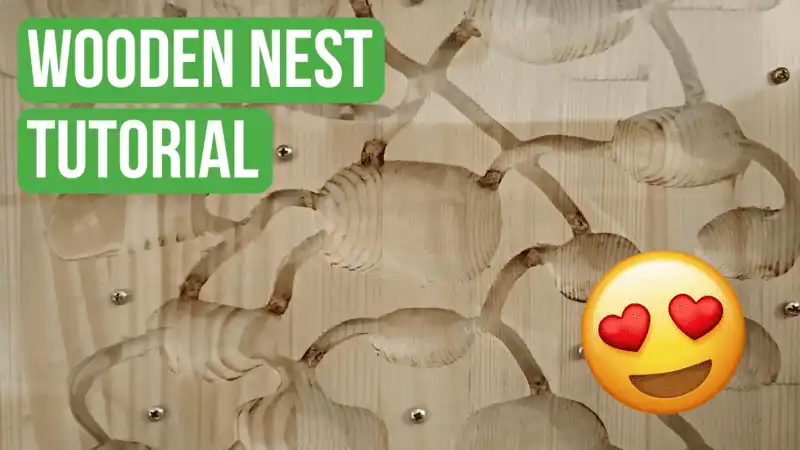
How to Make a Wooden Nest - Ant Keeping Tutorial
In this tutorial, you will learn how to make a wooden nest for your ant colonies! This type of nest is perfect for species that love wood!

How To Hibernate Your Ants - Hibernation Tutorial
In this guide, we’re going to talk about hibernation: What is it? Why do ants need hibernation? Should I hibernate my ants? Let's see!
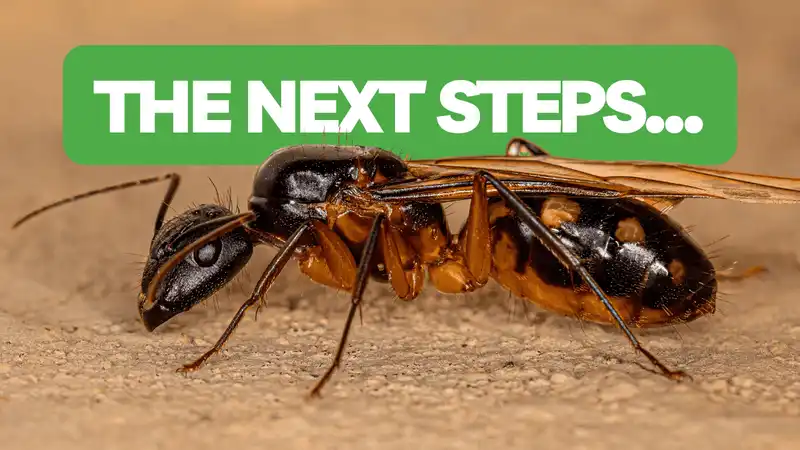
What To Do After Catching Your First Queen Ant!
In this short guide, you’re going to learn what steps you need to take after catching your very first queen ant! Let's get into it!
FAQs
10It is a mimic. A 2025 field study around the Mediterranean concluded that the resemblance is most likely Batesian mimicry: its red head and dark body copy the acrobat ant, a bluff where the less defended ant borrows the look of a well-defended one. The study also found hints that lizards swallow ants but avoid Crematogaster, and most nests were close to Crematogaster, whose trails the workers follow to find food.
In the wild it usually lives with it: about four in five nests in the study were close to Crematogaster or on its trails, and those nests were bigger and more often held winged ants. It is a trail follower, not a parasite that must live inside the host nest, though, and keepers raise colonies without any Crematogaster. One journal colony grew to around 200 workers on its own.
They are the bigger workers acting as living food stores, often called repletes or honey pots. They fill their gaster with sugary liquid and pass it on to nestmates later, so a round, glossy belly is normal and a sign that the colony is well fed.
Camponotus lateralis workers measure 3–7 mm, and the queen measures 8–10 mm.
Just one. Camponotus lateralis is monogyne: each colony has a single queen, so never put two queens together once the first workers arrive.
No. Camponotus lateralis has no sting: the workers bite and spray formic acid, which can sting small cuts.
In temperate Europe and the Mediterranean, Camponotus lateralis usually flies in Apr – May. The weather decides the exact days.
Keep the Camponotus lateralis nest at 21–27 °C, with 40–60 % humidity in the brood chambers.
Yes. Hibernate Camponotus lateralis at 8–12 °C, roughly during Nov – Feb.
Camponotus lateralis is not on the EU list of invasive alien species and is not protected in the countries we checked. Rules differ between countries and can change, so check your local laws first.
Sources and review
- 1
- 2Wagner, Kraker, Bračko and Schifani (2025), Ecology and Evolution 15: Extensive field observations throw light on the evolution of mimicry in Camponotus lateralis (nest sites, colony size, queen number, swarming season, association with Crematogaster scutellaris)
Paper · Biology, Distribution, Nuptial flights
- 3
- 4GBIF: Camponotus lateralis (Olivier, 1792), occurrence records by country and month
Reference · Distribution
- 5Wikipedia (German): Hohlrückige Holzameise, Camponotus lateralis
Reference · Taxonomy, Biology, Distribution, Nuptial flights
Showing 5 of 33 sources
Last reviewed
- BiologyWell documented
- Care valuesKeeper consensus
- Nuptial flightsKeeper consensus
Legal status
Not on the EU list of invasive alien species and not protected in the countries we checked. Rules differ between countries and can change, so check your local laws before buying or collecting a queen.
Checked on October 11, 2026
All values are starting points: watch your colony and adjust. Found something wrong or missing?
Suggest a correction