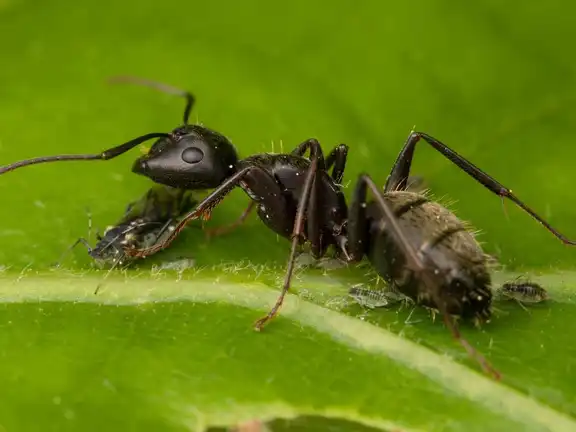
Camponotus pennsylvanicus
Eastern black carpenter ant
DifficultyBeginner · 4/7
Species comparison
Side by side: difficulty, size, growth, climate, hibernation and nuptial flights, from the data and sources of each species sheet.
| Camponotus pennsylvanicus | Fact | Camponotus vagus |
|---|---|---|
| Keeping | ||
| Difficulty | ||
Easier4/7 Beginner | Difficulty | 5/7 Intermediate |
| Escape risk | ||
LowerMedium | Escape risk | High |
| Diet | ||
SugarInsects | Diet | SugarInsects |
| Best nests | ||
Ytong nest · Wooden nest · Naturalistic setup | Best nests | Wooden nest · Ytong nest · Naturalistic setup |
| Colony | ||
| Growth | ||
Moderate | Growth | Moderate |
| Colony size | ||
Reaches 15,000 workers | Colony size | Reaches 2,000 workers |
| Workers | ||
6–10 mm majors up to 13 mm | Workers | 6–12 mm majors up to 13 mm |
| Queen | ||
15–18 mm | Queen | 14–16 mm |
| Colony founding | ||
Fully claustral One queen | Colony founding | Fully claustral One queen |
| Defense | ||
Bites · Sprays formic acid | Defense | Bites · Sprays formic acid |
| Climate | ||
| Nest temperature | ||
22–27 °C | Nest temperature | 22–28 °C |
| Nest humidity | ||
50–70 % | Nest humidity | 50–60 % |
| Hibernation | ||
5–10 °C Oct – Feb | Hibernation | 5–10 °C Oct – Mar |
| Nuptial flights | ||
Apr – Jul Hot days · Calm weather | Nuptial flights | Apr – Jun Hot days · Calm weather |
| Native range | ||
North America | Native range | Europe, North Africa, Asia |
Camponotus pennsylvanicus
Camponotus vagus
Camponotus pennsylvanicus : Hibernation: Oct – Feb, Nuptial flights: Apr – Jul
Camponotus vagus : Hibernation: Oct – Mar, Nuptial flights: Apr – Jun
Months in the native range of the species. The weather decides the exact days, and colonies kept indoors can follow a different rhythm.
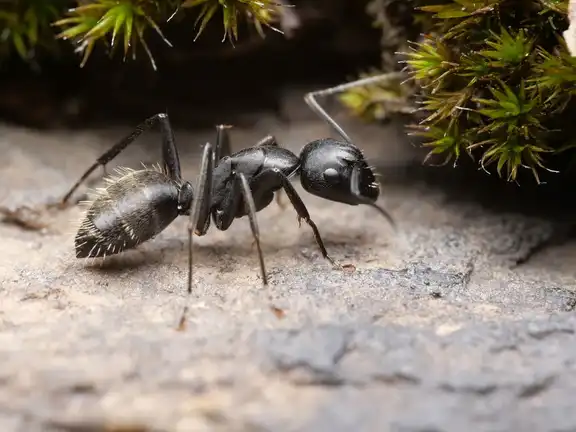
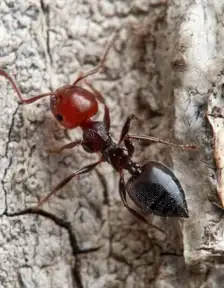
Large, all-black workers of many sizes, with pale yellowish to golden hairs lying flat on the gaster, long and dense on the bigger workers. Camponotus herculeanus and western C. modoc have short gaster hairs, and C. herculeanus usually has a dark reddish thorax or legs, while C. chromaiodes often shows red on the thorax, legs or gaster base and C. novaeboracensis has a red thorax and legs.
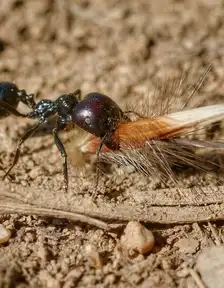
Big, uniformly matte black ants covered in long hairs, with pale bristles standing out on the gaster that give it a grayish sheen. Workers grade from small minors to majors with a wide, heart-shaped head, and unlike Camponotus ligniperda and C. herculeanus, whose thorax is red to reddish black, they are black all over.
Take the 1-minute species finder quiz and get matched with the perfect species for your experience, your space and what you'd love to watch.