Camponotus pennsylvanicus
(De Geer, 1773)
Eastern black carpenter ant
The big black carpenter ant of eastern North America, a slow-growing night forager that nests in trees and damp wood.
Compiled from published sources and keeper reports: I haven't kept this species myself, so treat the care values as starting points.
At a glance
- Nest temperature
- ≈ 22–27 °CIn the nest
- Nest humidity
- ≈ 50–70 %In the nest
- Hibernation
- ≈ 5–10 °COct – Feb
- Nuptial flights
- Apr – JulEvening flights
- Workers
- ≈ 6–10 mmmajors up to 13 mm
- Queen
- ≈ 15–18 mmOne queen
- Colony size
- No data yetGrowth: Moderate
- Escape risk
- MediumKeep an escape barrier on the outworld
Year at a glance
Hibernation : Oct – Feb
Active season : Mar – Sep
Nuptial flights : Apr – Jul
- Evening flights
- Hot days
- Calm weather
Months in the native range of the species. The weather decides the exact days, and colonies kept indoors can follow a different rhythm.
How to recognize it
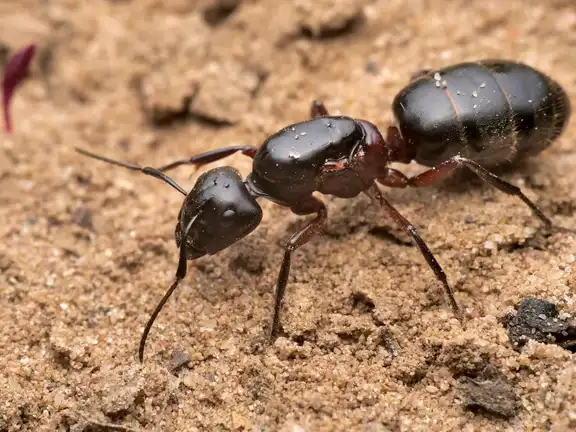
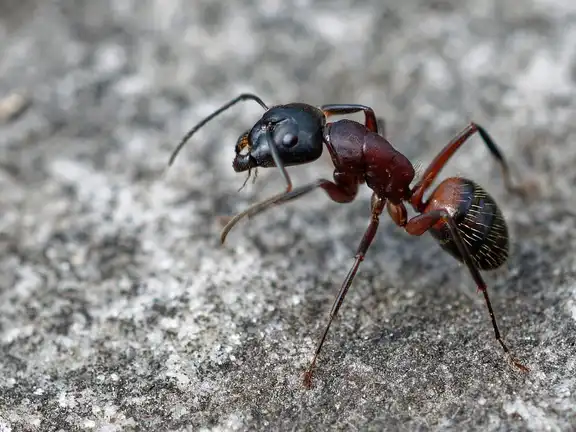
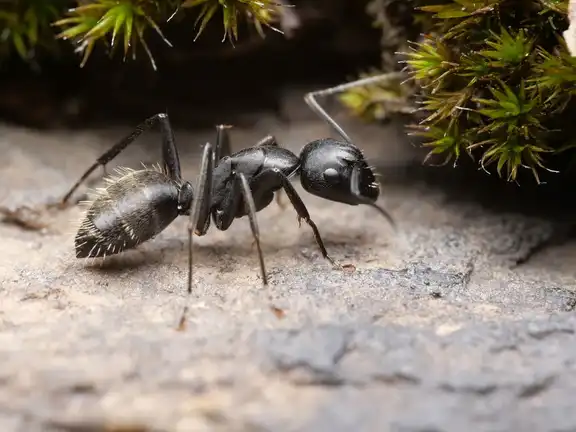
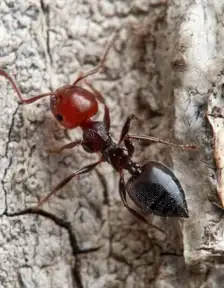
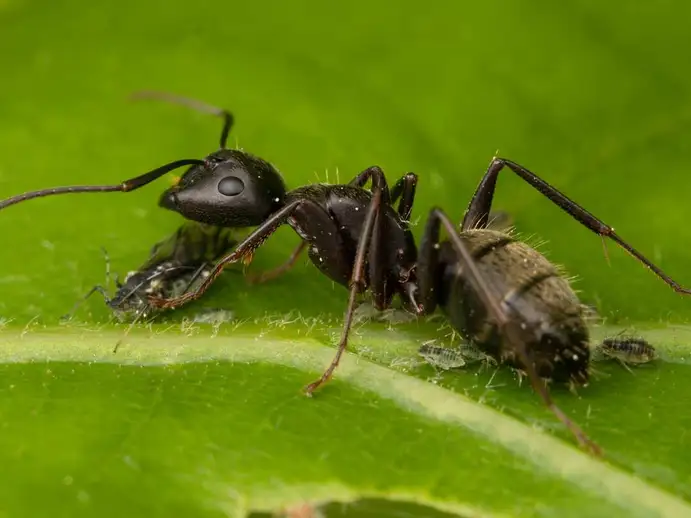
Large, all-black workers of many sizes, with pale yellowish to golden hairs lying flat on the gaster, long and dense on the bigger workers. Camponotus herculeanus and western C. modoc have short gaster hairs, and C. herculeanus usually has a dark reddish thorax or legs, while C. chromaiodes often shows red on the thorax, legs or gaster base and C. novaeboracensis has a red thorax and legs.
Often confused with
- Camponotus herculeanus
- Camponotus modoc
- Camponotus chromaiodes
- Camponotus novaeboracensis
- Workers6–10 mm
- Majors≤ 13 mm
- Queen15–18 mm
mm
Biology
- Queens
- One queenEach colony has a single queen: never put two queens together once the first workers arrive.In the glossary
- Colony founding
- Fully claustralThe queen raises her first workers without eating, living off her wing muscles and fat reserves.In the glossary
- Workers
- Many sizesThe workers come in a continuous range of sizes, from small minors to large majors.In the glossary
- Defense
- Bites · Sprays formic acidNo sting: the workers bite and spray formic acid, which can sting small cuts.
Native range
- North America
Canada, United States
Taxonomy
Formicinae › Camponotini
Camponotus
Care at a glance
Difficulty
Why this rating
- Makes it easier: Fully claustral: the queen needs no food until her first workers arrive
- Makes it harder: Curious workers: keep an escape barrier on the outworld
- Makes it harder: Needs a cold hibernation, for example in a fridge
Food
- Sugar
- Insects
Sugar or honey water for the workers, and insects as protein for the queen and the brood.
Best nests
- 1Ytong nest
- 2Wooden nest
- 3Naturalistic setup
Notes from keepers
Tip
Keep the founding queen in a dark, quiet spot and check on her rarely. Her first clutch is small and takes at least about 60 days to become workers. One keeper who checked a queen daily and moved her between three setups lost the early brood and waited about 87 days for the first worker. Ending the first year with 5 to 30 workers is normal.
Watch out
Check cotton plugs and water barriers all year, including during the winter rest. The workers chew cotton, soft plastic and plaster, and one keeper found a hibernating colony drowned after it had chewed through the cotton in its test tube. Fluon or talc keeps them in on smooth walls, but oil or petroleum jelly on a vertical wall does not.
Tip
Keep sugar water on hand even if you feed honey. Some colonies take honey well, but one keeper's queen never touched it and drank sugar water readily, and a founding queen given too big a drop of honey ended up with her eggs in a pool of it. Add small prey such as fruit flies, crickets or pieces of mealworm, and clear out leftovers before they mold.
Watch out
Do not rely on a heat cable to keep the colony active all year. One heated colony left its winter rest in March, and by June the queen had stopped laying and the workers had stopped taking prey, so keepers advised a cool rest of three to four months starting in September or October. After the rest, offer water first, since one keeper's colony stumbled around dehydrated until it drank.
Related posts
How To Hibernate Your Ants - Hibernation Tutorial
In this guide, we’re going to talk about hibernation: What is it? Why do ants need hibernation? Should I hibernate my ants? Let's see!
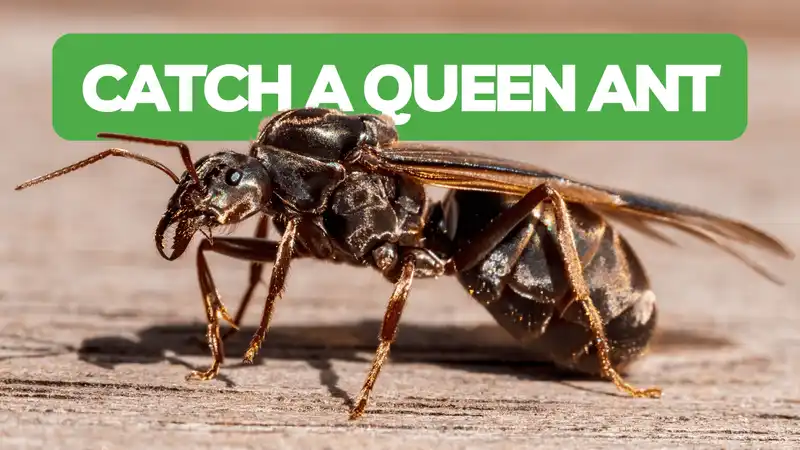
How To Catch Your First Queen Ant!
In this short article, we’re going to learn how to catch our very first queen ant, the mother of all the members of the colony!

What To Do After Catching Your First Queen Ant!
In this short guide, you’re going to learn what steps you need to take after catching your very first queen ant! Let's get into it!
FAQs
10Both are called black carpenter ants, and their ranges overlap in southern Canada and the northern United States. C. pennsylvanicus is nearly always all black, and its larger workers have long, dense, pale hairs lying flat on the gaster. C. herculeanus usually has a dark reddish thorax or legs and short gaster hairs, and it dominates colder northern and mountain forests. Queens are harder to name, but in C. herculeanus queens the first antenna segment is shorter and barely reaches past the back corners of the head.
A colony often has a parent nest with the queen in a tree, stump or log outdoors, plus satellite nests nearby that hold workers and older brood. Satellite nests in buildings are often in damp or rotting wood, for example around leaks. The ants do not eat wood. They only hollow it out, and they seldom tunnel into dry, sound timber, so damp wood is the first place to look.
It is mainly a night forager. In a study in northwestern Ontario, its activity moved later into the night as the summer went on until it was almost fully nocturnal, and an Illinois public health guide says workers come out about 15 minutes after sundown. It does forage by day as well, especially early in the season and in cool weather. In a formicarium, look at the arena in the evening before deciding that the colony is not eating.
Camponotus pennsylvanicus workers measure 6–10 mm, with majors up to 13 mm, and the queen measures 15–18 mm.
Just one. Camponotus pennsylvanicus is monogyne: each colony has a single queen, so never put two queens together once the first workers arrive.
No. Camponotus pennsylvanicus has no sting: the workers bite and spray formic acid, which can sting small cuts.
In its native range, Camponotus pennsylvanicus usually flies in Apr – Jul. The weather decides the exact days.
Keep the Camponotus pennsylvanicus nest at 22–27 °C, with 50–70 % humidity in the brood chambers.
Yes. Hibernate Camponotus pennsylvanicus at 5–10 °C, roughly during Oct – Feb.
Camponotus pennsylvanicus is not on the EU list of invasive alien species and is not protected in the countries we checked. Rules differ between countries and can change, so check your local laws first.
Sources and review
- 1
- 2
- 3AntWiki: Camponotus pennsylvanicus (identification against C. herculeanus, C. modoc and C. chromaiodes after Mackay 2019, one queen per nest, flights of overwintered sexuals, range after Wheeler 1910)
Reference · Taxonomy, Biology, Distribution, Nuptial flights
- 4
- 5
Showing 5 of 42 sources
Last reviewed
- BiologyWell documented
- Care valuesKeeper consensus
- Nuptial flightsKeeper consensus
Legal status
Not on the EU list of invasive alien species and not protected in the countries we checked. Rules differ between countries and can change, so check your local laws before buying or collecting a queen.
Checked on October 26, 2026
All values are starting points: watch your colony and adjust. Found something wrong or missing?
Suggest a correction