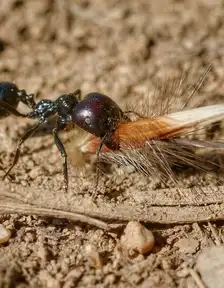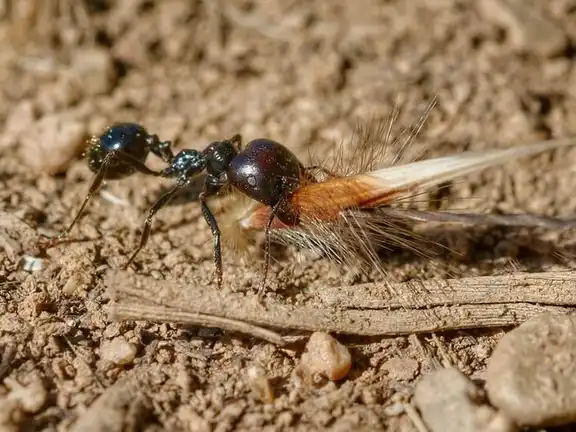
Messor barbarus
Harvester ant
DifficultyBeginner · 1/7
Kept by BrumaSpecies comparison
Side by side: difficulty, size, growth, climate, hibernation and nuptial flights, from the data and sources of each species sheet.
| Messor barbarus | Fact | Messor ibericus |
|---|---|---|
| Keeping | ||
| Difficulty | ||
Easier1/7 Beginner | Difficulty | 2/7 Beginner |
| Escape risk | ||
Low | Escape risk | Low |
| Diet | ||
SugarInsectsSeeds | Diet | SeedsInsectsSugar |
| Best nests | ||
Ytong nest · Acrylic nest · Naturalistic setup | Best nests | Ytong nest · Sandwich nest · Acrylic nest |
| Colony | ||
| Growth | ||
FasterVery fast | Growth | Fast |
| Colony size | ||
Reaches 1,000 workers | Colony size | Reaches 3,500 workers |
| Workers | ||
3–8 mm majors up to 14 mm | Workers | 4–8 mm majors up to 10 mm |
| Queen | ||
14–17 mm | Queen | 9–10 mm |
| Colony founding | ||
Fully claustral One queen | Colony founding | Fully claustral One or more queens |
| Defense | ||
Bites | Defense | Bites |
| Climate | ||
| Nest temperature | ||
21–26 °C | Nest temperature | 22–28 °C |
| Nest humidity | ||
50–60 % Seed granaries: 10–40 % | Nest humidity | 40–60 % Seed granaries: 30–50 % |
| Hibernation | ||
12–16 °C Oct – Mar | Hibernation | 10–15 °C Nov – Feb |
| Nuptial flights | ||
Sep – Nov After rain | Nuptial flights | Apr – Jun |
| Native range | ||
Europe, North Africa | Native range | Europe |
Messor barbarus
Messor ibericus
Messor barbarus : Hibernation: Oct – Mar, Nuptial flights: Sep – Nov
Messor ibericus : Hibernation: Nov – Feb, Nuptial flights: Apr – Jun
Months for temperate Europe and the Mediterranean. The weather decides the exact days, so flights can come earlier or later where you live.
Black workers in many sizes, from small minors to majors with an oversized red head that cracks seeds. They walk slowly and clumsily, and they are poor climbers.
Reddish brown to dark brown workers of many sizes, with abundant hairs, duller than the glossy black Messor capitatus. It is a near twin of Messor structor: only a microscope shows its slightly shorter first antennal segment after the scape, and its queens are smaller, so around the Mediterranean the place it comes from is the best clue.
Take the 1-minute species finder quiz and get matched with the perfect species for your experience, your space and what you'd love to watch.