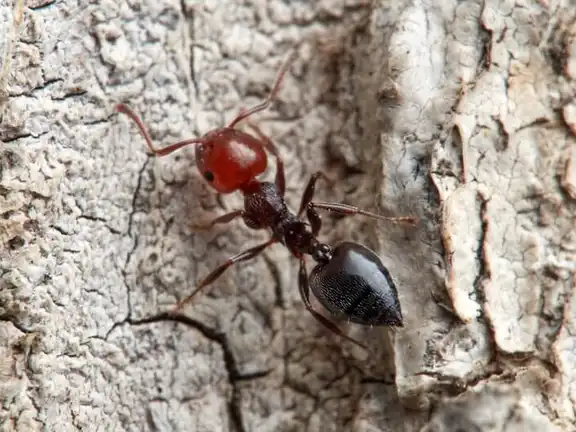
Crematogaster scutellaris
Acrobat ant
DifficultyIntermediate · 6/7
Kept by BrumaSpecies comparison
Side by side: difficulty, size, growth, climate, hibernation and nuptial flights, from the data and sources of each species sheet.
| Crematogaster scutellaris | Fact | Messor barbarus |
|---|---|---|
| Keeping | ||
| Difficulty | ||
6/7 Intermediate | Difficulty | Easier1/7 Beginner |
| Escape risk | ||
Medium | Escape risk | LowerLow |
| Diet | ||
SugarInsects | Diet | SugarInsectsSeeds |
| Best nests | ||
Wooden nest · Ytong nest · Acrylic nest | Best nests | Ytong nest · Acrylic nest · Naturalistic setup |
| Colony | ||
| Growth | ||
Very fast | Growth | Very fast |
| Colony size | ||
Reaches 1,000 workers | Colony size | Reaches 1,000 workers |
| Workers | ||
3–5 mm All the same size | Workers | 3–8 mm majors up to 14 mm |
| Queen | ||
7–9 mm | Queen | 14–17 mm |
| Colony founding | ||
Fully claustral One queen | Colony founding | Fully claustral One queen |
| Defense | ||
Bites · Smears venom | Defense | Bites |
| Climate | ||
| Nest temperature | ||
21–25 °C | Nest temperature | 21–26 °C |
| Nest humidity | ||
50–60 % | Nest humidity | 50–60 % Seed granaries: 10–40 % |
| Hibernation | ||
8–12 °C Oct – Mar | Hibernation | 12–16 °C Oct – Mar |
| Nuptial flights | ||
Aug – Oct | Nuptial flights | Sep – Nov After rain |
| Native range | ||
Europe, North Africa | Native range | Europe, North Africa |
Crematogaster scutellaris
Messor barbarus
Crematogaster scutellaris : Hibernation: Oct – Mar, Nuptial flights: Aug – Oct
Messor barbarus : Hibernation: Oct – Mar, Nuptial flights: Sep – Nov
Months for temperate Europe and the Mediterranean. The weather decides the exact days, so flights can come earlier or later where you live.
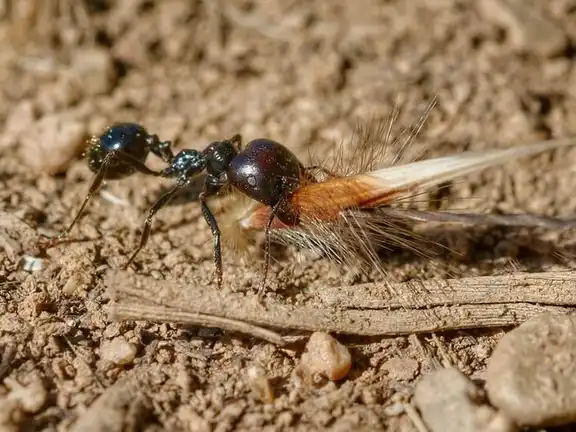
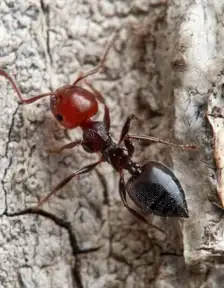
Workers with a red head, a dark body and a heart-shaped gaster that they lift above their head when disturbed. In the wild you will often find them in dead trees and old wood.
Black workers in many sizes, from small minors to majors with an oversized red head that cracks seeds. They walk slowly and clumsily, and they are poor climbers.
Take the 1-minute species finder quiz and get matched with the perfect species for your experience, your space and what you'd love to watch.