Messor capitatus
European seed harvesting ant
DifficultyBeginner · 2/7
Species comparison
Side by side: difficulty, size, growth, climate, hibernation and nuptial flights, from the data and sources of each species sheet.
| Messor capitatus | Fact | Messor ebeninus |
|---|---|---|
| Keeping | ||
| Difficulty | ||
2/7 Beginner | Difficulty | 2/7 Beginner |
| Escape risk | ||
Low | Escape risk | Low |
| Diet | ||
SeedsInsectsSugar | Diet | SeedsInsectsSugar |
| Best nests | ||
Ytong nest · Acrylic nest · Naturalistic setup | Best nests | Ytong nest · Acrylic nest · Naturalistic setup |
| Colony | ||
| Growth | ||
FasterFast | Growth | Moderate |
| Colony size | ||
Reaches 5,000 workers | Colony size | Reaches 5,000 workers |
| Workers | ||
4–8 mm majors up to 13 mm | Workers | 4–8 mm majors up to 10 mm |
| Queen | ||
13–15 mm | Queen | 11–12 mm |
| Colony founding | ||
Fully claustral One queen | Colony founding | Fully claustral One queen |
| Defense | ||
Bites | Defense | Bites |
| Climate | ||
| Nest temperature | ||
22–28 °C | Nest temperature | 22–28 °C |
| Nest humidity | ||
50–60 % Seed granaries: 30–50 % | Nest humidity | 50–60 % Seed granaries: 30–50 % |
| Hibernation | ||
10–15 °C Dec – Feb | Hibernation | 15–18 °C Jan – Feb |
| Nuptial flights | ||
Sep – Nov After rain | Nuptial flights | Nov – Dec After rain |
| Native range | ||
Europe, North Africa | Native range | Middle East, North Africa |
Messor capitatus
Messor ebeninus
Messor capitatus : Hibernation: Dec – Feb, Nuptial flights: Sep – Nov
Messor ebeninus : Hibernation: Jan – Feb, Nuptial flights: Nov – Dec
Months in the native range of the species. The weather decides the exact days, and colonies kept indoors can follow a different rhythm.
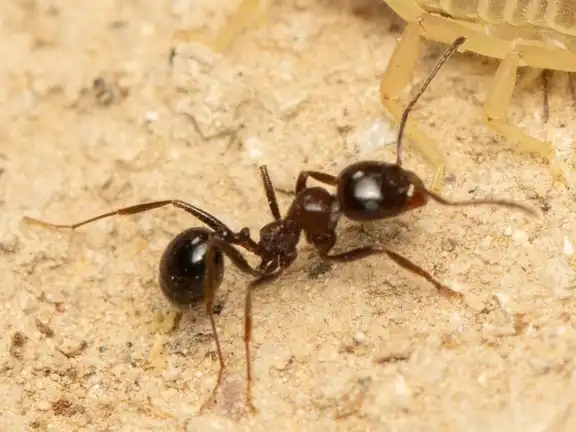
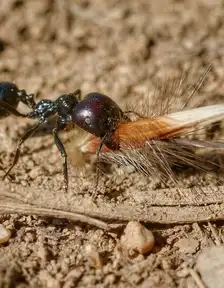
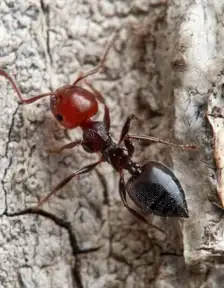
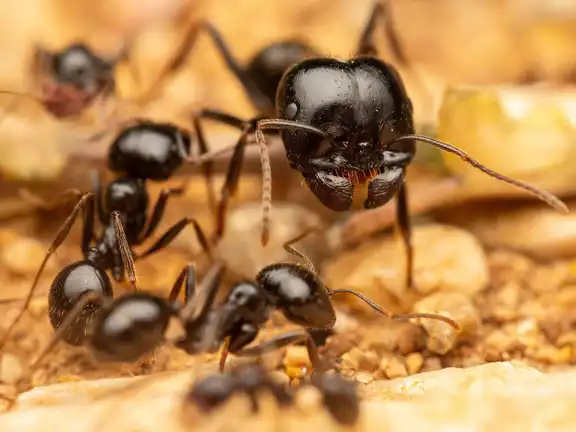
Glossy, uniformly black workers of many sizes, with big-headed majors that walk slowly and clumsily. Unlike Messor barbarus, the majors have a black head instead of a red one and an angular rear of the thorax instead of a rounded one.
Shiny, evenly black workers of several sizes, with at most a slightly reddish thorax in the smallest ones, which sets them apart from the red-headed majors of Messor barbarus. Middle Eastern Messor are hard to tell apart even for specialists and shops often write cf., so this sheet follows the black form sold as ebeninus.
Take the 1-minute species finder quiz and get matched with the perfect species for your experience, your space and what you'd love to watch.