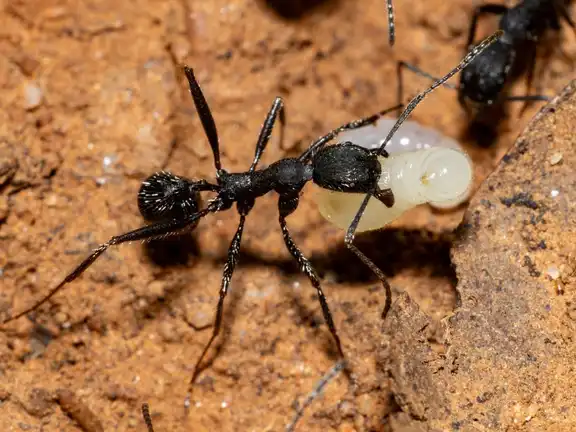
Aphaenogaster senilis
DifficultyBeginner · 3/7
Species comparison
Side by side: difficulty, size, growth, climate, hibernation and nuptial flights, from the data and sources of each species sheet.
| Aphaenogaster senilis | Fact | Aphaenogaster subterranea |
|---|---|---|
| Keeping | ||
| Difficulty | ||
Easier3/7 Beginner | Difficulty | 4/7 Beginner |
| Escape risk | ||
Medium | Escape risk | LowerLow |
| Diet | ||
InsectsSugar | Diet | InsectsSugar |
| Best nests | ||
Ytong nest · Naturalistic setup · Acrylic nest | Best nests | Ytong nest · Naturalistic setup · Sandwich nest |
| Colony | ||
| Growth | ||
FasterFast | Growth | Moderate |
| Colony size | ||
Reaches 3,000 workers | Colony size | Reaches 2,000 workers |
| Workers | ||
5–7 mm All the same size | Workers | 3–5 mm All the same size |
| Queen | ||
8–10 mm | Queen | 7–8 mm |
| Colony founding | ||
Colony fission One queen | Colony founding | Fully claustral One queen |
| Defense | ||
Bites · Stings | Defense | Bites · Stings |
| Climate | ||
| Nest temperature | ||
21–27 °C | Nest temperature | 20–26 °C |
| Nest humidity | ||
50–65 % | Nest humidity | 50–65 % |
| Hibernation | ||
12–16 °C Dec – Feb | Hibernation | 8–12 °C Nov – Feb |
| Nuptial flights | ||
No flights | Nuptial flights | Jul – Sep |
| Native range | ||
Europe, North Africa | Native range | Europe |
Aphaenogaster senilis
Aphaenogaster subterranea
Aphaenogaster senilis : Hibernation: Dec – Feb
Aphaenogaster subterranea : Hibernation: Nov – Feb, Nuptial flights: Jul – Sep
Months for temperate Europe and the Mediterranean. The weather decides the exact days, so flights can come earlier or later where you live.
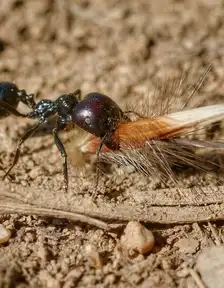
Slim, long-legged workers of a single size, matte black with fine whitish hairs and a pair of short spines on the back of the thorax. The similar Aphaenogaster gemella has almost no spines, and the queens of this species have only short stubs for wings.
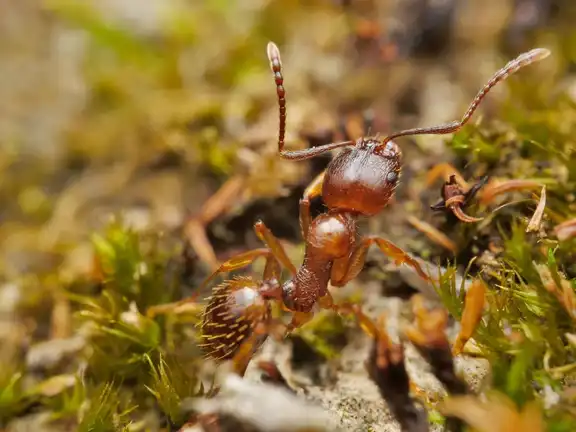
Slim, shiny, reddish-brown workers with long yellowish legs and antennae, a pair of spines on the thorax and a waist with a long stalk, like a slimmer Myrmica. The very similar Aphaenogaster ichnusa, found in the same southern European regions, has shorter, stubbier spines.
Take the 1-minute species finder quiz and get matched with the perfect species for your experience, your space and what you'd love to watch.