Aphaenogaster senilis
Mayr, 1853
A long-legged, restless hunter that spreads by splitting its colony instead of flying, and carries liquid food home on bits of debris.
Compiled from published sources and keeper reports: I haven't kept this species myself, so treat the care values as starting points.
At a glance
- Nest temperature
- 21–27 °CIn the nest
- Nest humidity
- 50–65 %In the nest
- Hibernation
- ≈ 12–16 °CDec – Feb · recommended
- Nuptial flights
- No flightsColony fission
- Workers
- 5–7 mmAll the same size
- Queen
- ≈ 8–10 mmOne queen
- Colony size
- ≈ Reaches 3,000 workersGrowth: Fast
- Escape risk
- MediumKeep an escape barrier on the outworld
Year at a glance
Hibernation : Dec – Feb
Active season : Mar – Nov
Months for temperate Europe and the Mediterranean. The weather decides the exact timing, so it can come earlier or later where you live.
How to recognize it
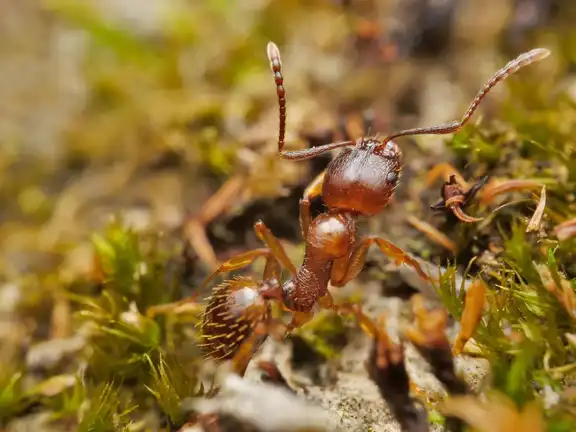
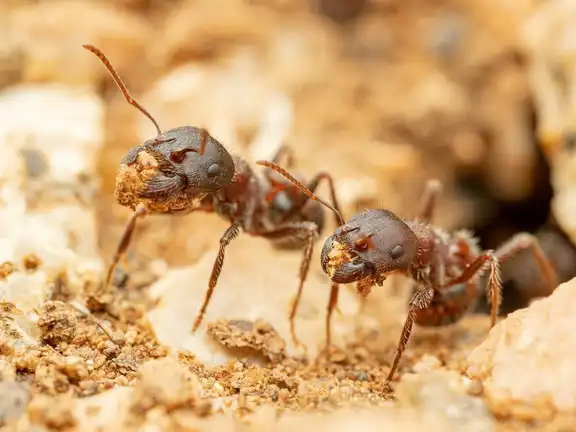
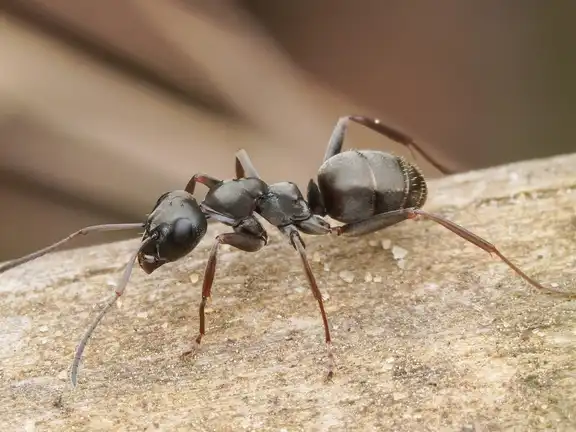
Slim, long-legged workers of a single size, matte black with fine whitish hairs and a pair of short spines on the back of the thorax. The similar Aphaenogaster gemella has almost no spines, and the queens of this species have only short stubs for wings.
Often confused with
- Aphaenogaster gemella
- Aphaenogaster iberica
- Workers5–7 mm
- Queen8–10 mm
mm
Biology
- Queens
- One queenEach colony has a single queen: never put two queens together once the first workers arrive.In the glossary
- Colony founding
- Colony fissionThere is no lone founding queen: new colonies form when a queen leaves the nest with part of the workers and brood.
- Workers
- All the same sizeAll the workers have about the same size and shape.
- Defense
- Bites · StingsThe workers can sting. It is usually mild for people, but avoid handling them.
Native range
- Europe
- North Africa
France, Italy, Morocco, Portugal, Spain
Taxonomy
Myrmicinae › Stenammini
Aphaenogaster
Care at a glance
Difficulty
Why this rating
- Makes it harder: Curious workers: keep an escape barrier on the outworld
- Makes it harder: The workers can sting
Food
- Insects
- Sugar
Sugar or honey water for the workers, and insects as protein for the queen and the brood.
Best nests
- 1Ytong nest
- 2Naturalistic setup
- 3Acrylic nest
Notes from keepers
Watch out
There is no nuptial flight and the queens do not found colonies alone, so the species is sold as a fragment with a queen, workers and brood. When you move it, empty the tube into the foraging area instead of connecting it to the new nest, because the workers can attack each other during a move.
Tip
Offer liquid food with a few grains of sand or tiny sponge pieces beside it. The workers cannot pass liquid mouth to mouth, so they soak these bits and carry them to the queen and the brood, and one keeper saw plain dishes buried under moss and substrate instead.
Tip
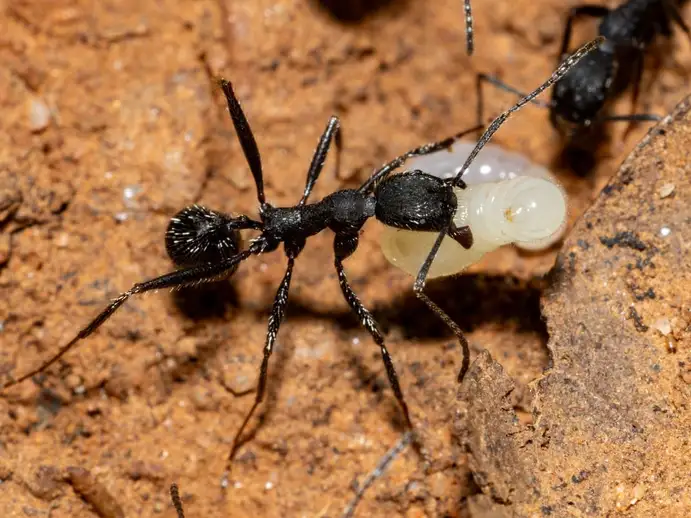
This is a hunter with a big appetite for protein, so feed small insects often, and boiled egg or tuna are accepted too. The workers lay the larvae right on the prey so they feed themselves, so remove leftovers from the nest before they mold.
Tip
Do not panic if the colony suddenly moves its brood to a new corner or tube, because wild colonies change nest all the time. Still check first for mold or a nest that has dried out, since one keeper's queen moved her eggs out of a tube that had grown mold.
Related posts
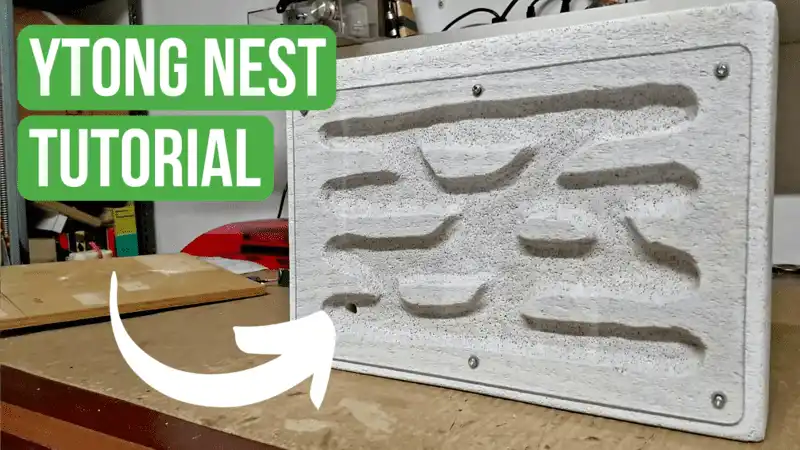
How To Make a Ytong Nest - Ant Keeping Tutorial
In this tutorial, you will learn how to make a Ytong nest for your ant colonies! This is one of the best nest types for many ant species!

How To Hibernate Your Ants - Hibernation Tutorial
In this guide, we’re going to talk about hibernation: What is it? Why do ants need hibernation? Should I hibernate my ants? Let's see!
The Best Conditions To Keep Ants - The Ant Pod
Temperature, humidity and pests: heating mats, hydration setups, how to spot and control mites, and why the best setup mimics each species' natural habitat.
FAQs
9No. The queens have only short, non-functional wings, so there is no nuptial flight. New colonies start by fission: after a nest move, part of the workers can leave with young female larvae and raise a new queen from them, and very large colonies also rear a few new queens, one of which walks out with workers and brood to found a new nest. This is why shops sell colonies with a queen, workers and brood, and not single queens.
The workers can rear replacement queens from young larvae, up to five at once in laboratory colonies, and the new queens fight until only one is left. Orphaned workers also lay unfertilized eggs, which become males. The new queen still has to mate, and mating did not happen in the laboratory colonies, so a colony that loses its queen in a closed formicarium may not recover.
In Spain, field colonies averaged about 1,260 workers, ranging from just over a hundred to almost 3,900. In captivity, one German keeper started with about 70 workers and counted around a thousand two years later, so plan for a colony of some thousands at most, not tens of thousands.
Aphaenogaster senilis workers measure 5–7 mm, and the queen measures 8–10 mm.
Just one. Aphaenogaster senilis is monogyne: each colony has a single queen, so never put two queens together once the first workers arrive.
Yes. Aphaenogaster senilis workers can sting. It is usually mild for people, but it's best to avoid handling them.
Keep the Aphaenogaster senilis nest at 21–27 °C, with 50–65 % humidity in the brood chambers.
Not strictly, but it helps. A cooler winter rest at 12–16 °C, roughly during Dec – Feb, keeps Aphaenogaster senilis colonies healthy.
Aphaenogaster senilis is not on the EU list of invasive alien species and is not protected in the countries we checked. Rules differ between countries and can change, so check your local laws first.
Sources and review
- 1
- 2
- 3
- 4
- 5
Showing 5 of 32 sources
Last reviewed
- BiologyWell documented
- Care valuesKeeper consensus
- Nuptial flightsWell documented
Legal status
Not on the EU list of invasive alien species and not protected in the countries we checked. Rules differ between countries and can change, so check your local laws before buying or collecting a queen.
Checked on October 11, 2026
All values are starting points: watch your colony and adjust. Found something wrong or missing?
Suggest a correction