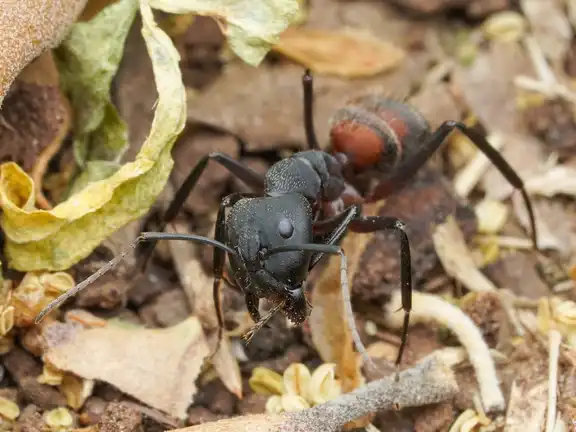
Camponotus cruentatus
Blood-spotted sugar ant
DifficultyIntermediate · 5/7
Species comparison
Side by side: difficulty, size, growth, climate, hibernation and nuptial flights, from the data and sources of each species sheet.
| Camponotus cruentatus | Fact | Camponotus herculeanus |
|---|---|---|
| Keeping | ||
| Difficulty | ||
5/7 Intermediate | Difficulty | Easier4/7 Beginner |
| Escape risk | ||
Medium | Escape risk | Medium |
| Diet | ||
SugarInsects | Diet | SugarInsects |
| Best nests | ||
Ytong nest · Acrylic nest · Naturalistic setup | Best nests | Ytong nest · Wooden nest · Naturalistic setup |
| Colony | ||
| Growth | ||
FasterFast | Growth | Moderate |
| Colony size | ||
Reaches 3,000 workers | Colony size | Reaches 5,000 workers |
| Workers | ||
6–10 mm majors up to 15 mm | Workers | 6–11 mm majors up to 13 mm |
| Queen | ||
15–18 mm | Queen | 14–17 mm |
| Colony founding | ||
Fully claustral One queen | Colony founding | Fully claustral One queen |
| Defense | ||
Bites · Sprays formic acid | Defense | Bites · Sprays formic acid |
| Climate | ||
| Nest temperature | ||
25–30 °C | Nest temperature | 18–25 °C |
| Nest humidity | ||
40–60 % | Nest humidity | 50–60 % |
| Hibernation | ||
10–15 °C Nov – Feb | Hibernation | 5–8 °C Oct – Mar |
| Nuptial flights | ||
Jun – Jul Hot days · Calm weather | Nuptial flights | May – Jun Hot days · Humid air |
| Native range | ||
Europe, North Africa | Native range | Europe, Asia, North America |
Camponotus cruentatus
Camponotus herculeanus
Camponotus cruentatus : Hibernation: Nov – Feb, Nuptial flights: Jun – Jul
Camponotus herculeanus : Hibernation: Oct – Mar, Nuptial flights: May – Jun
Months for temperate Europe and the Mediterranean. The weather decides the exact days, so flights can come earlier or later where you live.
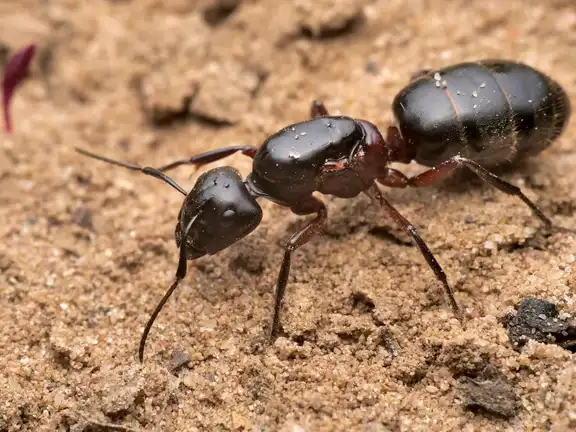
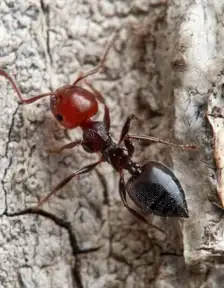
Matte, velvety black workers of many sizes with a rust-orange to brick-red band across the base of the gaster and reddish legs, and in the larger workers a red tint at the rear of the thorax. The similar Camponotus barbaricus is glossy rather than matte and has no orange band on its black gaster.
Large workers with a black head and gaster and a dull dark red to reddish-black thorax and legs. Compared with Camponotus ligniperda they look stockier and duller, with little or no red on the gaster, and they favor colder, higher and shadier woods, but the two are hard to tell apart by eye with certainty.
Take the 1-minute species finder quiz and get matched with the perfect species for your experience, your space and what you'd love to watch.