Camponotus cruentatus
(Latreille, 1802)
Blood-spotted sugar ant
A matte-black Mediterranean giant with a rust-red band across its gaster, shy while small and fiercely territorial once the colony grows.
Compiled from published sources and keeper reports: I haven't kept this species myself, so treat the care values as starting points.
At a glance
- Nest temperature
- ≈ 25–30 °CIn the nest
- Nest humidity
- ≈ 40–60 %In the nest
- Hibernation
- 10–15 °CNov – Feb
- Nuptial flights
- ≈ Jun – JulNight flights
- Workers
- ≈ 6–10 mmmajors up to 15 mm
- Queen
- ≈ 15–18 mmOne queen
- Colony size
- ≈ Reaches 3,000 workersGrowth: Fast
- Escape risk
- MediumKeep an escape barrier on the outworld
Year at a glance
Hibernation : Nov – Feb
Active season : Mar – Oct
Nuptial flights : Jun – Jul
- Night flights
- Hot days
- Calm weather
Months for temperate Europe and the Mediterranean. The weather decides the exact days, so flights can come earlier or later where you live.
How to recognize it
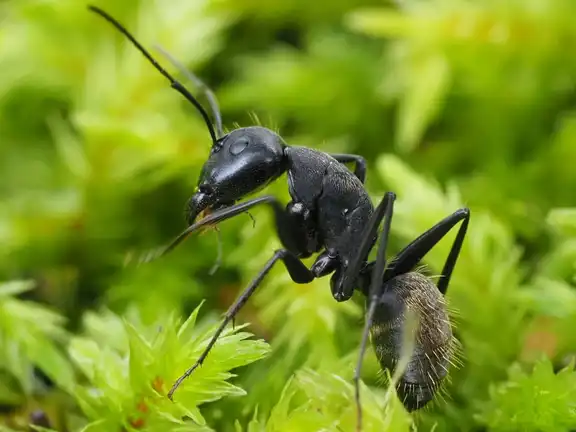
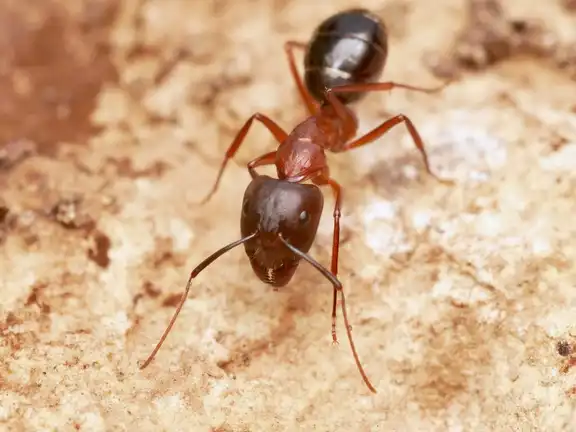
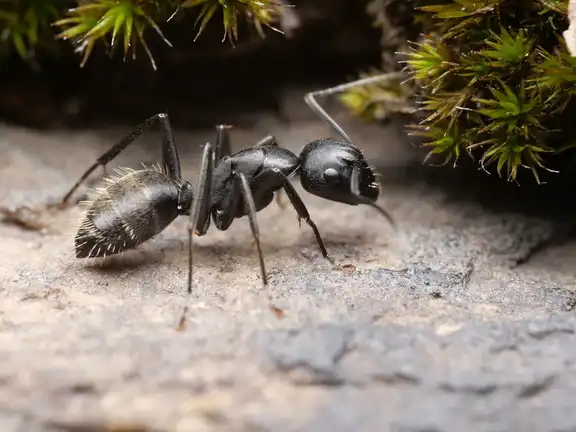
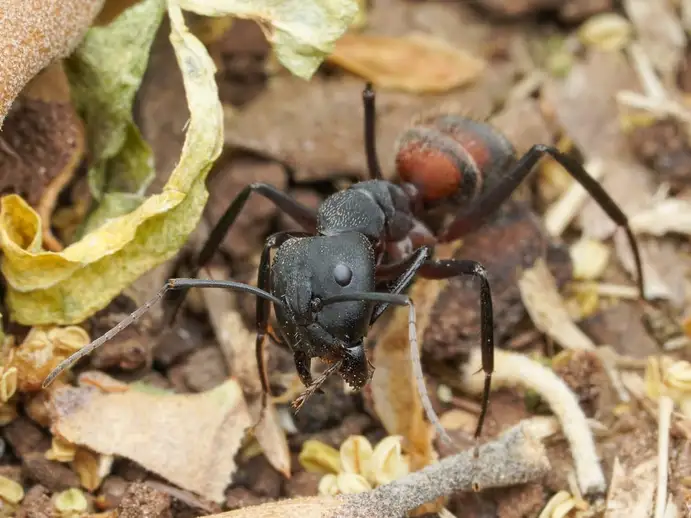
Matte, velvety black workers of many sizes with a rust-orange to brick-red band across the base of the gaster and reddish legs, and in the larger workers a red tint at the rear of the thorax. The similar Camponotus barbaricus is glossy rather than matte and has no orange band on its black gaster.
Often confused with
- Workers6–10 mm
- Majors≤ 15 mm
- Queen15–18 mm
mm
Biology
- Queens
- One queenEach colony has a single queen: never put two queens together once the first workers arrive.In the glossary
- Colony founding
- Fully claustralThe queen raises her first workers without eating, living off her wing muscles and fat reserves.In the glossary
- Workers
- Many sizesThe workers come in a continuous range of sizes, from small minors to large majors.In the glossary
- Defense
- Bites · Sprays formic acidNo sting: the workers bite and spray formic acid, which can sting small cuts.
Native range
- Europe
- North Africa
Algeria, Andorra, France, Gibraltar, Italy, Monaco, Morocco, Portugal, Spain, Tunisia
Taxonomy
Formicinae › Camponotini
Camponotus
Care at a glance
Difficulty
Why this rating
- Makes it easier: Fully claustral: the queen needs no food until her first workers arrive
- Makes it harder: Curious workers: keep an escape barrier on the outworld
Food
- Sugar
- Insects
Sugar or honey water for the workers, and insects as protein for the queen and the brood.
Best nests
- 1Ytong nest
- 2Acrylic nest
- 3Naturalistic setup
Notes from keepers
Tip
Offer a warm end and a cooler end, for example with a heat mat along one side of the nest. The colony moves its brood into the warmth, and several keepers saw development stall in a nest that stayed cool.
Watch out
Keep the arena dry and give the nest one damp chamber. Keepers lost workers and grew mold in nests that were watered too often, yet one keeper blamed an almost dry nest for a queen that laid very few eggs, and moistening it again helped.
Watch out
Rest them cool, not cold. A cold shed only a few degrees above freezing wiped out most of the workers of one colony, while colonies kept in a cool cellar or an unheated room came through with few or no losses.
Tip
Young colonies can be picky about protein, and several keepers saw insects ignored for weeks. Try spiders, houseflies, small roaches and soft cat food, and feed from a foraging box instead of inside the test tube, where the defensive workers rush out.
Related posts
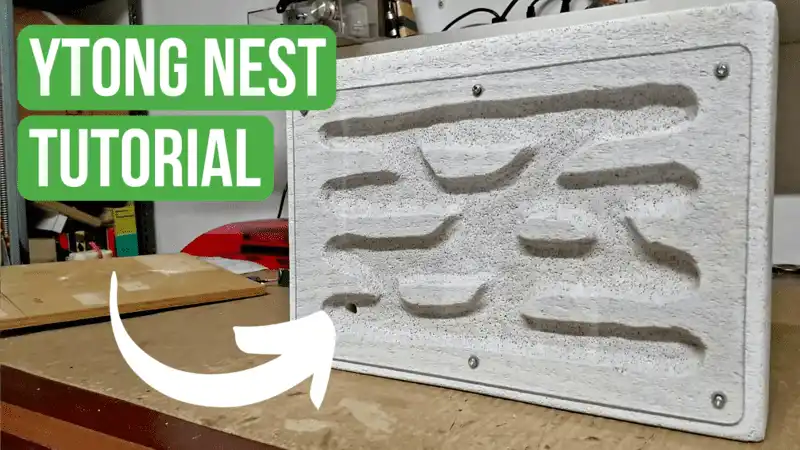
How To Make a Ytong Nest - Ant Keeping Tutorial
In this tutorial, you will learn how to make a Ytong nest for your ant colonies! This is one of the best nest types for many ant species!

How To Hibernate Your Ants - Hibernation Tutorial
In this guide, we’re going to talk about hibernation: What is it? Why do ants need hibernation? Should I hibernate my ants? Let's see!

How To Make a Test Tube Setup - Ant Keeping Basics
In this tutorial you will learn how to make a test tube setup, the best way to create the optimal environment for a newly mated queen ant!
FAQs
10Mostly sugary liquids. In a field study of one colony on the Catalan coast, about four in five workers that came home without prey carried liquid in the crop, mainly honeydew from aphids on a pine tree and on fennel plus nectar from fennel flowers. Only about six percent of the returning workers carried solid items, and these were mostly vertebrate droppings and small, dry arthropods. In a formicarium sugar water is the staple, but the brood still needs insects.
Check the surface and the color of the gaster. C. cruentatus is matte and velvety black, with an orange to red band at the base of the gaster and reddish legs. C. barbaricus is glossy, with a black head and gaster and a thorax that runs from black to red-orange between workers. Both are big Mediterranean carpenter ants sold by the same shops, so a photo of a worker settles it. Their behavior also differs: in nature cruentatus forages by day in spring and fall and around the clock in summer, while barbaricus is mostly nocturnal.
Not before the colony has a good number of workers. Founding queens raise small workers first. In one carefully counted colony the first major hatched at roughly 90 workers, with six to nine majors among about 200 workers roughly two months later, while another keeper counted a single major among 50 to 60 smaller workers. An Italian care sheet says the share of majors rises clearly after a few hundred workers. Majors are expensive to raise, so the larvae need a lot of protein.
Camponotus cruentatus workers measure 6–10 mm, with majors up to 15 mm, and the queen measures 15–18 mm.
Just one. Camponotus cruentatus is monogyne: each colony has a single queen, so never put two queens together once the first workers arrive.
No. Camponotus cruentatus has no sting: the workers bite and spray formic acid, which can sting small cuts.
In temperate Europe and the Mediterranean, Camponotus cruentatus usually flies in Jun – Jul. The weather decides the exact days.
Keep the Camponotus cruentatus nest at 25–30 °C, with 40–60 % humidity in the brood chambers.
Yes. Hibernate Camponotus cruentatus at 10–15 °C, roughly during Nov – Feb.
Camponotus cruentatus is not on the EU list of invasive alien species and is not protected in the countries we checked. Rules differ between countries and can change, so check your local laws first.
Sources and review
- 1
- 2
- 3
- 4Catalogue of Life: Camponotus (Myrmosericus) cruentatus (Latreille, 1802)
Reference · Taxonomy
- 5AntCat: Camponotus cruentatus (Latreille, 1802)
Reference · Taxonomy
Showing 5 of 36 sources
Last reviewed
- BiologyWell documented
- Care valuesKeeper consensus
- Nuptial flightsKeeper consensus
Legal status
Not on the EU list of invasive alien species and not protected in the countries we checked. Rules differ between countries and can change, so check your local laws before buying or collecting a queen.
Checked on October 11, 2026
All values are starting points: watch your colony and adjust. Found something wrong or missing?
Suggest a correction