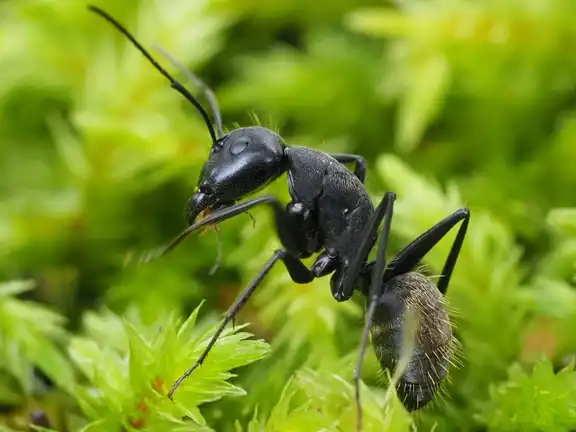
Camponotus japonicus
Japanese carpenter ant
DifficultyBeginner · 4/7
Species comparison
Side by side: difficulty, size, growth, climate, hibernation and nuptial flights, from the data and sources of each species sheet.
| Camponotus japonicus | Fact | Camponotus sylvaticus |
|---|---|---|
| Keeping | ||
| Difficulty | ||
4/7 Beginner | Difficulty | 4/7 Beginner |
| Escape risk | ||
LowerMedium | Escape risk | High |
| Diet | ||
SugarInsects | Diet | SugarInsects |
| Best nests | ||
Ytong nest · Acrylic nest · Naturalistic setup | Best nests | Ytong nest · Acrylic nest · Naturalistic setup |
| Colony | ||
| Growth | ||
Moderate | Growth | Moderate |
| Colony size | ||
Reaches 1,000 workers | Colony size | Reaches 5,000 workers |
| Workers | ||
6–12 mm majors up to 14 mm | Workers | 6–12 mm majors up to 15 mm |
| Queen | ||
15–18 mm | Queen | 14–17 mm |
| Colony founding | ||
Fully claustral One queen | Colony founding | Fully claustral One queen |
| Defense | ||
Bites · Sprays formic acid | Defense | Bites · Sprays formic acid |
| Climate | ||
| Nest temperature | ||
22–28 °C | Nest temperature | 22–28 °C |
| Nest humidity | ||
50–70 % | Nest humidity | 40–60 % |
| Hibernation | ||
8–12 °C Nov – Mar | Hibernation | 8–14 °C Nov – Feb |
| Nuptial flights | ||
Apr – Jun After rain · Hot days · Calm weather | Nuptial flights | Jun – Aug Hot days · Humid air |
| Native range | ||
Asia | Native range | Europe |
Camponotus japonicus
Camponotus sylvaticus
Camponotus japonicus : Hibernation: Nov – Mar, Nuptial flights: Apr – Jun
Camponotus sylvaticus : Hibernation: Nov – Feb, Nuptial flights: Jun – Aug
Months in the native range of the species. The weather decides the exact days, and colonies kept indoors can follow a different rhythm.
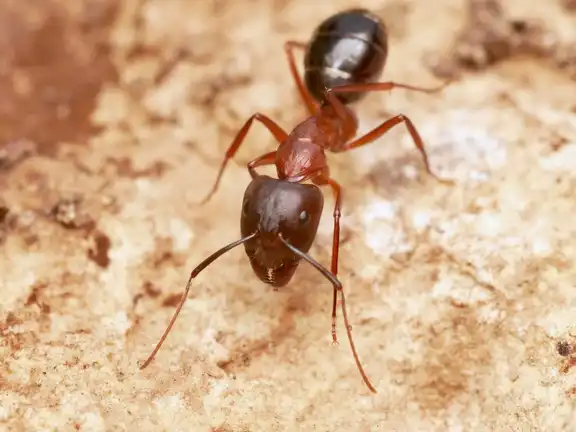
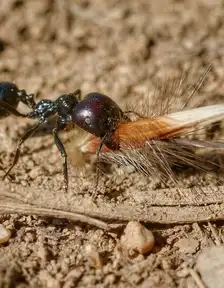
Dull, matte black workers of many sizes, from small minors to majors with big heads (sometimes dark red), with dense golden hairs on the gaster and no red on the thorax. That separates it from the red-thoraxed Camponotus obscuripes and from the shinier, short-haired Camponotus herculeanus, and some shops label the stock 'cf. japonicus', which means the identification is not fully certain.
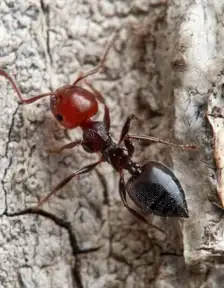
Shiny, sparsely haired workers with a dark head and gaster and a thorax that runs from red to dark reddish brown, sometimes almost black, in all sizes up to majors with a large head, and the small minors can look darker than the majors. Keepers mix it up with Camponotus barbaricus, C. foreli and C. pilicornis (orange head, hairy cheeks), so a doubtful colony is worth checking under a microscope.
Take the 1-minute species finder quiz and get matched with the perfect species for your experience, your space and what you'd love to watch.