Camponotus japonicus
Mayr, 1866
Japanese carpenter ant
A sturdy, matte-black giant of East Asian fields and parks that builds up slowly, yet can follow the same queen for many years.
Compiled from published sources and keeper reports: I haven't kept this species myself, so treat the care values as starting points.
At a glance
- Nest temperature
- 22–28 °CIn the nest
- Nest humidity
- 50–70 %In the nest
- Hibernation
- ≈ 8–12 °CNov – Mar · recommended
- Nuptial flights
- ≈ Apr – JunAfternoon flights
- Workers
- ≈ 6–12 mmmajors up to 14 mm
- Queen
- ≈ 15–18 mmOne queen
- Colony size
- ≈ Reaches 1,000 workersGrowth: Moderate
- Escape risk
- MediumKeep an escape barrier on the outworld
Year at a glance
Hibernation : Nov – Mar
Active season : Apr – Oct
Nuptial flights : Apr – Jun
- Afternoon flights
- After rain
- Hot days
- Calm weather
Months in the native range of the species. The weather decides the exact days, and colonies kept indoors can follow a different rhythm.
How to recognize it
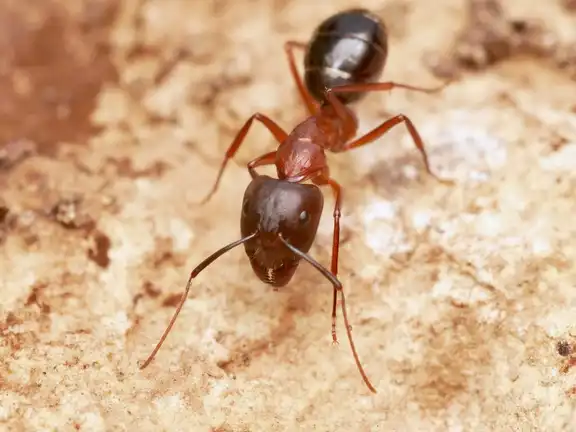
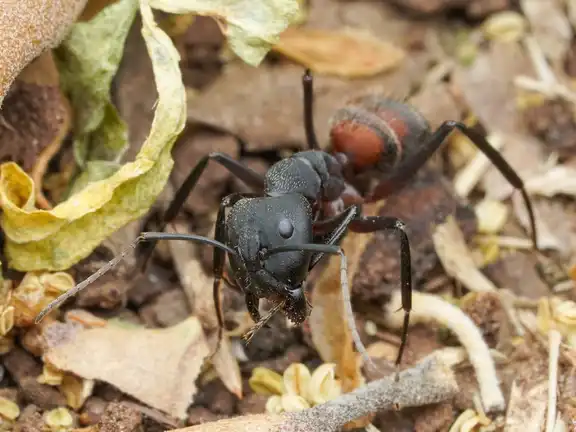
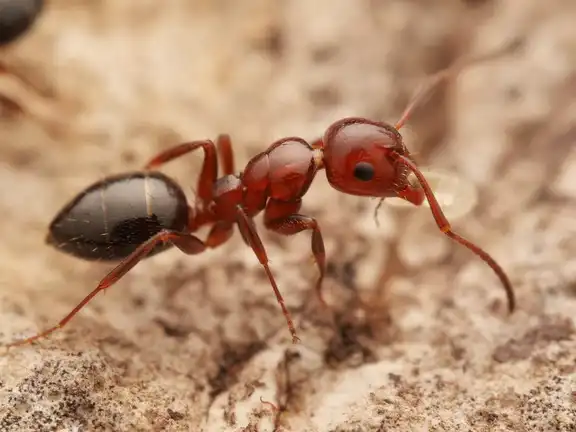
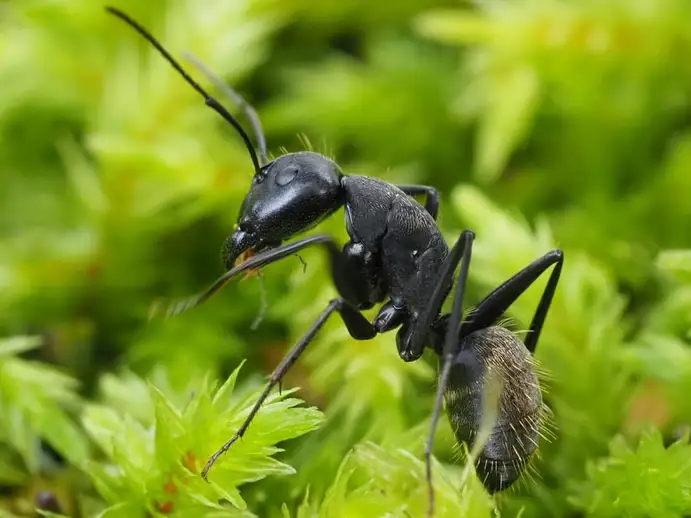
Dull, matte black workers of many sizes, from small minors to majors with big heads (sometimes dark red), with dense golden hairs on the gaster and no red on the thorax. That separates it from the red-thoraxed Camponotus obscuripes and from the shinier, short-haired Camponotus herculeanus, and some shops label the stock 'cf. japonicus', which means the identification is not fully certain.
Often confused with
- Camponotus herculeanus
- Camponotus obscuripes
- Camponotus fallax
- Workers6–12 mm
- Majors≤ 14 mm
- Queen15–18 mm
mm
Biology
- Queens
- One queenEach colony has a single queen: never put two queens together once the first workers arrive.In the glossary
- Colony founding
- Fully claustralThe queen raises her first workers without eating, living off her wing muscles and fat reserves.In the glossary
- Workers
- Many sizesThe workers come in a continuous range of sizes, from small minors to large majors.In the glossary
- Defense
- Bites · Sprays formic acidNo sting: the workers bite and spray formic acid, which can sting small cuts.
Native range
- Asia
China, Japan, Mongolia, North Korea, Russia, South Korea
Taxonomy
Formicinae › Camponotini
Camponotus
Care at a glance
Difficulty
Why this rating
- Makes it easier: Fully claustral: the queen needs no food until her first workers arrive
- Makes it harder: Curious workers: keep an escape barrier on the outworld
Food
- Sugar
- Insects
Sugar or honey water for the workers, and insects as protein for the queen and the brood.
Best nests
- 1Ytong nest
- 2Acrylic nest
- 3Naturalistic setup
Notes from keepers
Tip
Give the colony a cool winter rest from late fall to early spring, for example in an unheated room or a shaded, sheltered spot, as Japanese keepers do. The ants cluster together and usually need no food, but the nest must not dry out, and even colonies kept warm tend to slow down and pause their brood for a while in winter.
Tip
Keep one part of the nest damp and another part drier, because the workers carry their cocoons to the drier spot, and never let drops or puddles sit on the floor where eggs and larvae lie. Give drinking water separately from the moisture of the nest.
Tip
Offer diluted maple syrup or invert sugar syrup, since Japanese keepers report that cheap honey is often refused, and change the protein now and then. One German colony refused every frozen insect but took freshly killed flies, while others took cut mealworms and small crickets right away.
Watch out
Expect a slow start and do not hurry the colony into a big nest: ants dislike a nest that is far too large, and some young colonies in captivity stall for months. Move up in small steps once the brood and workers fill the current space.
Related posts

How To Hibernate Your Ants - Hibernation Tutorial
In this guide, we’re going to talk about hibernation: What is it? Why do ants need hibernation? Should I hibernate my ants? Let's see!
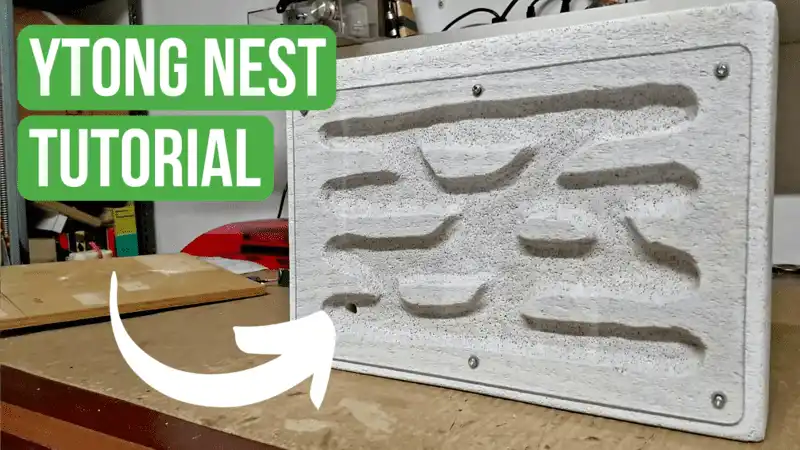
How To Make a Ytong Nest - Ant Keeping Tutorial
In this tutorial, you will learn how to make a Ytong nest for your ant colonies! This is one of the best nest types for many ant species!
What To Do After Catching Your First Queen Ant!
In this short guide, you’re going to learn what steps you need to take after catching your very first queen ant! Let's get into it!
FAQs
10Only once the colony has grown a lot. A Japanese keeping site saw medium-sized workers at roughly 50 to 100 workers and the first majors at about 200 to 300 workers or more. The sizes blend into each other instead of forming two sharp groups, and keepers rarely see the biggest workers outside the nest.
Not according to current catalogs, but taxonomists argued about it for a long time. Many early authors treated japonicus as a subspecies of the northern Camponotus herculeanus, and Yasumatsu and Brown reported intermediate forms in 1951. In 1957 they found that most samples can be sorted clearly: japonicus is mostly black, with a dull, coarsely sculptured body and long, dense hairs on the gaster, while the East Asian herculeanus has a shinier gaster with short hairs and often some red on the thorax and legs. AntCat now lists japonicus as a valid species.
As long as its queen, and Japanese sources give a queen lifespan of up to about 20 years. Workers live only one to two years and are constantly replaced, and in nature a colony needs four to five years to reach full size. One Japanese keeper's queen, caught in 2015, was still leading her colony in 2022, when it produced winged queens for the first time under that keeper.
Camponotus japonicus workers measure 6–12 mm, with majors up to 14 mm, and the queen measures 15–18 mm.
Just one. Camponotus japonicus is monogyne: each colony has a single queen, so never put two queens together once the first workers arrive.
No. Camponotus japonicus has no sting: the workers bite and spray formic acid, which can sting small cuts.
In its native range, Camponotus japonicus usually flies in Apr – Jun. The weather decides the exact days.
Keep the Camponotus japonicus nest at 22–28 °C, with 50–70 % humidity in the brood chambers.
Not strictly, but it helps. A cooler winter rest at 8–12 °C, roughly during Nov – Mar, keeps Camponotus japonicus colonies healthy.
Camponotus japonicus is not on the EU list of invasive alien species and is not protected in the countries we checked. Rules differ between countries and can change, so check your local laws first.
Sources and review
- 1
- 2AntCat: Camponotus japonicus Mayr, 1866
Reference · Taxonomy, Distribution
- 3
- 4AntWiki: Camponotus japonicus
Reference · Taxonomy, Biology, Distribution
- 5Dhadwal and Bharti (2021), Halteres 12: First record of Camponotus japonicus Mayr, 1866 from India (redescription, distribution, colony structure)
Paper · Taxonomy, Biology, Distribution
Showing 5 of 36 sources
Last reviewed
- BiologyWell documented
- Care valuesKeeper consensus
- Nuptial flightsKeeper consensus
Legal status
Not on the EU list of invasive alien species and not protected in the countries we checked. Rules differ between countries and can change, so check your local laws before buying or collecting a queen.
Checked on October 11, 2026
All values are starting points: watch your colony and adjust. Found something wrong or missing?
Suggest a correction