Camponotus sylvaticus
(Olivier, 1792)
A long-legged, red-and-black Mediterranean carpenter ant that sprints out of reach after dark and needs a few patient years to grow into a big colony.
Compiled from published sources and keeper reports: I haven't kept this species myself, so treat the care values as starting points.
At a glance
- Nest temperature
- 22–28 °CIn the nest
- Nest humidity
- ≈ 40–60 %In the nest
- Hibernation
- ≈ 8–14 °CNov – Feb
- Nuptial flights
- Jun – AugNight flights
- Workers
- ≈ 6–12 mmmajors up to 15 mm
- Queen
- ≈ 14–17 mmOne queen
- Colony size
- ≈ Reaches 5,000 workersGrowth: Moderate
- Escape risk
- HighEscape artists: use a closed outworld and a good barrier
Year at a glance
Hibernation : Nov – Feb
Active season : Mar – Oct
Nuptial flights : Jun – Aug
- Night flights
- Hot days
- Humid air
Months for temperate Europe and the Mediterranean. The weather decides the exact days, so flights can come earlier or later where you live.
How to recognize it
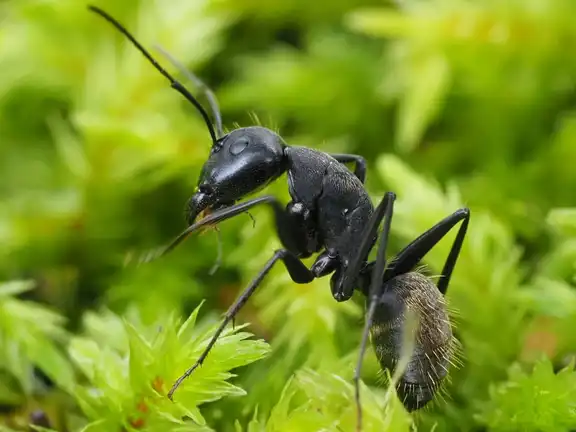
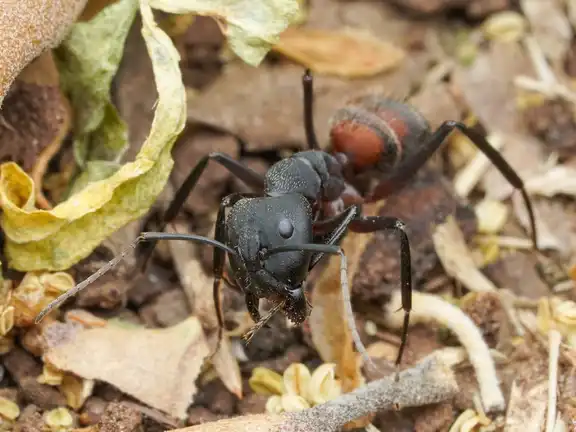
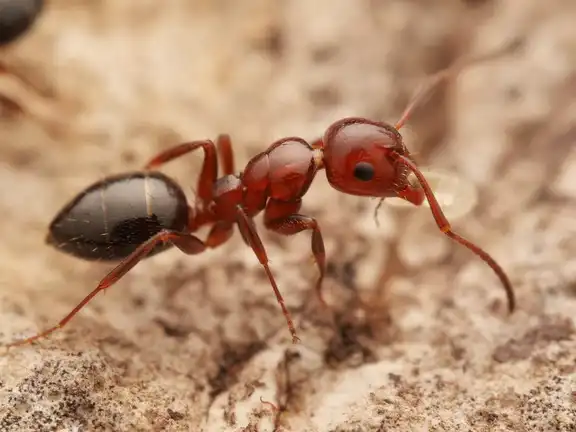
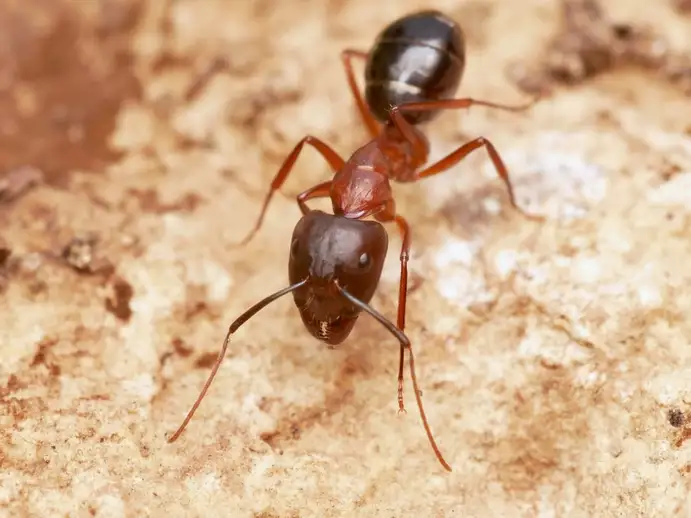
Shiny, sparsely haired workers with a dark head and gaster and a thorax that runs from red to dark reddish brown, sometimes almost black, in all sizes up to majors with a large head, and the small minors can look darker than the majors. Keepers mix it up with Camponotus barbaricus, C. foreli and C. pilicornis (orange head, hairy cheeks), so a doubtful colony is worth checking under a microscope.
Often confused with
- Camponotus barbaricus
- Camponotus foreli
- Camponotus pilicornis
- Workers6–12 mm
- Majors≤ 15 mm
- Queen14–17 mm
mm
Biology
- Queens
- One queenEach colony has a single queen: never put two queens together once the first workers arrive.In the glossary
- Colony founding
- Fully claustralThe queen raises her first workers without eating, living off her wing muscles and fat reserves.In the glossary
- Workers
- Many sizesThe workers come in a continuous range of sizes, from small minors to large majors.In the glossary
- Defense
- Bites · Sprays formic acidNo sting: the workers bite and spray formic acid, which can sting small cuts.
Native range
- Europe
France, Portugal, Spain
Taxonomy
Formicinae › Camponotini
Camponotus
Care at a glance
Difficulty
Why this rating
- Makes it easier: Fully claustral: the queen needs no food until her first workers arrive
- Makes it harder: A real escape artist that needs an escape-proof setup
Food
- Sugar
- Insects
Sugar or honey water for the workers, and insects as protein for the queen and the brood.
Best nests
- 1Ytong nest
- 2Acrylic nest
- 3Naturalistic setup
Notes from keepers
Watch out
The workers are long-legged and extremely fast. One keeper watched them skim over an anti-escape coating and lost many every time the lid was opened, so feed through a small hatch or from a connected foraging box and back the barrier up with a second one.
Watch out
Expect them to remodel soft nest materials. Queens reshaped cork-based founding nests within hours, and one shop warns that Ytong needs to be encased because they chew it, so keep soft material enclosed or choose acrylic for a growing colony.
Tip
Expect a very slow start. One long-term colony had only about fifteen nurses after its first year, around fifty workers early in the second and hundreds by its end, and from then on it needed a bigger nest and far more food every season.
Tip
For the winter rest, Spanish keepers skip the fridge. They move the colony to the coolest, quietest spot of the home or a sheltered balcony, and the ants slow down with the season on their own, so keep water and a little food on offer.
Related posts

How To Hibernate Your Ants - Hibernation Tutorial
In this guide, we’re going to talk about hibernation: What is it? Why do ants need hibernation? Should I hibernate my ants? Let's see!
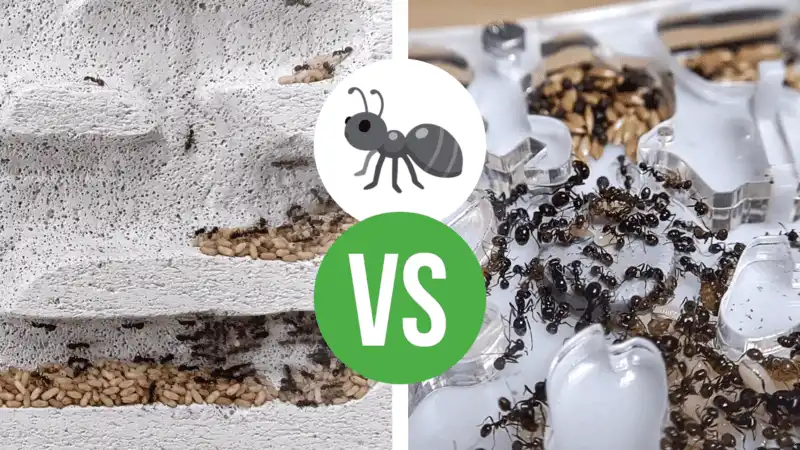
Ytong vs Acrylic - Which Is Better For An Ant Nest?
In this article, we’re going to talk about two of the most popular types of ant nests: acrylic nests and Ytong nests! Let's compare them!

How To Make a Test Tube Setup - Ant Keeping Basics
In this tutorial you will learn how to make a test tube setup, the best way to create the optimal environment for a newly mated queen ant!
FAQs
10Mostly after dark. A field study on the Spanish Mediterranean coast found it crepuscular and nocturnal: foraging starts in the late afternoon, runs through the night and ends in the early morning, and within the temperatures it tolerates it is mainly the light level that starts and stops the activity. Keepers describe the first workers of a young colony as very shy and seen mostly at night, so the evening is the best time to watch them.
Almost only sugary liquids. The same field study found a very narrow diet made up almost exclusively of sugary liquids, above all the honeydew of two aphid species and, to a much lesser extent, flower nectar. In a formicarium that means sugar water or diluted honey should always be available, while insects feed the brood: one big captive colony ate roughly twenty blowflies and a few crickets a day, on top of several syringes of sugar water and honey.
Not necessarily, despite the carpenter ant name. The field study was done in open grassland on the Mediterranean coast. A Spanish keeper who found wild colonies describes them in the soil among tree roots, where the ground stays a little damp, and shops mention earth nests as well as dead wood. In a formicarium, offer a damp corner next to a drier side and treat wood as optional.
Camponotus sylvaticus workers measure 6–12 mm, with majors up to 15 mm, and the queen measures 14–17 mm.
Just one. Camponotus sylvaticus is monogyne: each colony has a single queen, so never put two queens together once the first workers arrive.
No. Camponotus sylvaticus has no sting: the workers bite and spray formic acid, which can sting small cuts.
In temperate Europe and the Mediterranean, Camponotus sylvaticus usually flies in Jun – Aug. The weather decides the exact days.
Keep the Camponotus sylvaticus nest at 22–28 °C, with 40–60 % humidity in the brood chambers.
Yes. Hibernate Camponotus sylvaticus at 8–14 °C, roughly during Nov – Feb.
Camponotus sylvaticus is not on the EU list of invasive alien species and is not protected in the countries we checked. Rules differ between countries and can change, so check your local laws first.
Sources and review
- 1
- 2
- 3
- 4
- 5GBIF: Camponotus sylvaticus (Olivier, 1792), occurrence records by country
Reference · Distribution
Showing 5 of 26 sources
Last reviewed
- BiologyKeeper consensus
- Care valuesKeeper consensus
- Nuptial flightsKeeper consensus
Legal status
Not on the EU list of invasive alien species and not protected in the countries we checked. Rules differ between countries and can change, so check your local laws before buying or collecting a queen.
Checked on October 11, 2026
All values are starting points: watch your colony and adjust. Found something wrong or missing?
Suggest a correction