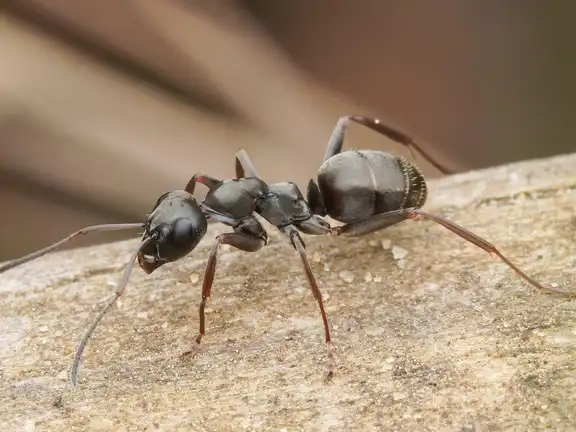
Formica fusca
Silky ant
DifficultyBeginner · 3/7
Species comparison
Side by side: difficulty, size, growth, climate, hibernation and nuptial flights, from the data and sources of each species sheet.
| Formica fusca | Fact | Formica sanguinea |
|---|---|---|
| Keeping | ||
| Difficulty | ||
Easier3/7 Beginner | Difficulty | 6/7 Intermediate |
| Escape risk | ||
LowerMedium | Escape risk | High |
| Diet | ||
SugarInsects | Diet | SugarInsects |
| Best nests | ||
Ytong nest · Naturalistic setup · Sandwich nest | Best nests | Ytong nest · Naturalistic setup · Sandwich nest |
| Colony | ||
| Growth | ||
Moderate | Growth | FasterFast |
| Colony size | ||
Reaches 2,000 workers | Colony size | Reaches 5,000 workers |
| Workers | ||
4–7 mm All the same size | Workers | 6–9 mm All the same size |
| Queen | ||
8–10 mm | Queen | 9–11 mm |
| Colony founding | ||
Fully claustral One or more queens | Colony founding | Social parasite One or more queens |
| Defense | ||
Bites · Sprays formic acid | Defense | Bites · Sprays formic acid |
| Climate | ||
| Nest temperature | ||
21–25 °C | Nest temperature | 21–26 °C |
| Nest humidity | ||
50–60 % | Nest humidity | 50–60 % |
| Hibernation | ||
5–8 °C Oct – Mar | Hibernation | 5–8 °C Oct – Mar |
| Nuptial flights | ||
Jun – Aug Hot days | Nuptial flights | Jun – Aug |
| Native range | ||
Europe, Asia | Native range | Europe, Asia |
Formica fusca
Formica sanguinea
Formica fusca : Hibernation: Oct – Mar, Nuptial flights: Jun – Aug
Formica sanguinea : Hibernation: Oct – Mar, Nuptial flights: Jun – Aug
Months for temperate Europe and the Mediterranean. The weather decides the exact days, so flights can come earlier or later where you live.
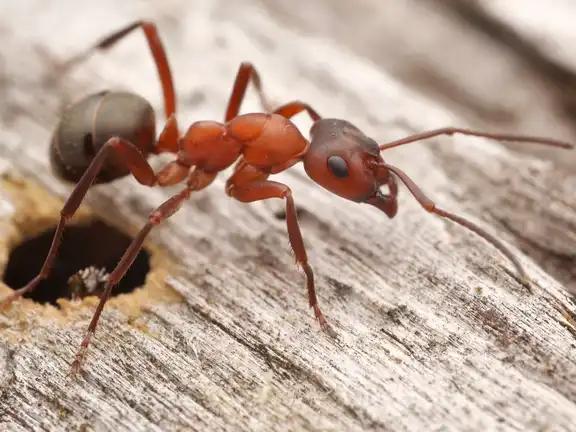
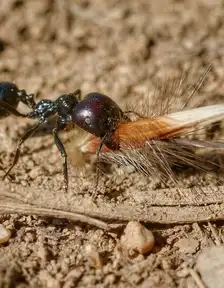
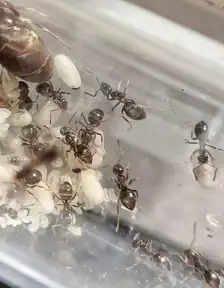
Dull black to dark gray workers with brownish legs that run fast and forage alone, bigger and longer-legged than Lasius niger and less silvery than Formica cinerea. Formica lemani is almost identical and only a microscope (hairs on the pronotum and the legs) tells them apart, so a colony sold as Formica fusca is a best guess within the fusca group, and this sheet describes the species in the strict sense.
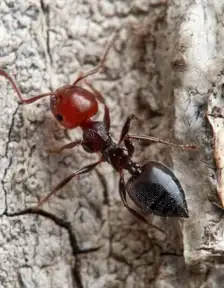
Large workers with a bright red front of the head and thorax, a dark brownish-black gaster and a distinct notch in the middle of the clypeus. The notch separates them from the red wood ants, and Polyergus rufescens, another red slave-maker, has long sickle-shaped jaws, while sanguinea has broad heads and mandibles.
Take the 1-minute species finder quiz and get matched with the perfect species for your experience, your space and what you'd love to watch.