Formica fusca
Linnaeus, 1758
Silky ant
A shy, quick-footed black ant that forgives beginner mistakes and is the classic host of slave-making ants.
Compiled from published sources and keeper reports: I haven't kept this species myself, so treat the care values as starting points.
At a glance
- Nest temperature
- 21–25 °CIn the nest
- Nest humidity
- 50–60 %In the nest
- Hibernation
- 5–8 °COct – Mar
- Nuptial flights
- Jun – AugAfternoon flights
- Workers
- ≈ 4–7 mmAll the same size
- Queen
- ≈ 8–10 mmOne or more queens
- Colony size
- ≈ Reaches 2,000 workersGrowth: Moderate
- Escape risk
- MediumKeep an escape barrier on the outworld
Year at a glance
Hibernation : Oct – Mar
Active season : Apr – Sep
Nuptial flights : Jun – Aug
- Afternoon flights
- Hot days
Months for temperate Europe and the Mediterranean. The weather decides the exact days, so flights can come earlier or later where you live.
How to recognize it
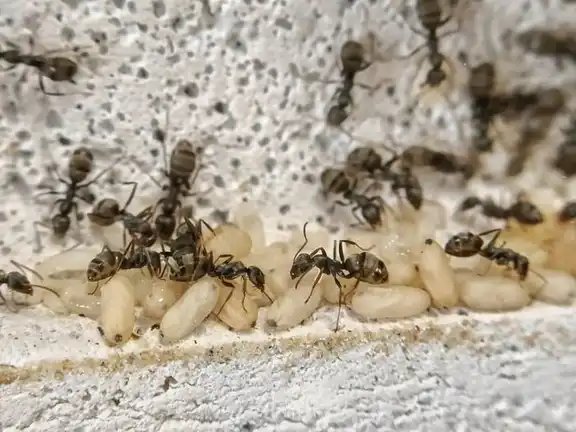
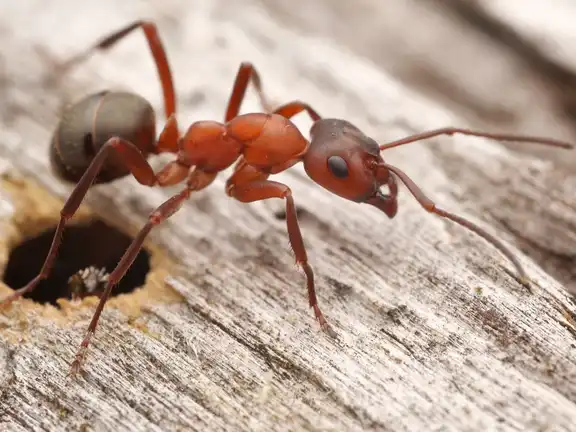
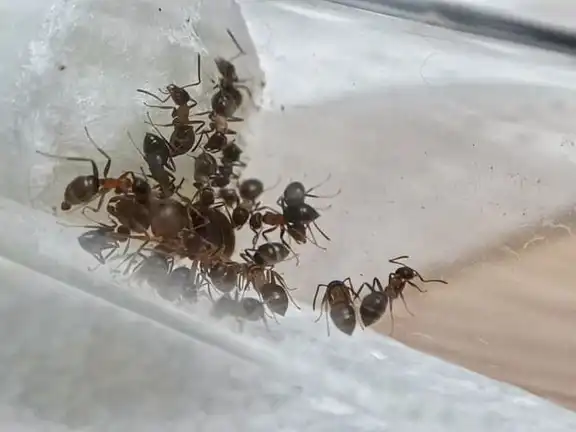
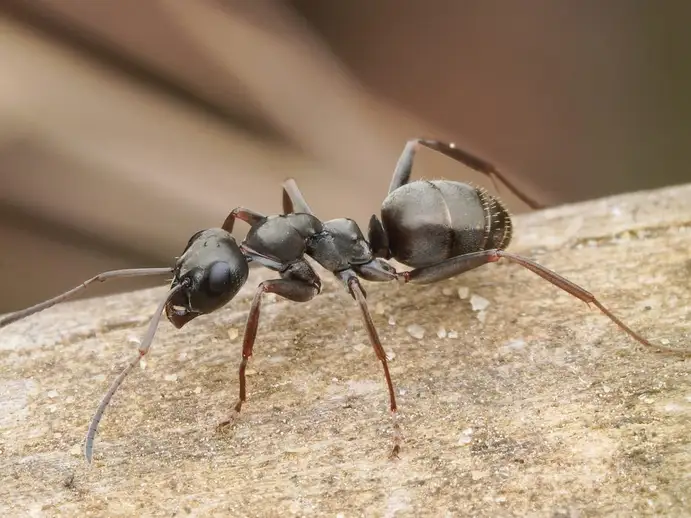
Dull black to dark gray workers with brownish legs that run fast and forage alone, bigger and longer-legged than Lasius niger and less silvery than Formica cinerea. Formica lemani is almost identical and only a microscope (hairs on the pronotum and the legs) tells them apart, so a colony sold as Formica fusca is a best guess within the fusca group, and this sheet describes the species in the strict sense.
Often confused with
- Formica lemani
- Formica cinerea
- Lasius niger
- Workers4–7 mm
- Queen8–10 mm
mm
Biology
- Queens
- One or more queensNew colonies usually start with a single queen, but many grow to hold several queens living together.In the glossary
- Colony founding
- Fully claustralThe queen raises her first workers without eating, living off her wing muscles and fat reserves.In the glossary
- Workers
- All the same sizeAll the workers have about the same size and shape.
- Defense
- Bites · Sprays formic acidNo sting: the workers bite and spray formic acid, which can sting small cuts.
Native range
- Europe
- Asia
Austria, Belgium, Czechia, Denmark, Estonia, Finland, France, Germany, Netherlands, Norway, Poland, Russia, Sweden, Switzerland, United Kingdom
Taxonomy
Formicinae › Formicini
Formica
Care at a glance
Difficulty
Why this rating
- Makes it easier: Fully claustral: the queen needs no food until her first workers arrive
- Makes it harder: Curious workers: keep an escape barrier on the outworld
- Makes it harder: Needs a cold hibernation, for example in a fridge
Food
- Sugar
- Insects
Sugar or honey water for the workers, and insects as protein for the queen and the brood.
Best nests
- 1Ytong nest
- 2Naturalistic setup
- 3Sandwich nest
Notes from keepers
Tip
Give the nest a humid chamber and keep the outworld dry. The species comes from dry, open ground, and keepers report that a moist nest with a dry arena works well.
Watch out
Leave a founding queen alone as much as you can. Keepers report queens that ate almost all their larvae after repeated checks and vibrations, so keep the tube dark, still and closed until the first workers appear.
Watch out
Colonies are skittish: a slight vibration sends the workers running around with the brood. Put the setup on a stable surface and give it room and ventilation, because the workers spray formic acid in cramped containers.
Tip
Do not worry when the queen stops laying in late summer: the colony normally rests through the winter without any brood. Cool it down gradually in autumn, once the last brood has hatched and the workers slow down.
Related posts

How To Hibernate Your Ants - Hibernation Tutorial
In this guide, we’re going to talk about hibernation: What is it? Why do ants need hibernation? Should I hibernate my ants? Let's see!

What To Do After Catching Your First Queen Ant!
In this short guide, you’re going to learn what steps you need to take after catching your very first queen ant! Let's get into it!

How To Make a Test Tube Setup - Ant Keeping Basics
In this tutorial you will learn how to make a test tube setup, the best way to create the optimal environment for a newly mated queen ant!
FAQs
10Because it is the usual victim of slave-making ants, not because it enslaves anyone. Formica sanguinea and Polyergus rufescens raid its nests for pupae and raise the hatched workers as helpers, and every fusca-group species of Fennoscandia has been found in mixed colonies with Formica sanguinea. Its German name, Grauschwarze Sklavenameise, means gray-black slave ant and points to the same habit.
Mostly in the ground, in banks and under stones, and also in old tree stumps and dead wood. It likes dry, open and lightly shaded places such as hedgerows, woodland edges, heaths, clearings and the edges of cities, and its colonies are usually modest, from a few hundred to about two thousand workers.
The workers hunt small insects on their own, and they also drink aphid honeydew and the nectar of plants. They can occupy an aphid colony for a long time and defend it, and they quickly exploit short-lived food sources, sometimes even taking food from Lasius niger workers on their way home.
Formica fusca workers measure 4–7 mm, and the queen measures 8–10 mm.
One or more. Formica fusca colonies are usually founded by a single queen, but many end up with several queens living together.
No. Formica fusca has no sting: the workers bite and spray formic acid, which can sting small cuts.
In temperate Europe and the Mediterranean, Formica fusca usually flies in Jun – Aug. The weather decides the exact days.
Keep the Formica fusca nest at 21–25 °C, with 50–60 % humidity in the brood chambers.
Yes. Hibernate Formica fusca at 5–8 °C, roughly during Oct – Mar.
Keeping Formica fusca is restricted in some countries. Check your local laws before buying or collecting a queen.
Sources and review
- 1AntCat: Formica fusca Linnaeus, 1758 (the catalog of the ants of the world)
Reference · Taxonomy
- 2Collingwood (1979), Fauna Entomologica Scandinavica 8: The Formicidae (Hymenoptera) of Fennoscandia and Denmark, treatment of Formica fusca (Plazi TreatmentBank)
Book · Taxonomy, Biology, Distribution, Nuptial flights
- 3
- 4
- 5
Showing 5 of 30 sources
Last reviewed
- BiologyWell documented
- Care valuesKeeper consensus
- Nuptial flightsKeeper consensus
Legal status
Keeping this species is restricted in some countries. Check your local laws before buying or collecting a queen.
Checked on October 11, 2026
All values are starting points: watch your colony and adjust. Found something wrong or missing?
Suggest a correction