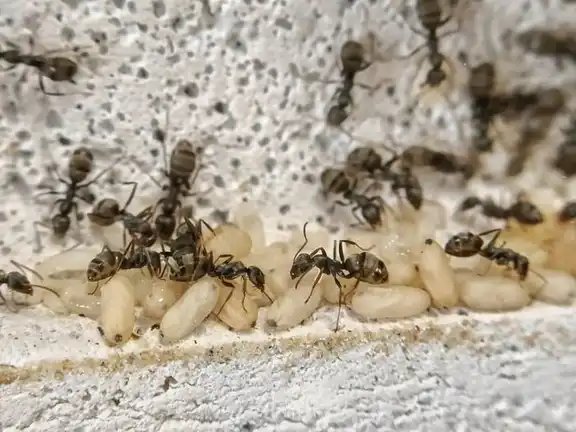
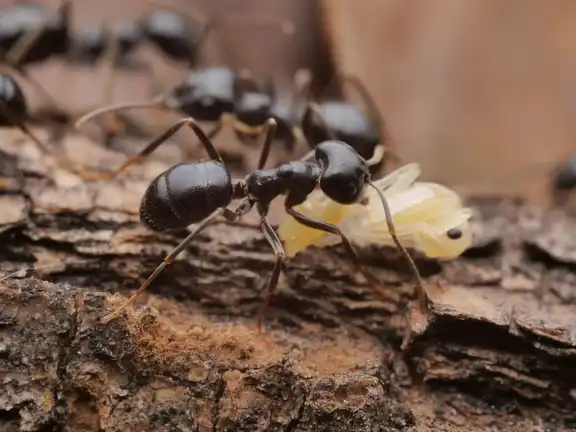
Formica sanguinea
Latreille, 1798
Blood-red ant
A bold red-and-black raider that steals the pupae of other Formica to raise as helpers, and a project for keepers who already know the basics.
Compiled from published sources and keeper reports: I haven't kept this species myself, so treat the care values as starting points.
At a glance
- Nest temperature
- ≈ 21–26 °CIn the nest
- Nest humidity
- 50–60 %In the nest
- Hibernation
- ≈ 5–8 °COct – Mar
- Nuptial flights
- ≈ Jun – Aug
- Workers
- 6–9 mmAll the same size
- Queen
- 9–11 mmOne or more queens
- Colony size
- ≈ Reaches 5,000 workersGrowth: Fast
- Escape risk
- HighEscape artists: use a closed outworld and a good barrier
Year at a glance
Hibernation : Oct – Mar
Active season : Apr – Sep
Nuptial flights : Jun – Aug
Months for temperate Europe and the Mediterranean. The weather decides the exact days, so flights can come earlier or later where you live.
How to recognize it
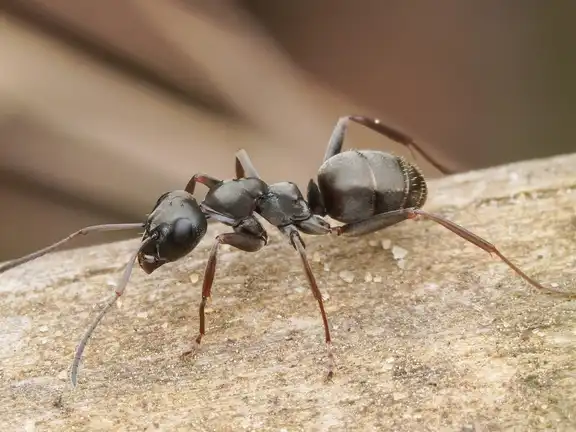
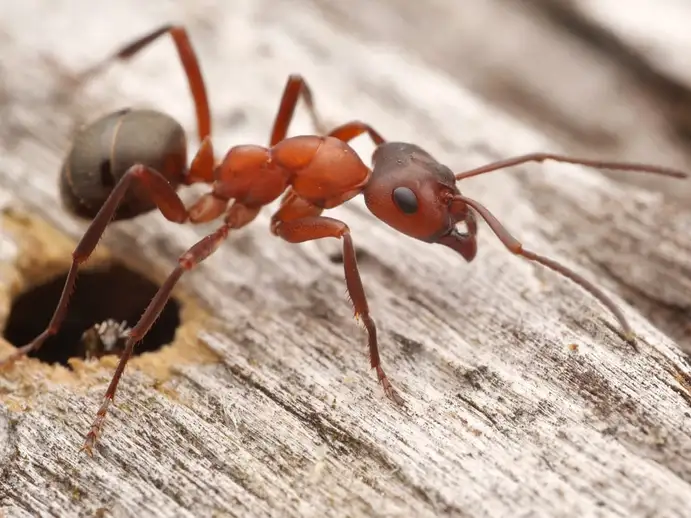
Large workers with a bright red front of the head and thorax, a dark brownish-black gaster and a distinct notch in the middle of the clypeus. The notch separates them from the red wood ants, and Polyergus rufescens, another red slave-maker, has long sickle-shaped jaws, while sanguinea has broad heads and mandibles.
Often confused with
- Formica rufa
- Polyergus rufescens
- Workers6–9 mm
- Queen9–11 mm
mm
Biology
- Queens
- One or more queensNew colonies usually start with a single queen, but many grow to hold several queens living together.In the glossary
- Colony founding
- Social parasiteThe queen needs the workers of a host species to start her colony.In the glossary
- Workers
- All the same sizeAll the workers have about the same size and shape.
- Defense
- Bites · Sprays formic acidNo sting: the workers bite and spray formic acid, which can sting small cuts.
Native range
- Europe
- Asia
Austria, Belgium, Denmark, Finland, France, Germany, Japan, Netherlands, Norway, Poland, Russia, Spain, Sweden, Switzerland, United Kingdom
Taxonomy
Formicinae › Formicini
Formica
Care at a glance
Difficulty
Why this rating
- Makes it harder: A real escape artist that needs an escape-proof setup
- Makes it harder: Social parasite: the queen needs host workers to start
- Makes it harder: Needs a cold hibernation, for example in a fridge
Food
- Sugar
- Insects
Sugar or honey water for the workers, and insects as protein for the queen and the brood.
Best nests
- 1Ytong nest
- 2Naturalistic setup
- 3Sandwich nest
Notes from keepers
Tip
Use Formica fusca as the host: it shares the open, dry habitat of this species and is the one shops and most keepers use. Formica cunicularia also works, but Camponotus, red wood ants and all Myrmicinae are not suitable hosts.
Tip
When you start a queen, give her host pupae and freshly hatched, still pale workers. Keepers report that adult workers from a foreign nest and older, darker workers are often killed, while pupae are accepted.
Watch out
A raid can wipe out a small host colony in a single night, and formic acid can build up in sealed containers and kill the helpers. Connect a host colony only if you can spare it, use a roomy, ventilated arena where you can cut the link at any time, and stay nearby while it happens.
Watch out
Think about space before you start. Keepers report a slow start followed by explosive growth once the colony passes a few hundred workers, and the workers get pushier as they run out of room. Plan a much bigger arena early, and decide what you will do with a very large colony.
Related posts
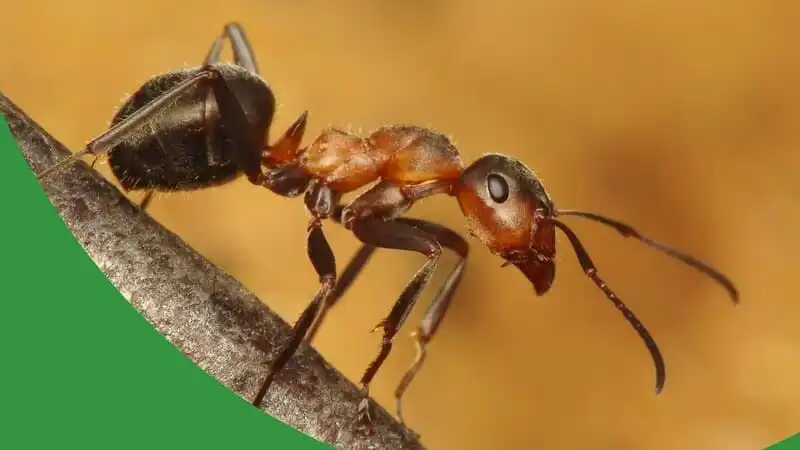
Keeping Slavemaker Ants - The Ant Pod
Keeping slavemaker ants: choosing the right host species, introducing the parasitic queen, brood boosting and the ethics of sacrificing host colonies.

How To Hibernate Your Ants - Hibernation Tutorial
In this guide, we’re going to talk about hibernation: What is it? Why do ants need hibernation? Should I hibernate my ants? Let's see!
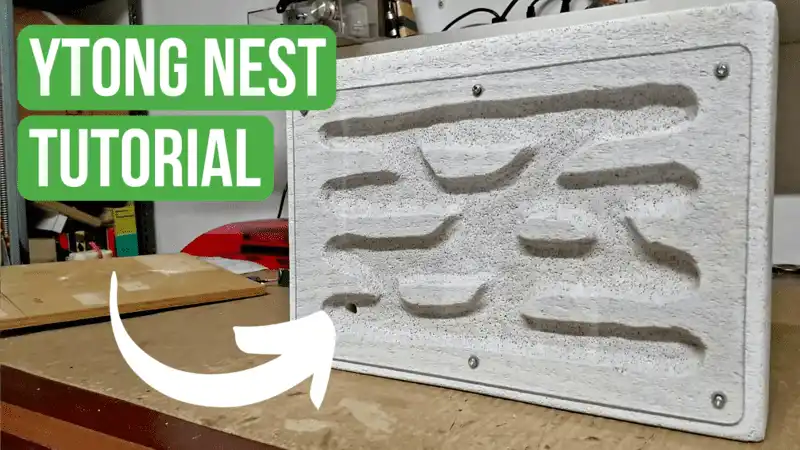
How To Make a Ytong Nest - Ant Keeping Tutorial
In this tutorial, you will learn how to make a Ytong nest for your ant colonies! This is one of the best nest types for many ant species!
FAQs
10A single queen rarely manages it alone. In the wild, colonies spread by splitting, or a young queen enters a nest of a fusca-group host, takes over part of the brood, and the host queen is destroyed. In laboratory trials a queen founded a colony independently only when several queens were housed together, and taking over or being adopted by young host colonies worked better than by mature ones. This is why keepers start queens with host pupae and young host workers.
No. It is a facultative slave-maker, so a colony can live without helpers, and where it has wiped out every other Formica nearby, pure sanguinea colonies are found, usually with many small workers acting as nurses. In mixed colonies the helpers are fully accepted, because the sanguinea workers give them their own scent as a recognition label.
Scouts find the target nest, then the raiders carry off the pupae, some of which are raised as helpers and some eaten. Workers that fight back are killed, while those that stay still are often ignored. In a formicarium a small host colony can be gone by the next morning, so keepers connect only colonies they can spare.
Formica sanguinea workers measure 6–9 mm, and the queen measures 9–11 mm.
One or more. Formica sanguinea colonies are usually founded by a single queen, but many end up with several queens living together.
No. Formica sanguinea has no sting: the workers bite and spray formic acid, which can sting small cuts.
In temperate Europe and the Mediterranean, Formica sanguinea usually flies in Jun – Aug. The weather decides the exact days.
Keep the Formica sanguinea nest at 21–26 °C, with 50–60 % humidity in the brood chambers.
Yes. Hibernate Formica sanguinea at 5–8 °C, roughly during Oct – Mar.
Keeping Formica sanguinea is restricted in some countries. Check your local laws before buying or collecting a queen.
Sources and review
- 1AntCat: Formica sanguinea Latreille, 1798 (the catalog of the ants of the world)
Reference · Taxonomy
- 2Collingwood (1979), Fauna Entomologica Scandinavica 8: The Formicidae (Hymenoptera) of Fennoscandia and Denmark, treatment of Formica sanguinea (Plazi TreatmentBank)
Book · Taxonomy, Biology, Distribution, Nuptial flights
- 3Mori and Le Moli (1998), Journal of Insect Behavior 11: Mating behavior and colony founding of the slave-making ant Formica sanguinea
Paper · Biology, Nuptial flights, Care
- 4
- 5
Showing 5 of 38 sources
Last reviewed
- BiologyWell documented
- Care valuesKeeper consensus
- Nuptial flightsKeeper consensus
Legal status
Keeping this species is restricted in some countries. Check your local laws before buying or collecting a queen.
Checked on October 11, 2026
All values are starting points: watch your colony and adjust. Found something wrong or missing?
Suggest a correction