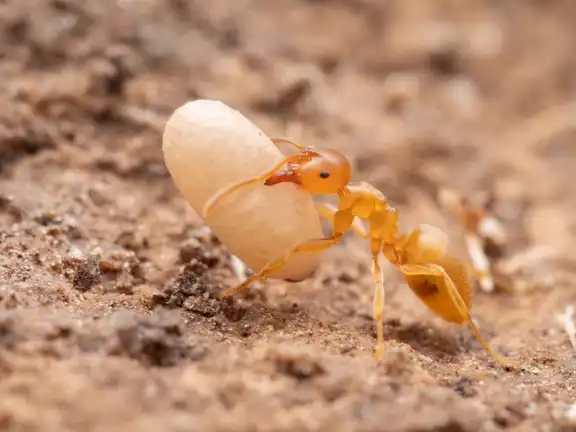
Lasius flavus
Yellow meadow ant
DifficultyBeginner · 2/7
Species comparison
Side by side: difficulty, size, growth, climate, hibernation and nuptial flights, from the data and sources of each species sheet.
| Lasius flavus | Fact | Lasius fuliginosus |
|---|---|---|
| Keeping | ||
| Difficulty | ||
Easier2/7 Beginner | Difficulty | 7/7 Advanced |
| Escape risk | ||
LowerLow | Escape risk | High |
| Diet | ||
SugarInsects | Diet | SugarInsects |
| Best nests | ||
Ytong nest · Sandwich nest · Naturalistic setup | Best nests | Ytong nest · Wooden nest · Test tube setup |
| Colony | ||
| Growth | ||
Moderate | Growth | FasterFast |
| Colony size | ||
Reaches 10,000 workers | Colony size | Reaches 10,000 workers |
| Workers | ||
2–5 mm All the same size | Workers | 4–6 mm All the same size |
| Queen | ||
7–9 mm | Queen | 6–6.5 mm |
| Colony founding | ||
Fully claustral One or more queens | Colony founding | Social parasite One queen |
| Defense | ||
Bites · Sprays formic acid | Defense | Bites · Sprays formic acid |
| Climate | ||
| Nest temperature | ||
20–25 °C | Nest temperature | 20–26 °C |
| Nest humidity | ||
60–70 % | Nest humidity | 50–70 % |
| Hibernation | ||
5–8 °C Oct – Mar | Hibernation | 5–8 °C Oct – Mar |
| Nuptial flights | ||
Jul – Sep Hot days · Calm weather | Nuptial flights | May – Jul |
| Native range | ||
Europe, North Africa, Middle East, Asia | Native range | Europe, Middle East, Asia |
Lasius flavus
Lasius fuliginosus
Lasius flavus : Hibernation: Oct – Mar, Nuptial flights: Jul – Sep
Lasius fuliginosus : Hibernation: Oct – Mar, Nuptial flights: May – Jul
Months for temperate Europe and the Mediterranean. The weather decides the exact days, so flights can come earlier or later where you live.
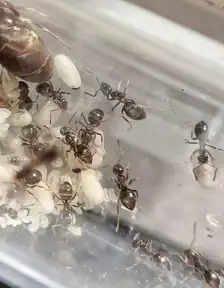
Small workers of a clear yellow to brownish-yellow color with tiny eyes, living almost entirely underground or under stones in grass; unlike the similar Lasius umbratus, they have no erect hairs on the antennal scapes and shins. The queen is light to dark brown with a paler underside, so she is often mistaken for a Lasius niger queen.
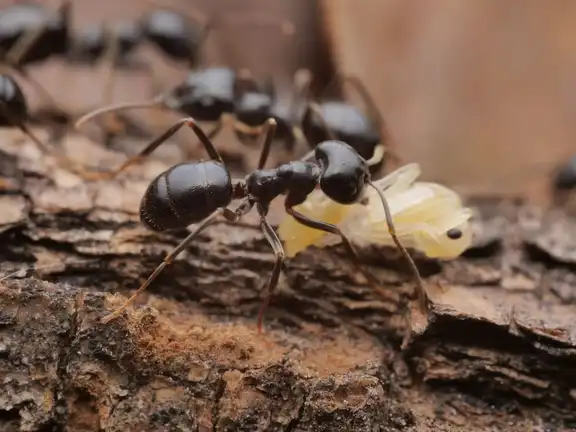
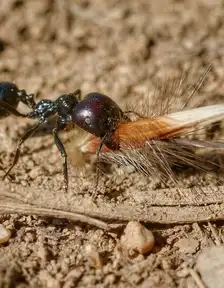
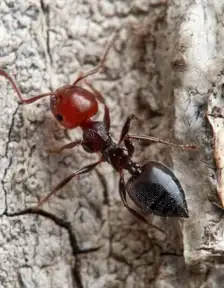
Glossy jet black workers with a big, heart-shaped head that sets them apart from other black Lasius such as Lasius niger, often seen running in dense trails up trees to tend aphids. The queen is also glossy black and barely larger than a big worker, and the nest gives off a sweetish smell.
Take the 1-minute species finder quiz and get matched with the perfect species for your experience, your space and what you'd love to watch.