Lasius flavus
(Fabricius, 1782)
Yellow meadow ant
A shy, golden-yellow soil dweller that herds root aphids and raises grassy mounds in old meadows.
Compiled from published sources and keeper reports: I haven't kept this species myself, so treat the care values as starting points.
At a glance
- Nest temperature
- 20–25 °CIn the nest
- Nest humidity
- 60–70 %In the nest
- Hibernation
- 5–8 °COct – Mar
- Nuptial flights
- Jul – SepAfternoon flights
- Workers
- 2–5 mmAll the same size
- Queen
- 7–9 mmOne or more queens
- Colony size
- No data yetGrowth: Moderate
- Escape risk
- LowCalm ants that rarely try to escape
Year at a glance
Hibernation : Oct – Mar
Active season : Apr – Sep
Nuptial flights : Jul – Sep
- Afternoon flights
- Hot days
- Calm weather
Months for temperate Europe and the Mediterranean. The weather decides the exact days, so flights can come earlier or later where you live.
How to recognize it
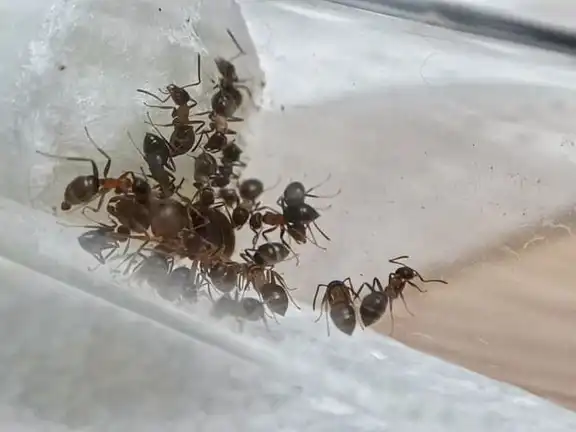
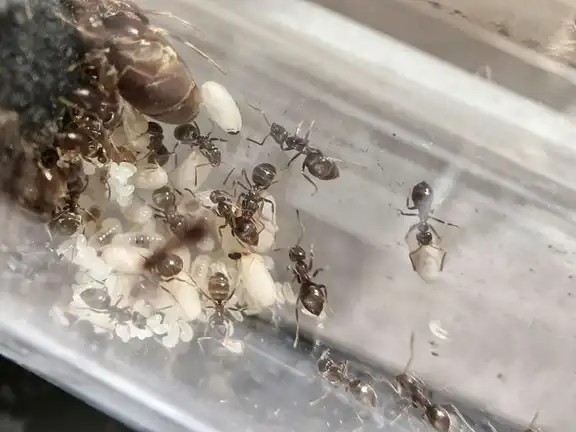
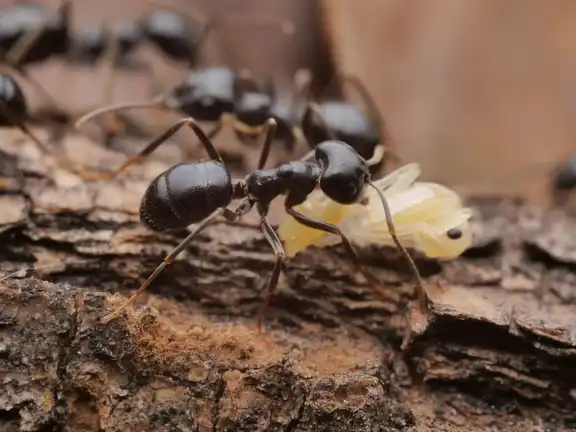
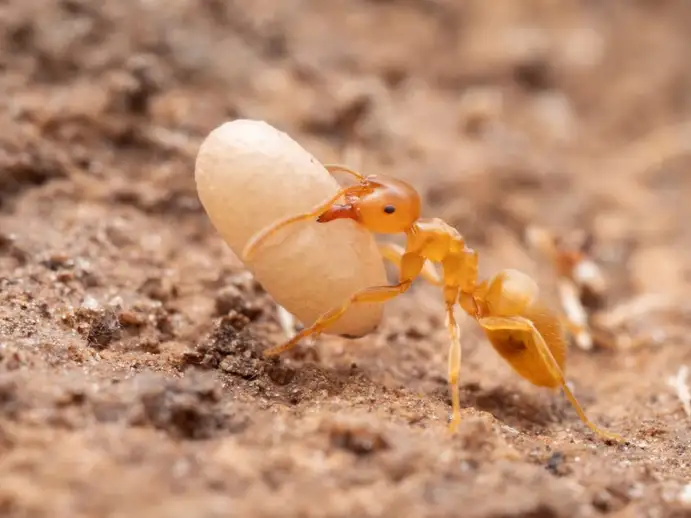
Small workers of a clear yellow to brownish-yellow color with tiny eyes, living almost entirely underground or under stones in grass; unlike the similar Lasius umbratus, they have no erect hairs on the antennal scapes and shins. The queen is light to dark brown with a paler underside, so she is often mistaken for a Lasius niger queen.
Often confused with
- Lasius niger
- Lasius umbratus
- Lasius mixtus
- Workers2–5 mm
- Queen7–9 mm
mm
Biology
- Queens
- One or more queensNew colonies usually start with a single queen, but many grow to hold several queens living together.In the glossary
- Colony founding
- Fully claustralThe queen raises her first workers without eating, living off her wing muscles and fat reserves.In the glossary
- Workers
- All the same sizeAll the workers have about the same size and shape.
- Defense
- Bites · Sprays formic acidNo sting: the workers bite and spray formic acid, which can sting small cuts.
Native range
- Europe
- North Africa
- Middle East
- Asia
Austria, Belgium, Denmark, Finland, France, Germany, Italy, Netherlands, Norway, Poland, Russia, Spain, Sweden, Switzerland, United Kingdom
Taxonomy
Formicinae › Lasiini
Lasius
Care at a glance
Difficulty
Why this rating
- Makes it easier: Calm workers that rarely try to escape
- Makes it easier: Fully claustral: the queen needs no food until her first workers arrive
- Makes it harder: Needs a cold hibernation, for example in a fridge
Food
- Sugar
- Insects
Sugar or honey water for the workers, and insects as protein for the queen and the brood.
Best nests
- 1Ytong nest
- 2Sandwich nest
- 3Naturalistic setup
Notes from keepers
Tip
In the wild they live mostly on honeydew from root aphids, so keep honey or sugar water on offer whenever the colony is active and add small soft insects, like fruit flies, for the brood.
Tip
They are soil dwellers that suffer when the nest dries out. Give them a nest that stays moist, such as a Ytong, gypsum or soil-based one, with a drier corner they can retreat to.
Tip
A small outworld is enough: keepers report that they rarely try to climb out, so escapes are much less of a worry than with Lasius niger.
Watch out
Colonies grow slowly compared with other Lasius, so expect a small colony for the first years and leave a founding queen undisturbed in her test tube.
Related posts
What To Do After Catching Your First Queen Ant!
In this short guide, you’re going to learn what steps you need to take after catching your very first queen ant! Let's get into it!

How To Hibernate Your Ants - Hibernation Tutorial
In this guide, we’re going to talk about hibernation: What is it? Why do ants need hibernation? Should I hibernate my ants? Let's see!
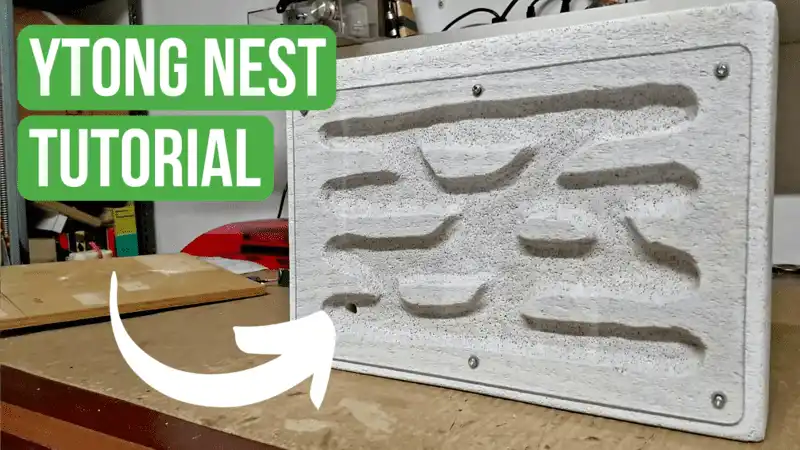
How To Make a Ytong Nest - Ant Keeping Tutorial
In this tutorial, you will learn how to make a Ytong nest for your ant colonies! This is one of the best nest types for many ant species!
FAQs
10No. In nature the workers live mostly on honeydew from root aphids that they tend in their tunnels, which is why they are rarely seen above ground. Keepers raise colonies without aphids using honey or sugar water plus small insects.
The mound is a sun-warmed nest for the brood. A field study found that mounds shaded from direct sunlight stayed much cooler, probably cool enough to slow the development and reproduction of the colony. Their mounds are made mostly of soil and produce little heat of their own, so the ants depend on the sun, which is why the mounds sit in open, sunny grassland and can last for many years.
A very long time. A lab record of 22.5 years is reported for a Lasius flavus queen, among the longest lifespans recorded for ant queens. A healthy colony can therefore last for many years.
Lasius flavus workers measure 2–5 mm, and the queen measures 7–9 mm.
One or more. Lasius flavus colonies are usually founded by a single queen, but many end up with several queens living together.
No. Lasius flavus has no sting: the workers bite and spray formic acid, which can sting small cuts.
In temperate Europe and the Mediterranean, Lasius flavus usually flies in Jul – Sep. The weather decides the exact days.
Keep the Lasius flavus nest at 20–25 °C, with 60–70 % humidity in the brood chambers.
Yes. Hibernate Lasius flavus at 5–8 °C, roughly during Oct – Mar.
Lasius flavus is not on the EU list of invasive alien species and is not protected in the countries we checked. Rules differ between countries and can change, so check your local laws first.
Sources and review
- 1AntCat: Lasius flavus
Reference · Taxonomy, Distribution
- 2AntWiki: Lasius flavus
Reference · Biology, Distribution, Nuptial flights
- 3Collingwood (1979), Fauna Entomologica Scandinavica 8: The Formicidae (Hymenoptera) of Fennoscandia and Denmark, treatment of Lasius flavus (Plazi TreatmentBank)
Book · Taxonomy, Biology, Distribution, Nuptial flights
- 4BWARS: Lasius flavus (Bees, Wasps and Ants Recording Society)
Reference · Biology, Distribution, Nuptial flights
- 5
Showing 5 of 23 sources
Last reviewed
- BiologyWell documented
- Care valuesKeeper consensus
- Nuptial flightsWell documented
Legal status
Not on the EU list of invasive alien species and not protected in the countries we checked. Rules differ between countries and can change, so check your local laws before buying or collecting a queen.
Checked on October 11, 2026
All values are starting points: watch your colony and adjust. Found something wrong or missing?
Suggest a correction