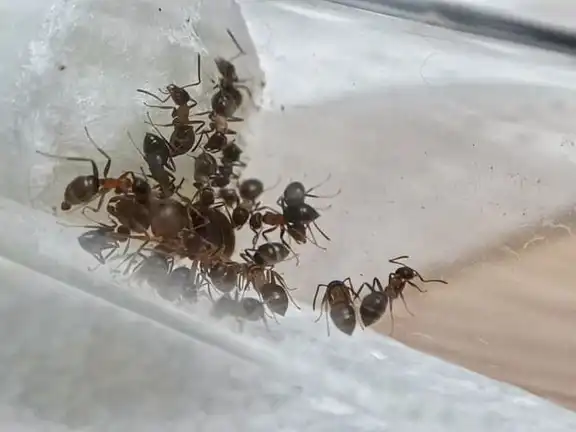
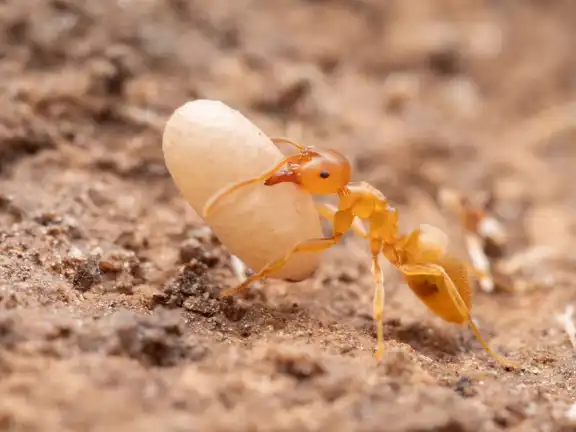
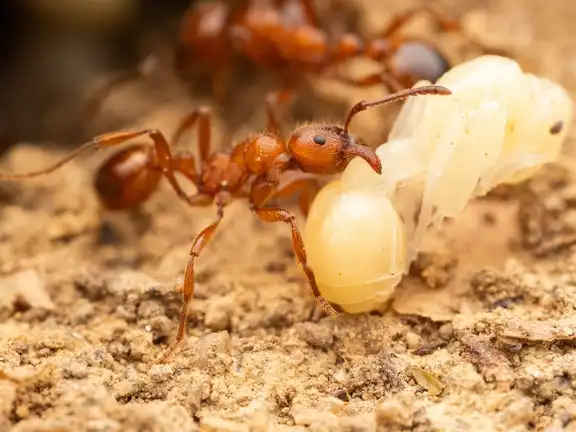
Lasius fuliginosus
(Latreille, 1798)
Jet black ant
A glossy black, sweet-smelling carton builder that cannot start a colony without borrowing another ant's workers.
Compiled from published sources and keeper reports: I haven't kept this species myself, so treat the care values as starting points.
At a glance
- Nest temperature
- 20–26 °CIn the nest
- Nest humidity
- ≈ 50–70 %In the nest
- Hibernation
- 5–8 °COct – Mar
- Nuptial flights
- ≈ May – Jul
- Workers
- 4–6 mmAll the same size
- Queen
- 6–6.5 mmOne queen
- Colony size
- No data yetGrowth: Fast
- Escape risk
- HighEscape artists: use a closed outworld and a good barrier
Year at a glance
Hibernation : Oct – Mar
Active season : Apr – Sep
Nuptial flights : May – Jul
Months for temperate Europe and the Mediterranean. The weather decides the exact days, so flights can come earlier or later where you live.
How to recognize it
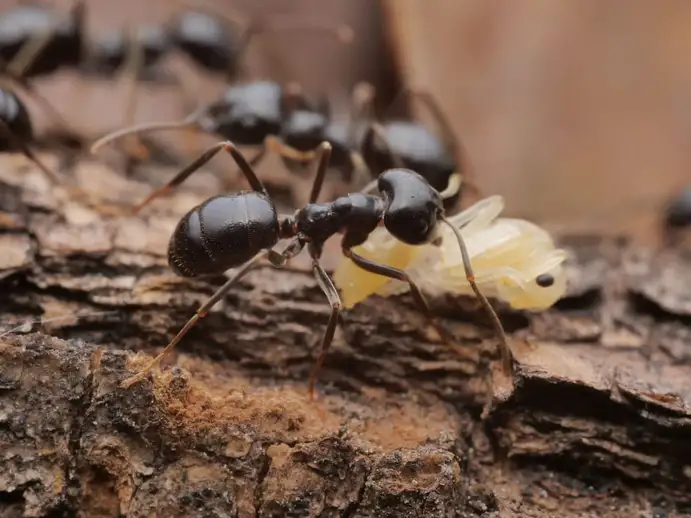
Glossy jet black workers with a big, heart-shaped head that sets them apart from other black Lasius such as Lasius niger, often seen running in dense trails up trees to tend aphids. The queen is also glossy black and barely larger than a big worker, and the nest gives off a sweetish smell.
Often confused with
- Workers4–6 mm
- Queen6–6.5 mm
mm
Biology
- Queens
- One queenEach colony has a single queen: never put two queens together once the first workers arrive.In the glossary
- Colony founding
- Social parasiteThe queen needs the workers of a host species to start her colony.In the glossary
- Workers
- All the same sizeAll the workers have about the same size and shape.
- Defense
- Bites · Sprays formic acidNo sting: the workers bite and spray formic acid, which can sting small cuts.
Native range
- Europe
- Middle East
- Asia
Austria, Belgium, Denmark, Finland, France, Germany, Hungary, Italy, Netherlands, Poland, Russia, Spain, Sweden, Switzerland, United Kingdom
Taxonomy
Formicinae › Lasiini
Lasius
Care at a glance
Difficulty
Why this rating
- Makes it harder: A real escape artist that needs an escape-proof setup
- Makes it harder: Social parasite: the queen needs host workers to start
- Makes it harder: Needs a cold hibernation, for example in a fridge
Food
- Sugar
- Insects
Sugar or honey water for the workers, and insects as protein for the queen and the brood.
Best nests
- 1Ytong nest
- 2Wooden nest
- 3Test tube setup
Notes from keepers
Tip
Most keepers start with an adopted queen: soon after the flight, put her with a group of young Lasius workers and plenty of cocoons. The natural host is a queenless Lasius umbratus colony. Lasius niger workers and cocoons have also worked in captivity, although niger workers are poor at opening the queen's first cocoons, which her young workers need to get out.
Tip
Give the colony wood. A Ytong nest with a chamber of crumbly rotten wood or sawdust lets the workers build their own carton walls, and they sort the brood by age, with eggs in the dampest rooms and cocoons in the driest.
Watch out
They are very hungry for sugar and protein, so keep diluted honey and fresh water always available and feed the brood generously: a colony with lots of larvae empties its honey supply and takes insects every day.
Watch out
They are strong climbers and determined diggers, so use a well-tested escape barrier and check it often: one diary colony crossed an oil-based barrier until the mixture was strengthened, and later tried to dig out through an old barrier layer.
Related posts
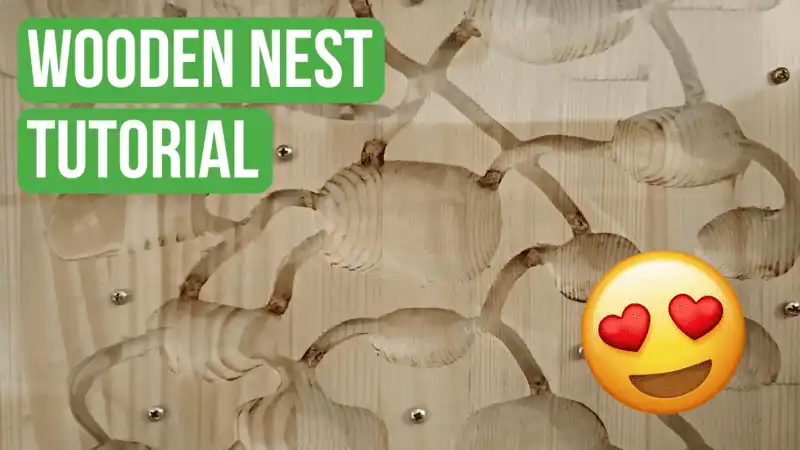
How to Make a Wooden Nest - Ant Keeping Tutorial
In this tutorial, you will learn how to make a wooden nest for your ant colonies! This type of nest is perfect for species that love wood!

How To Hibernate Your Ants - Hibernation Tutorial
In this guide, we’re going to talk about hibernation: What is it? Why do ants need hibernation? Should I hibernate my ants? Let's see!
Keeping Slavemaker Ants - The Ant Pod
Keeping slavemaker ants: choosing the right host species, introducing the parasitic queen, brood boosting and the ethics of sacrificing host colonies.
FAQs
10No. A young queen is a temporary social parasite: she enters a nest of another Lasius ant, usually a queenless Lasius umbratus colony, and its workers raise her first brood until her own daughters replace them. Lasius umbratus is itself a parasite of Lasius niger, so Lasius fuliginosus is called a hyperparasite. Keepers have also started queens with Lasius niger workers and cocoons.
Mostly chewed wood glued together with saliva and sugary honeydew, shaped into thin, wavy walls inside hollow trees, stumps, fence posts or beams. A fungus called Cladosporium myrmecophilum grows through the carton and strengthens it. The ants do not eat the fungus.
When the nest is disturbed, the workers release scented secretions from their mandibular glands, including dendrolasin. To people it is just a sweetish smell, but to other ants it works as an alarm signal and helps drive off rival ants.
Lasius fuliginosus workers measure 4–6 mm, and the queen measures 6–6.5 mm.
Just one. Lasius fuliginosus is monogyne: each colony has a single queen, so never put two queens together once the first workers arrive.
No. Lasius fuliginosus has no sting: the workers bite and spray formic acid, which can sting small cuts.
In temperate Europe and the Mediterranean, Lasius fuliginosus usually flies in May – Jul. The weather decides the exact days.
Keep the Lasius fuliginosus nest at 20–26 °C, with 50–70 % humidity in the brood chambers.
Yes. Hibernate Lasius fuliginosus at 5–8 °C, roughly during Oct – Mar.
Lasius fuliginosus is not on the EU list of invasive alien species and is not protected in the countries we checked. Rules differ between countries and can change, so check your local laws first.
Sources and review
- 1AntCat: Lasius fuliginosus
Reference · Taxonomy, Distribution
- 2AntWiki: Lasius fuliginosus
Reference · Biology, Distribution, Nuptial flights
- 3Collingwood (1979), Fauna Entomologica Scandinavica 8: The Formicidae (Hymenoptera) of Fennoscandia and Denmark, treatment of Lasius fuliginosus (Plazi TreatmentBank)
Book · Taxonomy, Biology, Distribution, Nuptial flights
- 4
- 5
Showing 5 of 24 sources
Last reviewed
- BiologyWell documented
- Care valuesKeeper consensus
- Nuptial flightsFew sources
Legal status
Not on the EU list of invasive alien species and not protected in the countries we checked. Rules differ between countries and can change, so check your local laws before buying or collecting a queen.
Checked on October 11, 2026
All values are starting points: watch your colony and adjust. Found something wrong or missing?
Suggest a correction