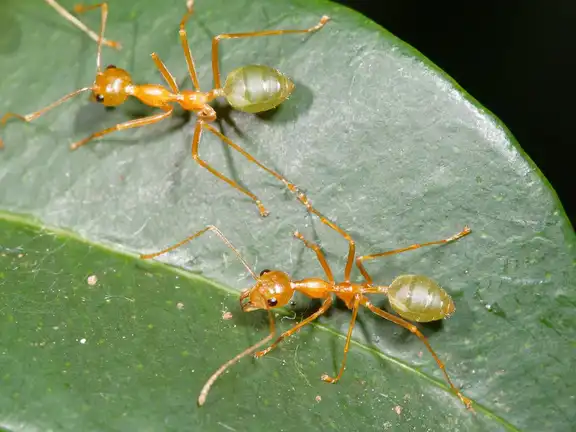
Oecophylla smaragdina
Asian weaver ant
DifficultyAdvanced · 7/7
Species comparison
Side by side: difficulty, size, growth, climate, hibernation and nuptial flights, from the data and sources of each species sheet.
| Oecophylla smaragdina | Fact | Polyrhachis dives |
|---|---|---|
| Keeping | ||
| Difficulty | ||
7/7 Advanced | Difficulty | Easier5/7 Intermediate |
| Escape risk | ||
High | Escape risk | High |
| Diet | ||
SugarInsects | Diet | SugarInsects |
| Best nests | ||
Naturalistic setup · Test tube setup | Best nests | Naturalistic setup · Acrylic nest · Ytong nest |
| Colony | ||
| Growth | ||
Fast | Growth | Fast |
| Colony size | ||
Reaches 2,000 workers | Colony size | Reaches 3,000 workers |
| Workers | ||
5–8 mm majors up to 10 mm | Workers | 5–8 mm All the same size |
| Queen | ||
20–25 mm | Queen | 9–12 mm |
| Colony founding | ||
Fully claustral One or more queens | Colony founding | Semi-claustral Several queens |
| Defense | ||
Bites · Sprays formic acid | Defense | Bites · Sprays formic acid |
| Climate | ||
| Nest temperature | ||
24–30 °C | Nest temperature | 25–30 °C |
| Nest humidity | ||
65–85 % | Nest humidity | 60–80 % |
| Hibernation | ||
Not needed | Hibernation | Not needed |
| Nuptial flights | ||
No flights | Nuptial flights | No flights |
| Native range | ||
Asia, Oceania | Native range | Asia, Oceania |
Oecophylla smaragdina
Polyrhachis dives
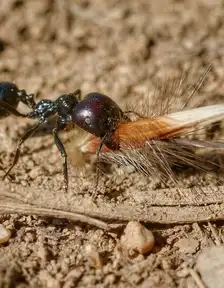
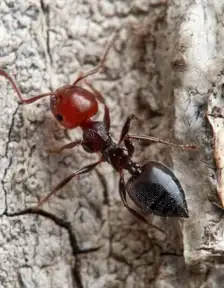
Slender, long-legged workers of two size classes, small minors and larger majors, orange to brown in Asian stock and with a green gaster in Australian stock, plus large green to brown queens. Shops sell both forms under the same name, and the leaf nests stitched together with larval silk give the species away; the only other Oecophylla, O. longinoda, lives in Africa, and the black, spiny Polyrhachis dives is a different kind of weaver ant.
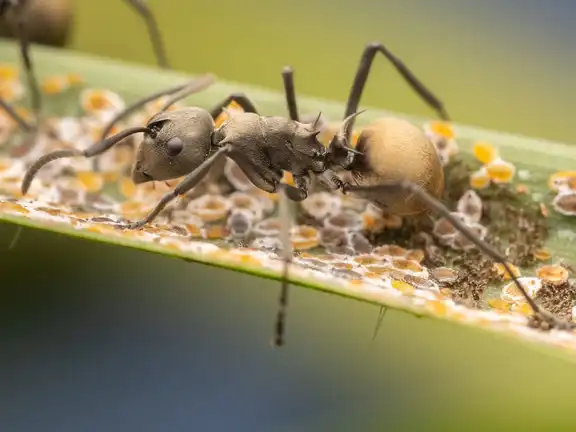
Black workers, all of one size, with a silvery to golden sheen from the fine hairs on the gaster and the sharp spines on the thorax and the petiole that give the genus Polyrhachis its name. When disturbed they sit back on the gaster with its tip pointed up, ready to spray acid, and unlike the long-legged, orange or green Oecophylla weaver ants they are black and spiny.
Take the 1-minute species finder quiz and get matched with the perfect species for your experience, your space and what you'd love to watch.