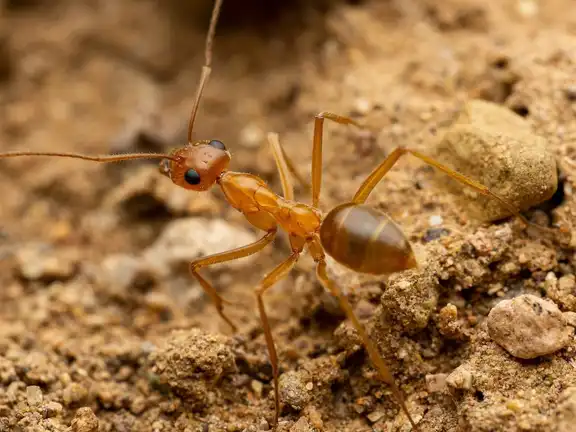
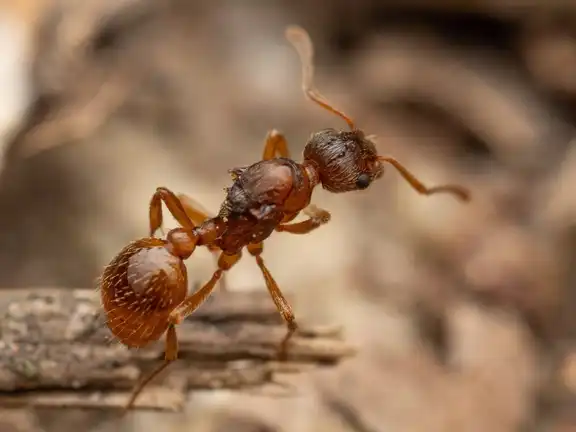
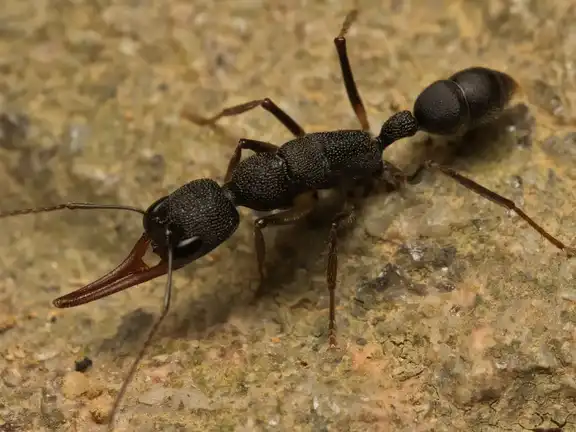
Polyrhachis dives
Smith, 1857
Asian spiny weaver ant
A spiny, fast-moving climber that weaves its nests with silk from its own larvae and lives in colonies with many queens.
Compiled from published sources and keeper reports: I haven't kept this species myself, so treat the care values as starting points.
At a glance
- Nest temperature
- ≈ 25–30 °CIn the nest
- Nest humidity
- 60–80 %In the nest
- Hibernation
- Not needed
- Nuptial flights
- No data yet
- Workers
- ≈ 5–8 mmAll the same size
- Queen
- ≈ 9–12 mmSeveral queens
- Colony size
- ≈ Reaches 3,000 workersGrowth: Fast
- Escape risk
- HighEscape artists: use a closed outworld and a good barrier
How to recognize it
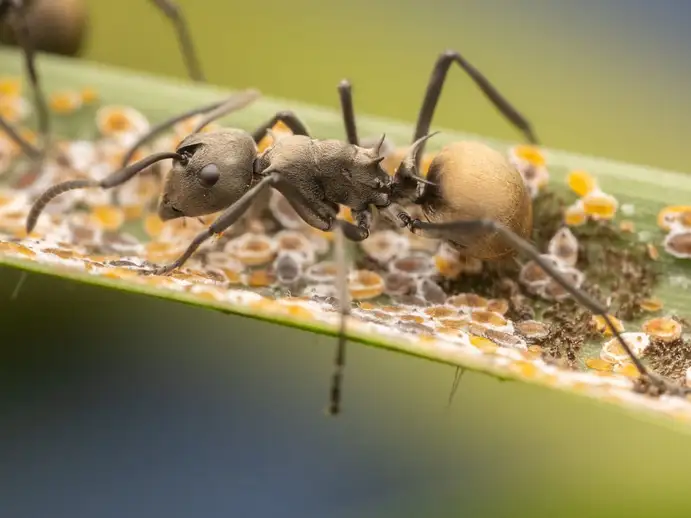
Black workers, all of one size, with a silvery to golden sheen from the fine hairs on the gaster and the sharp spines on the thorax and the petiole that give the genus Polyrhachis its name. When disturbed they sit back on the gaster with its tip pointed up, ready to spray acid, and unlike the long-legged, orange or green Oecophylla weaver ants they are black and spiny.
Often confused with
- Polyrhachis ammon
- Oecophylla smaragdina
- Workers5–8 mm
- Queen9–12 mm
mm
Biology
- Queens
- Several queensColonies live with several queens, which helps them grow faster.In the glossary
- Colony founding
- Semi-claustralThe queen has to leave her chamber to hunt and eat while she raises her first workers.In the glossary
- Workers
- All the same sizeAll the workers have about the same size and shape.
- Defense
- Bites · Sprays formic acidNo sting: the workers bite and spray formic acid, which can sting small cuts.
Native range
- Asia
- Oceania
Australia, Cambodia, China, India, Indonesia, Japan, Malaysia, Myanmar (Burma), Papua New Guinea, Philippines, Singapore, Sri Lanka, Taiwan, Thailand, Vietnam
Taxonomy
Formicinae › Camponotini
Polyrhachis
Care at a glance
Difficulty
Why this rating
- Makes it easier: No hibernation to manage
- Makes it harder: A real escape artist that needs an escape-proof setup
- Makes it harder: Semi-claustral: the founding queen has to be fed
- Makes it harder: Needs constant warmth all year round
Food
- Sugar
- Insects
Sugar or honey water for the workers, and insects as protein for the queen and the brood.
Best nests
- 1Naturalistic setup
- 2Acrylic nest
- 3Ytong nest
Notes from keepers
Tip
Give them a tall setup with cork bark, twigs, moss and dry plant material, and let them weave their own nest. Keepers report colonies moving into a cork piece, a hollow seed pod or a cavity in wood, while a heated nest basin offered to them was ignored at first.
Watch out
Seal the setup completely and do not rely on an oil film alone. One keeper saw a worker, startled by a twitching cricket, race far up an oiled glass wall before slipping back, and a new colony vanished through a small gap into the electronics of a thermometer housing. Keepers combine an oil or PTFE barrier with talcum, a tight lid and fine gauze.
Tip
Offer pre-killed prey. Frozen crickets were accepted as readily as fresh ones, and one colony ignored live prey altogether. The workers are also very thirsty and hungry, so keep a water dish in the outworld at all times and expect a lot of food to disappear.
Watch out
Do not expect to start with a single founding queen. Colonies reach hobbyists as offshoots with a queen or a few queens and their workers, and how lone queens found a colony is poorly documented. Keep the starter colony in a small space: one keeper whose colony stagnated suspected that the offered space was far too big.
Related posts
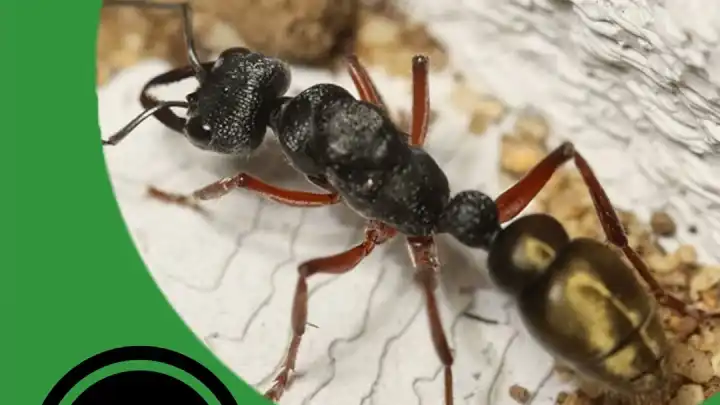
Keeping Semi-Claustral Ants - The Ant Pod
Semi-claustral queens need food from day one. Lynn and Jake share what they learned founding Manica rubida and Myrmica rubra colonies, and how to set them up.
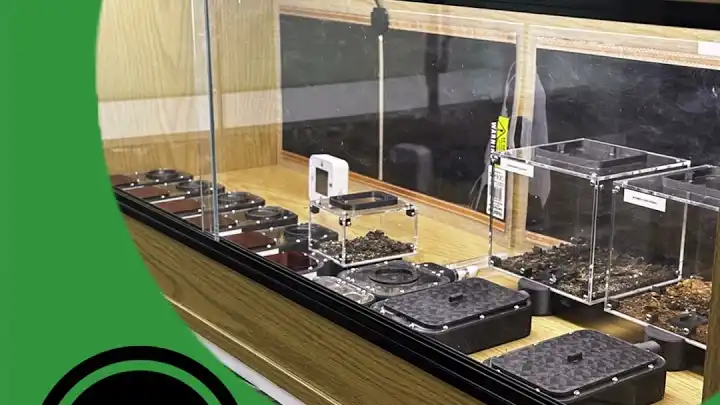
You Should Have A Vivarium! - The Ant Pod
Why a vivarium (VIF) is worth it for exotic ants: heat wires with thermostats, probe placement and how to get your colonies through a heatwave.
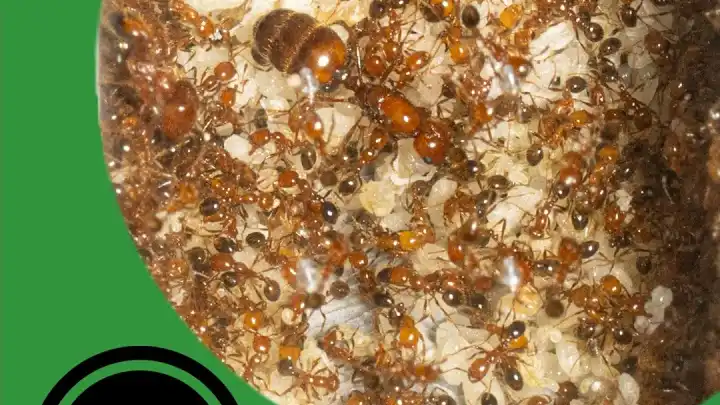
When Ant Colonies Grow Out of Control! - The Ant Pod
What do you do when an ant colony gets too big? Lynn, Jake and Alex cover overcrowding, cleaning large outworlds, diet control and downsizing.
FAQs
9Its larvae spin silk, and the workers use it to bind leaves, grass, moss and debris into nests, on low branches, among grass, on stones or on bark. It shares the name with the Oecophylla weaver ants, but the two belong to different tribes and build differently: Oecophylla workers form chains to pull living leaves together, while Polyrhachis dives needs much less teamwork and builds nests of silk, carton and plant debris.
In the wild it can be huge. A survey on Okinawa found that neighboring nests exchanged colony members, so that many nests formed one polycalic colony of about a million workers. Captive colonies stay much smaller, from several hundred up to a few thousand workers in keeper reports, but they grow fast and need a lot of vertical space.
Yes. Polyrhachis vicina Roger, 1863 is a junior synonym of Polyrhachis dives Smith, 1857, so research and traditional-medicine texts that use the name vicina describe the same ant. In that literature it is called the Chinese black ant, and it has been used as a traditional edible insect and in Chinese medicine.
Polyrhachis dives workers measure 5–8 mm, and the queen measures 9–12 mm.
Several. Polyrhachis dives is polygyne: colonies live with more than one queen, which helps them grow faster.
No. Polyrhachis dives has no sting: the workers bite and spray formic acid, which can sting small cuts.
Keep the Polyrhachis dives nest at 25–30 °C, with 60–80 % humidity in the brood chambers.
No. Polyrhachis dives stays active all year and does not need a winter rest.
Polyrhachis dives is not on the EU list of invasive alien species and is not protected in the countries we checked. Rules differ between countries and can change, so check your local laws first.
Sources and review
- 1
- 2
- 3
- 4
- 5
Showing 5 of 34 sources
Last reviewed
- BiologyKeeper consensus
- Care valuesKeeper consensus
- Nuptial flightsFew sources
Legal status
Not on the EU list of invasive alien species and not protected in the countries we checked. Rules differ between countries and can change, so check your local laws before buying or collecting a queen.
Checked on October 11, 2026
All values are starting points: watch your colony and adjust. Found something wrong or missing?
Suggest a correction