Oecophylla smaragdina
(Fabricius, 1775)
Asian weaver ant
Long-legged tree ants that stitch living leaves into nests with silk from their own larvae, and an expert-level challenge to keep.
Compiled from published sources and keeper reports: I haven't kept this species myself, so treat the care values as starting points.
At a glance
- Nest temperature
- ≈ 24–30 °CIn the nest
- Nest humidity
- ≈ 65–85 %In the nest
- Hibernation
- Not needed
- Nuptial flights
- No data yetMorning flights
- Workers
- ≈ 5–8 mmmajors up to 10 mm
- Queen
- ≈ 20–25 mmOne or more queens
- Colony size
- ≈ Reaches 2,000 workersGrowth: Fast
- Escape risk
- HighEscape artists: use a closed outworld and a good barrier
How to recognize it
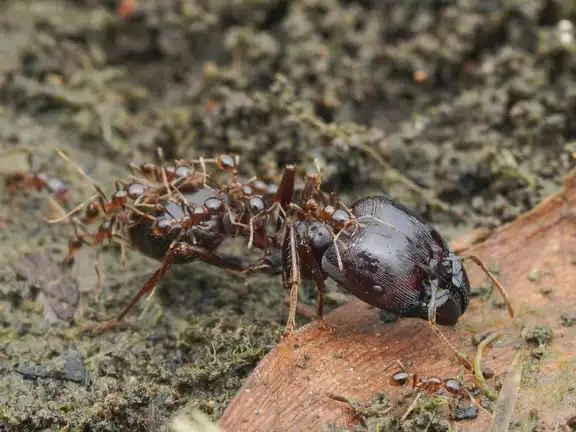
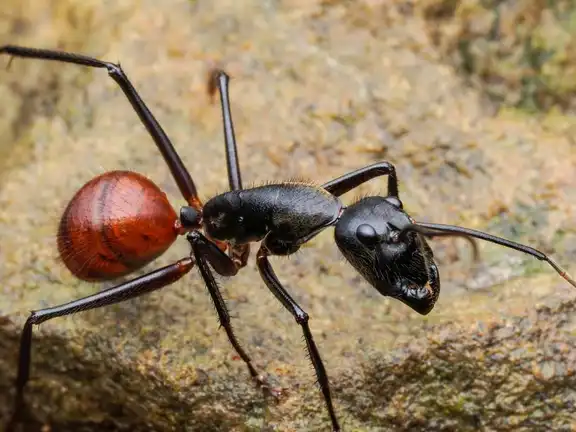
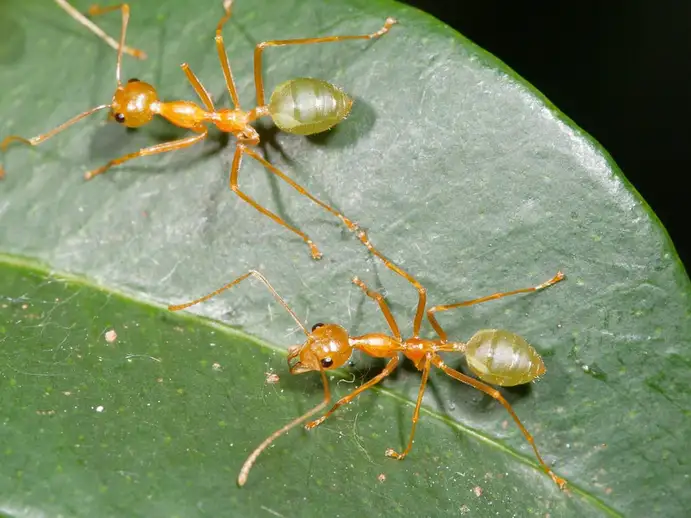
Slender, long-legged workers of two size classes, small minors and larger majors, orange to brown in Asian stock and with a green gaster in Australian stock, plus large green to brown queens. Shops sell both forms under the same name, and the leaf nests stitched together with larval silk give the species away; the only other Oecophylla, O. longinoda, lives in Africa, and the black, spiny Polyrhachis dives is a different kind of weaver ant.
Often confused with
- Oecophylla longinoda
- Polyrhachis dives
- Workers5–8 mm
- Majors≤ 10 mm
- Queen20–25 mm
mm
Biology
- Queens
- One or more queensNew colonies usually start with a single queen, but many grow to hold several queens living together.In the glossary
- Colony founding
- Fully claustralThe queen raises her first workers without eating, living off her wing muscles and fat reserves.In the glossary
- Workers
- Minors and majorsThe workers come in two distinct castes: small minors and big-headed majors.In the glossary
- Defense
- Bites · Sprays formic acidNo sting: the workers bite and spray formic acid, which can sting small cuts.
Native range
- Asia
- Oceania
Australia, Bangladesh, Cambodia, China, India, Indonesia, Laos, Malaysia, Myanmar (Burma), Papua New Guinea, Philippines, Singapore, Sri Lanka, Thailand, Vietnam
Taxonomy
Formicinae › Oecophyllini
Oecophylla
Care at a glance
Difficulty
Why this rating
- Makes it easier: Fully claustral: the queen needs no food until her first workers arrive
- Makes it easier: No hibernation to manage
- Makes it harder: A real escape artist that needs an escape-proof setup
- Makes it harder: Needs constant warmth all year round
Food
- Sugar
- Insects
Sugar or honey water for the workers, and insects as protein for the queen and the brood.
Best nests
- 1Naturalistic setup
- 2Test tube setup
Notes from keepers
Tip
Build the setup around a living, healthy host plant with large, flexible leaves, such as weeping fig (Ficus benjamina), coffee or citrus. One keeper's nests on money tree leaves turned brown and had to be rebuilt every few weeks, which stressed a small colony, while nests on coffee and hibiscus lasted for months.
Watch out
Wash the plant, replace its soil and let it stand for a while before the ants move in. Nursery plants are often treated with insecticide, and keepers lost workers to the residues, in one case from new plants that had been washed, repotted and left for months before they joined a running colony.
Watch out
Treat them as escape artists with an extraordinary grip: a colony in a 2024 keeping report walked over an oil barrier without trouble. Combine a tight lid with fine mesh, or stand the pot on an island surrounded by water with a drop of dish soap to break the surface tension.
Tip
Leave founding queens alone. Keep the tube still, dark and damp, because dry tubes are a common reason founding fails, and avoid checking too often, since stressed workers eat their own brood.
Related posts
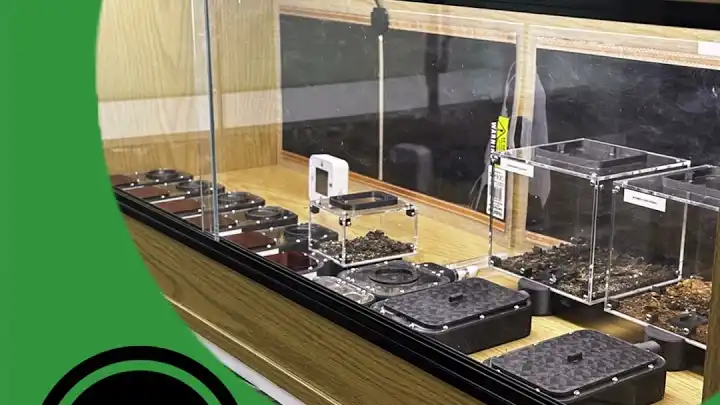
You Should Have A Vivarium! - The Ant Pod
Why a vivarium (VIF) is worth it for exotic ants: heat wires with thermostats, probe placement and how to get your colonies through a heatwave.
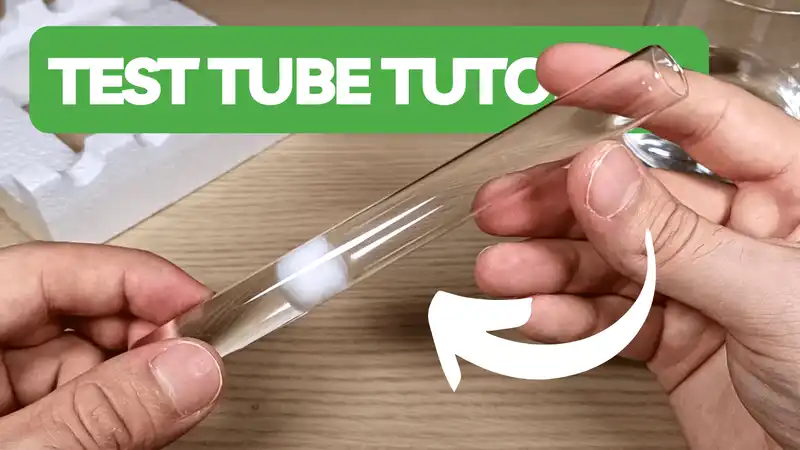
How To Make a Test Tube Setup - Ant Keeping Basics
In this tutorial you will learn how to make a test tube setup, the best way to create the optimal environment for a newly mated queen ant!
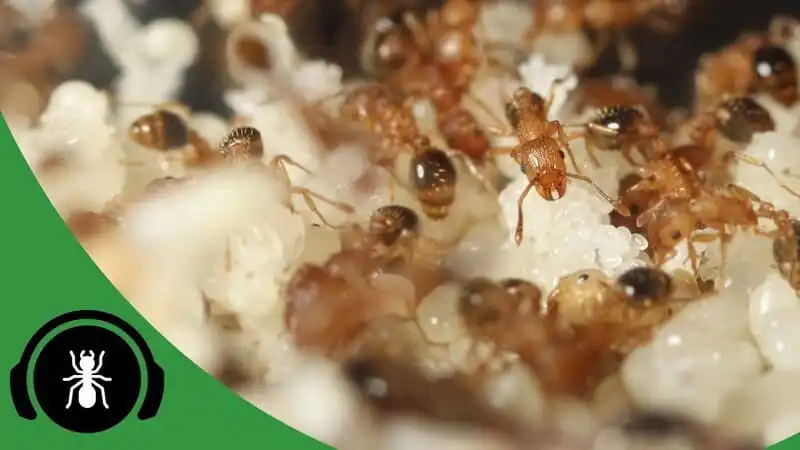
The Best Conditions To Keep Ants - The Ant Pod
Temperature, humidity and pests: heating mats, hydration setups, how to spot and control mites, and why the best setup mimics each species' natural habitat.
FAQs
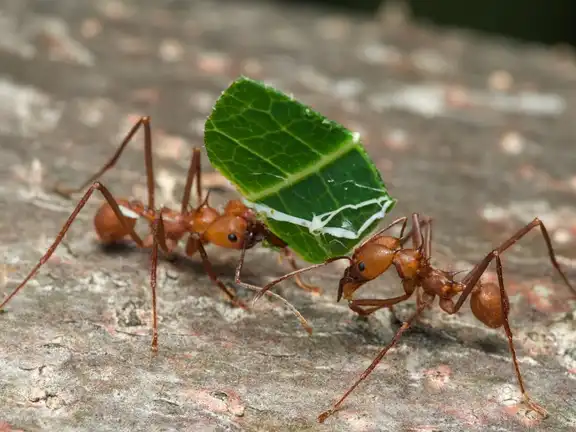
9Workers pull the edges of living leaves together, often by forming chains in which each ant grips the next. Other workers carry larvae in their jaws and move them along the seam like glue guns, so the silk from the larvae binds the leaves. The nests are built at night, a large one can be finished in well under a day, and one colony used 151 nests spread over 12 trees.
After mating, the queen finds a nest site, sheds her wings and lays 25 to 40 eggs within about a week. At 25 °C the first larvae appear after about 10 days, the first pupae after about 3 weeks and the first worker after about 39 days, and at 30 °C the first worker comes out after about 28 days. The queen seals her chamber with silk from the first larvae and opens it one to three days after the first worker emerges.
It depends on where the colony comes from. Workers from northern Australia have a green gaster and the queens are green, while Asian workers are mostly orange to brown, and the queens range from bright green to orange or light brown. Shops sell both forms as Oecophylla smaragdina, so ask the seller where a colony comes from.
Oecophylla smaragdina workers measure 5–8 mm, with majors up to 10 mm, and the queen measures 20–25 mm.
One or more. Oecophylla smaragdina colonies are usually founded by a single queen, but many end up with several queens living together.
No. Oecophylla smaragdina has no sting: the workers bite and spray formic acid, which can sting small cuts.
Keep the Oecophylla smaragdina nest at 24–30 °C, with 65–85 % humidity in the brood chambers.
No. Oecophylla smaragdina stays active all year and does not need a winter rest.
Oecophylla smaragdina is not on the EU list of invasive alien species and is not protected in the countries we checked. Rules differ between countries and can change, so check your local laws first.
Sources and review
- 1
- 2
- 3
- 4
- 5
Showing 5 of 30 sources
Last reviewed
- BiologyWell documented
- Care valuesKeeper consensus
- Nuptial flightsFew sources
Legal status
Not on the EU list of invasive alien species and not protected in the countries we checked. Rules differ between countries and can change, so check your local laws before buying or collecting a queen.
Checked on October 11, 2026
All values are starting points: watch your colony and adjust. Found something wrong or missing?
Suggest a correction