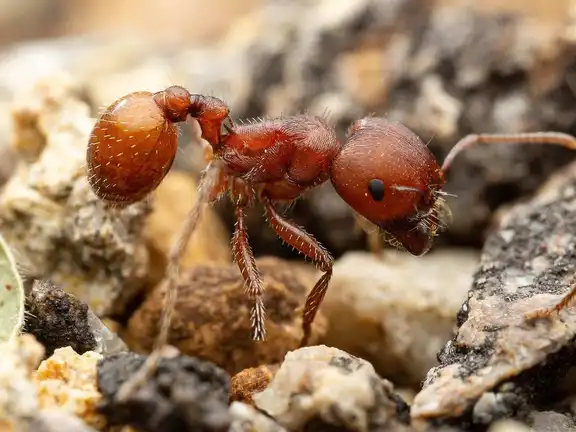
Pogonomyrmex barbatus
Red harvester ant
DifficultyBeginner · 4/7
Species comparison
Side by side: difficulty, size, growth, climate, hibernation and nuptial flights, from the data and sources of each species sheet.
| Pogonomyrmex barbatus | Fact | Pogonomyrmex rugosus |
|---|---|---|
| Keeping | ||
| Difficulty | ||
Easier4/7 Beginner | Difficulty | 5/7 Intermediate |
| Escape risk | ||
Medium | Escape risk | Medium |
| Diet | ||
SeedsInsectsSugar | Diet | SeedsInsectsSugar |
| Best nests | ||
Naturalistic setup · Ytong nest · Acrylic nest | Best nests | Naturalistic setup · Ytong nest · Acrylic nest |
| Colony | ||
| Growth | ||
Moderate | Growth | Moderate |
| Colony size | ||
Reaches 10,000 workers | Colony size | Reaches 8,000 workers |
| Workers | ||
6–10 mm All the same size | Workers | 7–9 mm All the same size |
| Queen | ||
11–13 mm | Queen | 12–14 mm |
| Colony founding | ||
Fully claustral One queen | Colony founding | Fully claustral One queen |
| Defense | ||
Bites · Painful sting | Defense | Bites · Painful sting |
| Climate | ||
| Nest temperature | ||
26–32 °C | Nest temperature | 26–30 °C |
| Nest humidity | ||
50–70 % Seed granaries: 30–50 % | Nest humidity | 50–70 % Seed granaries: 30–50 % |
| Hibernation | ||
12–16 °C Dec – Feb | Hibernation | 13–16 °C Dec – Feb |
| Nuptial flights | ||
Jun – Sep After rain · Hot days · Calm weather | Nuptial flights | Jul – Sep After rain · Hot days · Humid air |
| Native range | ||
North America | Native range | North America |
Pogonomyrmex barbatus
Pogonomyrmex rugosus
Pogonomyrmex barbatus : Hibernation: Dec – Feb, Nuptial flights: Jun – Sep
Pogonomyrmex rugosus : Hibernation: Dec – Feb, Nuptial flights: Jul – Sep
Months in the native range of the species. The weather decides the exact days, and colonies kept indoors can follow a different rhythm.
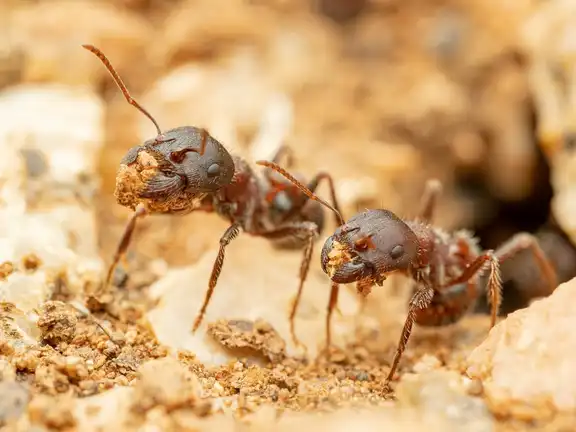
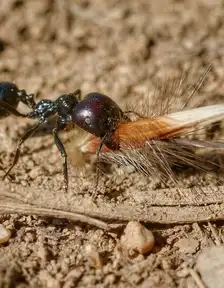
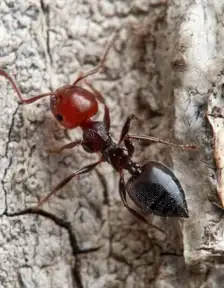
Large workers, rusty red to deep red all over, with a beard of long hairs under the head, fine ridges on the head and a pair of spines at the back of the thorax. Pogonomyrmex rugosus is dark brown to blackish with a lighter, contrasting gaster and coarse, widely spaced head ridges, while P. occidentalis and P. californicus are smaller, and californicus has no thorax spines.
Big, heavy-built workers, reddish brown to almost black (desert populations often have a lighter, redder gaster), with coarse, wrinkled ridges on the head and thorax and a beard of long hairs under the head. Color usually tells it from the red harvester ant Pogonomyrmex barbatus, which is red all over, while P. rugosus is darker with a contrasting lighter gaster. When the color is unclear, look at the head: P. rugosus has coarse, widely spaced ridges, P. barbatus fine ones.
Take the 1-minute species finder quiz and get matched with the perfect species for your experience, your space and what you'd love to watch.