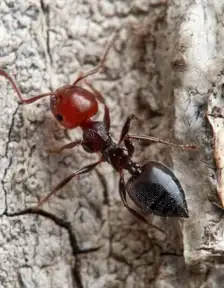
Pogonomyrmex barbatus
(Smith, 1858)
Red harvester ant
A big red seed harvester of southwestern deserts and grasslands, with a painful sting and colonies that live for 20 to 30 years.
Compiled from published sources and keeper reports: I haven't kept this species myself, so treat the care values as starting points.
At a glance
- Nest temperature
- ≈ 26–32 °CIn the nest
- Nest humidity
- ≈ 50–70 %Seed granaries: 30–50 %
- Hibernation
- ≈ 12–16 °CDec – Feb · recommended
- Nuptial flights
- Jun – SepAfternoon flights
- Workers
- ≈ 6–10 mmAll the same size
- Queen
- ≈ 11–13 mmOne queen
- Colony size
- ≈ Reaches 10,000 workersGrowth: Moderate
- Escape risk
- MediumKeep an escape barrier on the outworld
Year at a glance
Hibernation : Dec – Feb
Active season : Mar – Nov
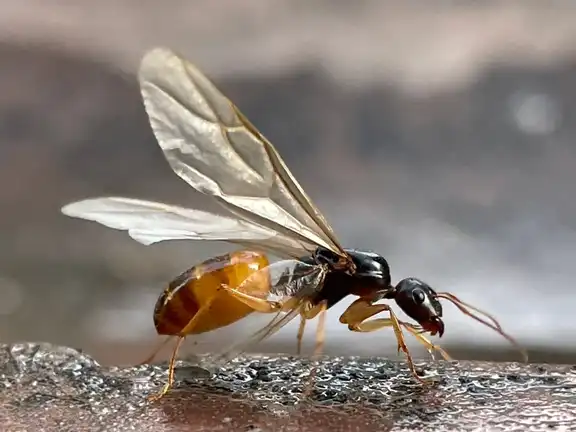
Nuptial flights : Jun – Sep
- Afternoon flights
- After rain
- Hot days
- Calm weather
Months in the native range of the species. The weather decides the exact days, and colonies kept indoors can follow a different rhythm.
How to recognize it
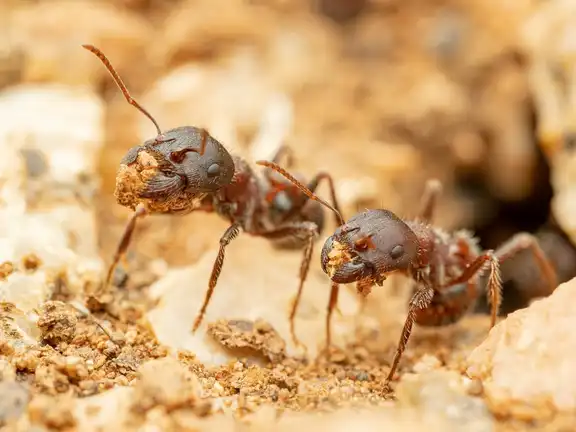
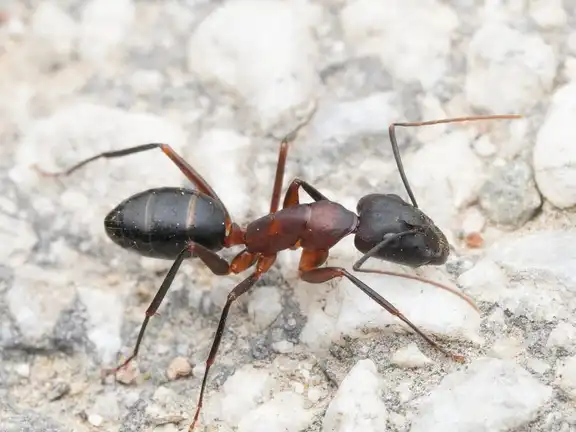
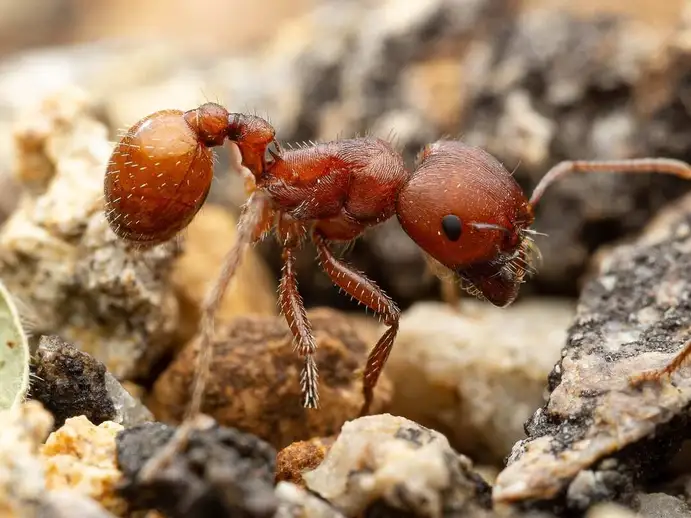
Large workers, rusty red to deep red all over, with a beard of long hairs under the head, fine ridges on the head and a pair of spines at the back of the thorax. Pogonomyrmex rugosus is dark brown to blackish with a lighter, contrasting gaster and coarse, widely spaced head ridges, while P. occidentalis and P. californicus are smaller, and californicus has no thorax spines.
Often confused with
- Pogonomyrmex rugosus
- Pogonomyrmex occidentalis
- Pogonomyrmex californicus
- Workers6–10 mm
- Queen11–13 mm
mm
Biology
- Queens
- One queenEach colony has a single queen: never put two queens together once the first workers arrive.In the glossary
- Colony founding
- Fully claustralThe queen raises her first workers without eating, living off her wing muscles and fat reserves.In the glossary
- Workers
- All the same sizeAll the workers have about the same size and shape.
- Defense
- Bites · Painful stingThe sting is very painful and can cause strong reactions: always handle the colony with care.
Native range
- North America
Mexico, United States
Taxonomy
Myrmicinae › Pogonomyrmecini
Pogonomyrmex
Care at a glance
Difficulty
Why this rating
- Makes it easier: Fully claustral: the queen needs no food until her first workers arrive
- Makes it easier: Stores seeds, so a missed feeding is not a problem
- Makes it harder: Curious workers: keep an escape barrier on the outworld
- Makes it harder: Needs a humidity gradient, with dry granaries and humid brood chambers
- Makes it harder: Colonies get huge and need room to expand
- Makes it harder: The workers can sting
Food
- Seeds
- Insects
- Sugar
A seed harvester: seeds can feed the whole colony, with insects and sugar as extras.
Best nests
- 1Naturalistic setup
- 2Ytong nest
- 3Acrylic nest
Notes from keepers
Tip
Heat is what makes them grow. Keep the warm end of the nest at about 30 °C with a heat cable or mat and let the rest stay cooler. Sellers report that brood develops much more slowly below about 24 °C and that colonies barely grow at plain room temperature.
Watch out
Honey water alone is not enough. One keeper fed eight young colonies only honey water and watched their brood shrink, and was told to leave out crushed seeds and give insects two to three times a week. Offer small seeds such as Kentucky bluegrass, dandelion or chia, and remove any that sprout or turn moldy.
Tip
A founding queen can raise her first workers without food, but she does need moisture: in a lab study, water was the main factor in founding success. One keeper warns that Pogonomyrmex do not last long in a test tube alone, so move the young colony to a sand or soil setup with a damp corner. Give water through a plugged tube, not an open dish, since workers drown even in small drops.
Watch out
In the United States, moving any ant across state lines needs a USDA PPQ 526 permit. Buy only from a seller whose permit covers your state, since sellers may ship this species only to the states where it is native, or collect a local queen after the summer rains, which needs no USDA permit.
Related posts
How To Catch Your First Queen Ant!
In this short article, we’re going to learn how to catch our very first queen ant, the mother of all the members of the colony!
How To Care for Messor barbarus
In this guide, you will learn how to care for Messor barbarus! Temperature, humidity, food, hibernation, nest type... and much more!
How To Hibernate Your Ants - Hibernation Tutorial
In this guide, we’re going to talk about hibernation: What is it? Why do ants need hibernation? Should I hibernate my ants? Let's see!
FAQs
10About 20 to 30 years, usually in the same nest. In a population censused every year since the 1980s near Rodeo, New Mexico, a colony grows from about 2,000 workers at 2 years old to a stable 10,000 or so at 5 years. From 4 or 5 years old, it sends winged queens and males to the yearly mating flight. In one genetic study there, only about a quarter of the colonies old enough to reproduce had daughter colonies on the study site.
Without any leader. Foragers leave the nest at a rate set by how often nestmates come back with seeds, so a good harvest draws more ants out, and foraging stops when the day gets too hot and dry. In Deborah Gordon's long-term study, colonies that foraged less on dry days, which costs them less water, raised more daughter colonies and lived just as long.
In many populations of southeastern Arizona and southwestern New Mexico, the species is split into two genetic lineages. Daughters of parents from the same lineage become queens, while daughters of parents from different lineages become workers. A queen therefore needs males of both lineages to raise both workers and new queens, and she mates with many males. In eastern populations, such as those in Texas, caste depends on the environment, as in most ants.
Pogonomyrmex barbatus workers measure 6–10 mm, and the queen measures 11–13 mm.
Just one. Pogonomyrmex barbatus is monogyne: each colony has a single queen, so never put two queens together once the first workers arrive.
Yes, and it hurts. Pogonomyrmex barbatus workers have a very painful sting that can cause strong reactions in sensitive people, so always handle the colony with care.
In its native range, Pogonomyrmex barbatus usually flies in Jun – Sep. The weather decides the exact days.
Keep the Pogonomyrmex barbatus nest at 26–32 °C, with 50–70 % humidity in the brood chambers.
Not strictly, but it helps. A cooler winter rest at 12–16 °C, roughly during Dec – Feb, keeps Pogonomyrmex barbatus colonies healthy.
Pogonomyrmex barbatus is not on the EU list of invasive alien species and is not protected in the countries we checked. Rules differ between countries and can change, so check your local laws first.
Sources and review
- 1
- 2
- 3
- 4
- 5
Showing 5 of 42 sources
Last reviewed
- BiologyWell documented
- Care valuesKeeper consensus
- Nuptial flightsKeeper consensus
Legal status
Not on the EU list of invasive alien species and not protected in the countries we checked. Rules differ between countries and can change, so check your local laws before buying or collecting a queen.
Checked on October 26, 2026
All values are starting points: watch your colony and adjust. Found something wrong or missing?
Suggest a correction