Acrylic Nest
Definition
An ant nest made of clear acrylic layers stacked and screwed together to form the chambers, giving a great view of the colony and an escape-proof, easy-to-clean structure.
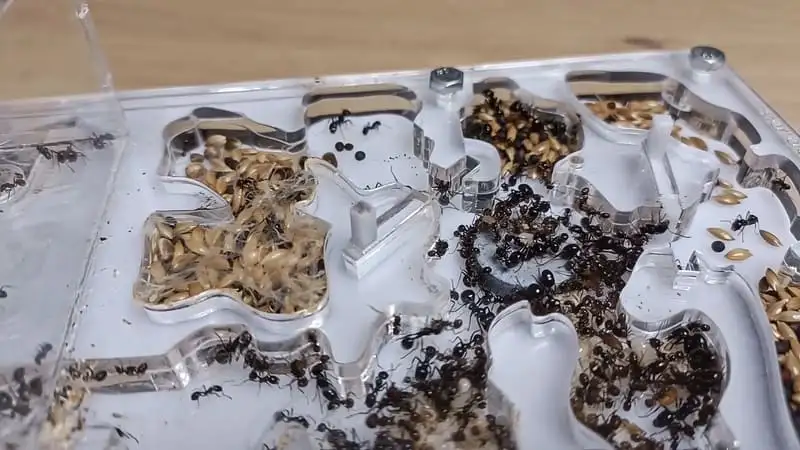
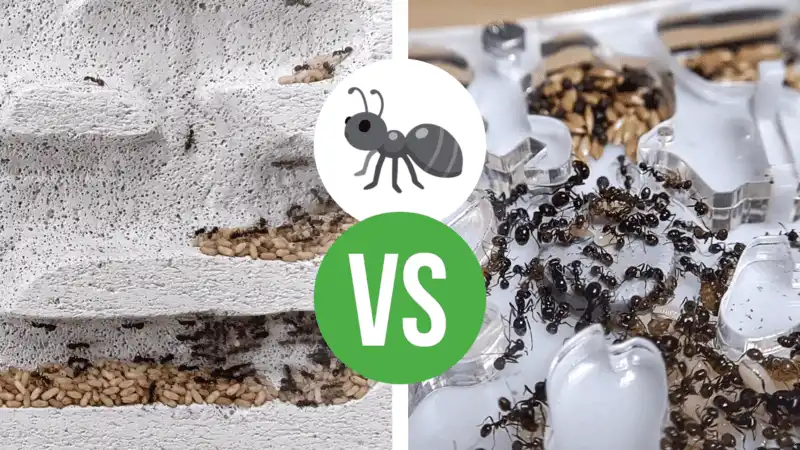
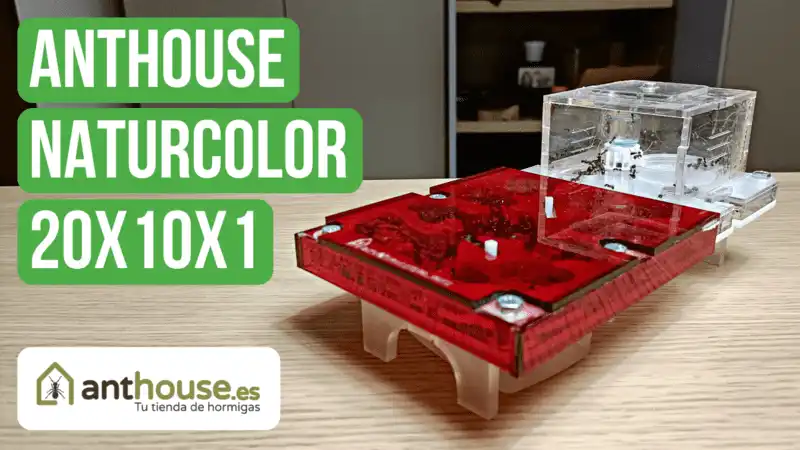
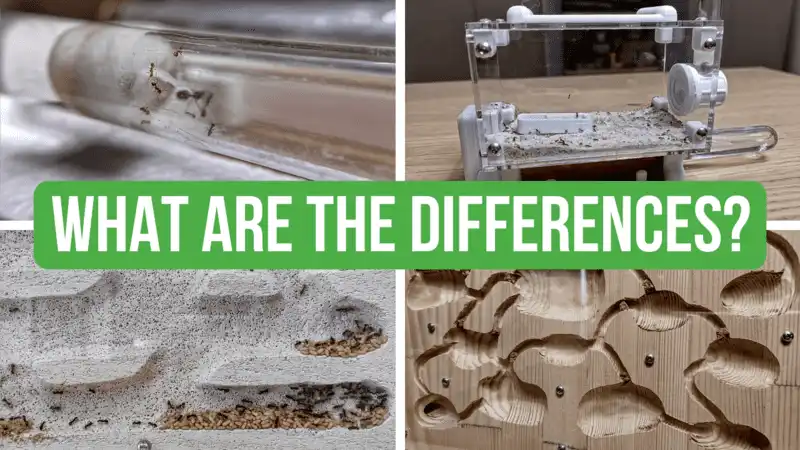
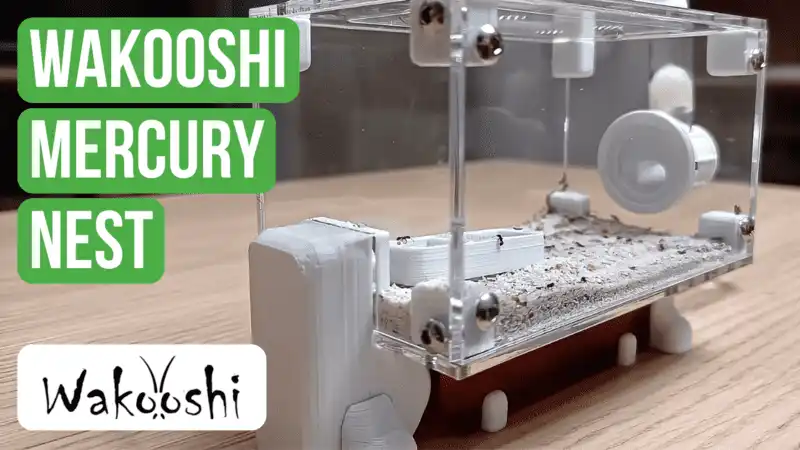
An acrylic nest is made of transparent plastic sheets, usually laser cut and stacked in layers to create the chambers and tunnels, then held together with screws or bolts. Today almost every ant keeping shop has its own line, from basic starter nests to modular systems and test tube-based nests with 3D-printed parts.
Their big strengths are visibility and durability. You can see every chamber, the material survives a fall that would crack a Ytong nest, and cleaning is simple: unscrew it, wash the layers, dry them and put it back together. The layers fit tightly, so acrylic nests are practically escape-proof, which makes them a great choice for tiny species like Pheidole or Solenopsis.
The weak point is humidity. Acrylic doesn't absorb water, so the chambers dry out quickly and air can stagnate, raising the risk of mold. Good acrylic nests solve this with a built-in humidity system, like a sponge, a capillary wick fed by a water tank, or a test tube.
In practice
- Choose a model with a proper humidity system, and check how quickly it dries out in your room.
- Use a red or dark cover over the chambers so the ants feel safe while you can still watch them.
- Keep food in the outworld, not in the chambers, to reduce mold.
- Clean it while the colony lives elsewhere, then wash and reassemble the layers carefully.