Brood
Definition
All the young, developing members of an ant colony: eggs, larvae and pupae. Pupae may be bare or wrapped in a silk cocoon, depending on the species.
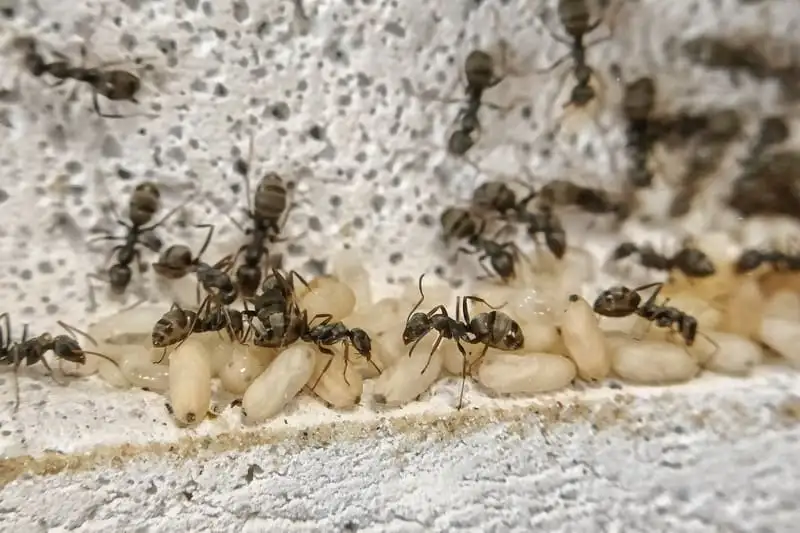
Brood is the word ant keepers use for all the young of the colony. Ants go through complete metamorphosis, so the brood includes three very different stages: tiny white eggs, worm-like larvae that eat and grow, and pupae, where the adult body takes shape.
In some species, like Formica cinerea and Lasius niger, the larvae spin a silk cocoon before pupating, so you'll see small tan "rice grains" in the nest. In others, like Messor barbarus or Pheidole pallidula, the pupae stay naked and look like pale, motionless ants.
The brood can't do anything on its own. Workers move it around the nest to find the best temperature and humidity, clean it and feed the larvae. Growing larvae need a lot of protein, which is why your colony gets hungry for insects whenever there's plenty of brood.
In practice
- Offer protein like fruit flies, crickets or mealworms regularly. It's essential for the development of the brood.
- A gentle heat source, like a heat cable or heat mat on one side of the nest, speeds up brood development.
- Give the colony a humidity gradient, so the workers can place the brood where it feels right.
- Don't overload a small colony with extra brood or pupae. Too few workers can't care for it, and they may abandon it.