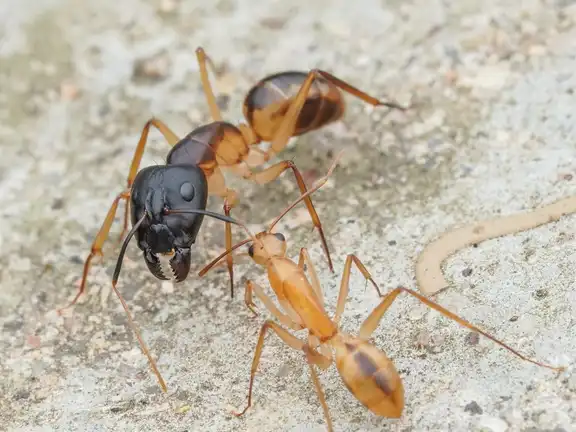
Camponotus maculatus
Spotted sugar ant
DifficultyBeginner · 4/7
Species comparison
Side by side: difficulty, size, growth, climate, hibernation and nuptial flights, from the data and sources of each species sheet.
| Camponotus maculatus | Fact | Camponotus sylvaticus |
|---|---|---|
| Keeping | ||
| Difficulty | ||
4/7 Beginner | Difficulty | 4/7 Beginner |
| Escape risk | ||
LowerMedium | Escape risk | High |
| Diet | ||
SugarInsects | Diet | SugarInsects |
| Best nests | ||
Ytong nest · Acrylic nest · Naturalistic setup | Best nests | Ytong nest · Acrylic nest · Naturalistic setup |
| Colony | ||
| Growth | ||
FasterVery fast | Growth | Moderate |
| Colony size | ||
Reaches 5,000 workers | Colony size | Reaches 5,000 workers |
| Workers | ||
6–10 mm majors up to 16 mm | Workers | 6–12 mm majors up to 15 mm |
| Queen | ||
15–18 mm | Queen | 14–17 mm |
| Colony founding | ||
Fully claustral One queen | Colony founding | Fully claustral One queen |
| Defense | ||
Bites · Sprays formic acid | Defense | Bites · Sprays formic acid |
| Climate | ||
| Nest temperature | ||
24–28 °C | Nest temperature | 22–28 °C |
| Nest humidity | ||
50–70 % | Nest humidity | 40–60 % |
| Hibernation | ||
Not needed | Hibernation | 8–14 °C Nov – Feb |
| Nuptial flights | ||
No flights | Nuptial flights | Jun – Aug Hot days · Humid air |
| Native range | ||
Africa, Middle East | Native range | Europe |
Camponotus maculatus
Camponotus sylvaticus
Camponotus maculatus :
Camponotus sylvaticus : Hibernation: Nov – Feb, Nuptial flights: Jun – Aug
Months in the native range of the species. The weather decides the exact days, and colonies kept indoors can follow a different rhythm.
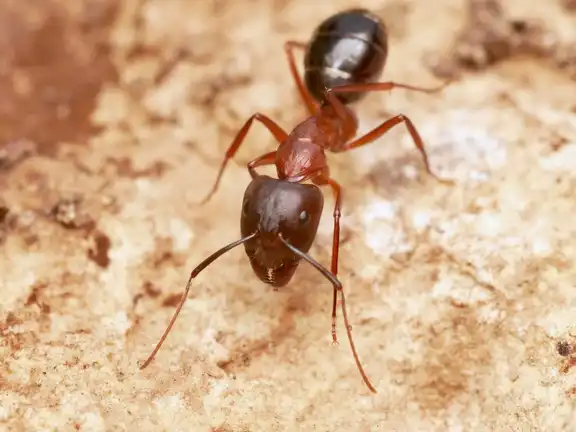
Large, strongly polymorphic ants with a dark head, a yellowish thorax and a dark gaster marked with pale yellow spots or stripes, though the colors vary a lot between populations. Shops sell it as 'maculatus' or as 'subnudus', with origins given as Africa or Southeast Asia, and a 2026 study found two chemically different but look-alike populations among colonies identified as this species, so the exact identity of any colony is uncertain.
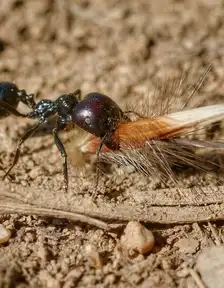
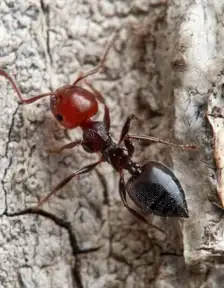
Shiny, sparsely haired workers with a dark head and gaster and a thorax that runs from red to dark reddish brown, sometimes almost black, in all sizes up to majors with a large head, and the small minors can look darker than the majors. Keepers mix it up with Camponotus barbaricus, C. foreli and C. pilicornis (orange head, hairy cheeks), so a doubtful colony is worth checking under a microscope.
Take the 1-minute species finder quiz and get matched with the perfect species for your experience, your space and what you'd love to watch.