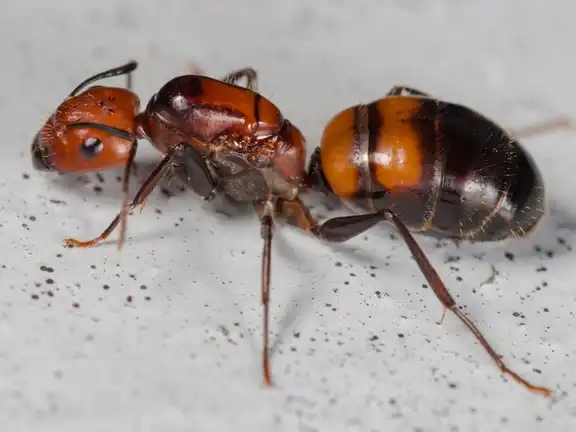
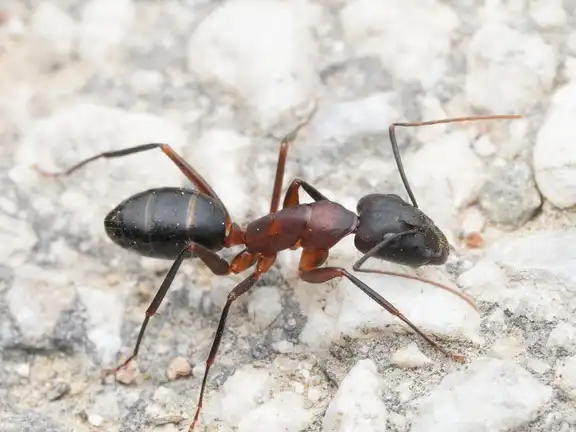
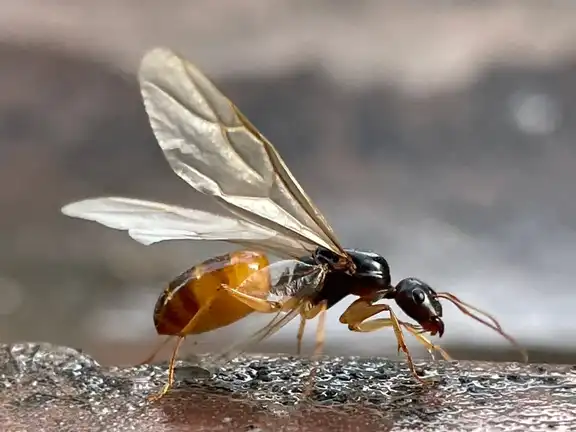
Camponotus maculatus
(Fabricius, 1782)
Spotted sugar ant
A fast-growing, big-headed carpenter ant from Africa with a yellowish thorax and a spotted gaster, and no need for a winter rest.
Compiled from published sources and keeper reports: I haven't kept this species myself, so treat the care values as starting points.
At a glance
- Nest temperature
- 24–28 °CIn the nest
- Nest humidity
- ≈ 50–70 %In the nest
- Hibernation
- Not needed
- Nuptial flights
- No data yetNight flights
- Workers
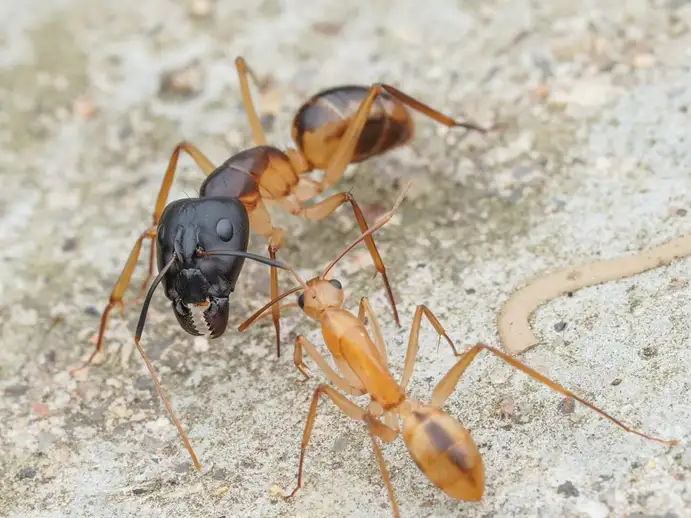
- ≈ 6–10 mmmajors up to 16 mm
- Queen
- ≈ 15–18 mmOne queen
- Colony size
- ≈ Reaches 5,000 workersGrowth: Very fast
- Escape risk
- MediumKeep an escape barrier on the outworld
How to recognize it
Large, strongly polymorphic ants with a dark head, a yellowish thorax and a dark gaster marked with pale yellow spots or stripes, though the colors vary a lot between populations. Shops sell it as 'maculatus' or as 'subnudus', with origins given as Africa or Southeast Asia, and a 2026 study found two chemically different but look-alike populations among colonies identified as this species, so the exact identity of any colony is uncertain.
Often confused with
- Camponotus aegyptiacus
- Camponotus irritans
- Workers6–10 mm
- Majors≤ 16 mm
- Queen15–18 mm
mm
Biology
- Queens
- One queenEach colony has a single queen: never put two queens together once the first workers arrive.In the glossary
- Colony founding
- Fully claustralThe queen raises her first workers without eating, living off her wing muscles and fat reserves.In the glossary
- Workers
- Many sizesThe workers come in a continuous range of sizes, from small minors to large majors.In the glossary
- Defense
- Bites · Sprays formic acidNo sting: the workers bite and spray formic acid, which can sting small cuts.
Native range
- Africa
- Middle East
Angola, Benin, Côte d’Ivoire, Ethiopia, Gambia, Ghana, Kenya, Mozambique, Namibia, Nigeria, Saudi Arabia, Senegal, South Africa, Tanzania, Zimbabwe
Taxonomy
Formicinae › Camponotini
Camponotus
Care at a glance
Difficulty
Why this rating
- Makes it easier: Fully claustral: the queen needs no food until her first workers arrive
- Makes it easier: No hibernation to manage
- Makes it harder: Curious workers: keep an escape barrier on the outworld
- Makes it harder: Needs constant warmth all year round
- Makes it harder: Grows very fast and needs plenty of protein and space
Food
- Sugar
- Insects
Sugar or honey water for the workers, and insects as protein for the queen and the brood.
Best nests
- 1Ytong nest
- 2Acrylic nest
- 3Naturalistic setup
Notes from keepers
Tip
Warm only part of the nest and put the heat mat partly under it, not against the glass. In one keeper's setup the whole colony avoided a heat mat on one side until it was moved partly under the nest, after which the brood settled over the warm spot, and too much heat at the glass front seemed to drive part of the colony out of the nest.
Tip
Keep at least one chamber damp: keepers describe colonies that clearly prefer a moist nest, and in one case most of the colony and brood moved overnight into a larger nest that had just been soaked. Do not let it turn swampy, because too much wetness invites mold.
Tip
Offer invert sugar syrup if a new colony turns up its nose at honey, and give protein in a form the ants can carry. One shipped colony ignored honey and crickets at first but eagerly took invert sugar, mosquitoes and spiders, and another keeper found that large cockroaches were only accepted when cut open.
Watch out
Plan the next nest early and seal the outworld well. Colonies can outgrow a nest surprisingly fast, the workers climb well, and keepers expect escapes when a new nest is connected, so use a tight lid with a slippery barrier such as Fluon or an oil line.
Related posts

How To Make a Test Tube Setup - Ant Keeping Basics
In this tutorial you will learn how to make a test tube setup, the best way to create the optimal environment for a newly mated queen ant!
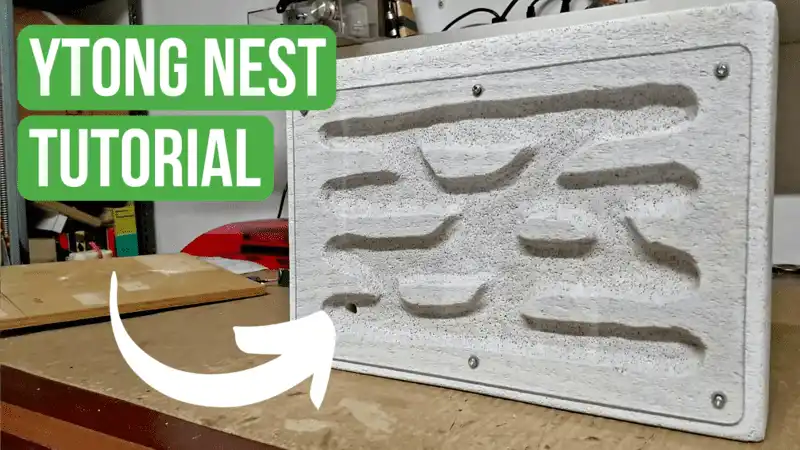
How To Make a Ytong Nest - Ant Keeping Tutorial
In this tutorial, you will learn how to make a Ytong nest for your ant colonies! This is one of the best nest types for many ant species!
When Ant Colonies Grow Out of Control! - The Ant Pod
What do you do when an ant colony gets too big? Lynn, Jake and Alex cover overcrowding, cleaning large outworlds, diet control and downsizing.
FAQs
9Probably not. The name covers a huge group of carpenter ants from Africa, Arabia and Asia: Baroni Urbani merged dozens of described forms into it in 1972, and AntCat still lists five subspecies. The name 'subnudus' that many shops use was given to a form from Rangoon in Myanmar in 1889, yet some shops sell African colonies under it. In a 2026 study, colonies from one national park in Ivory Coast that looked identical split into two groups with different cuticular chemistry, and workers attacked ants of the other group, so do not mix workers from different suppliers.
Mostly, yes. Several keepers and shops describe it as most lively in the evening and after dark, and one report notes that the ants stay in the nest by day and freeze when the keeper moves nearby. On Aldabra atoll, large numbers of workers were found tending scale insects for honeydew at night, and researchers in Ivory Coast collected its nuptial queens with a blacklight during the flight season. As a colony grows, its workers come out earlier in the day.
After several months of growth. In one German report the first two majors showed up about five months after the queen arrived, and an older report saw the first medium-sized workers roughly three and a half months after the first workers hatched. The smaller workers do the nursing and foraging, while the majors mainly defend the nest.
Camponotus maculatus workers measure 6–10 mm, with majors up to 16 mm, and the queen measures 15–18 mm.
Just one. Camponotus maculatus is monogyne: each colony has a single queen, so never put two queens together once the first workers arrive.
No. Camponotus maculatus has no sting: the workers bite and spray formic acid, which can sting small cuts.
Keep the Camponotus maculatus nest at 24–28 °C, with 50–70 % humidity in the brood chambers.
No. Camponotus maculatus stays active all year and does not need a winter rest.
Camponotus maculatus is not on the EU list of invasive alien species and is not protected in the countries we checked. Rules differ between countries and can change, so check your local laws first.
Sources and review
- 1AntCat: Camponotus maculatus (Fabricius, 1782), five valid subspecies and dozens of synonyms
Reference · Taxonomy, Distribution
- 2
- 3AntWiki: Camponotus maculatus
Reference · Taxonomy, Biology, Distribution
- 4AntWiki: Camponotus maculatus species complex
Reference · Taxonomy
- 5Pohl et al. (2026), Journal of Chemical Ecology 52: 56: Sharply contrasting chemotypes coincide with aggression and divergence in cryptic African carpenter ant populations (colonies identified as C. maculatus, worker sizes, nuptial queens, laboratory rearing)
Paper · Taxonomy, Biology, Care, Nuptial flights
Showing 5 of 32 sources
Last reviewed
- BiologyKeeper consensus
- Care valuesKeeper consensus
- Nuptial flightsFew sources
Legal status
Not on the EU list of invasive alien species and not protected in the countries we checked. Rules differ between countries and can change, so check your local laws before buying or collecting a queen.
Checked on October 11, 2026
All values are starting points: watch your colony and adjust. Found something wrong or missing?
Suggest a correction