Honeydew
Definition
A sugary liquid excreted by aphids and other sap-sucking insects. Many ants, like Lasius niger, collect it as food and protect the aphids in return, almost like farmers with a herd.
Honeydew is a sweet liquid produced by aphids and other sap-sucking insects. They drink plant sap, which contains far more sugar than they need, and release the extra as droplets. For ants, it's a fantastic source of energy.
Many species have turned this into a real partnership. The ants tend the aphids: they stroke them with their antennae to collect the honeydew, protect them from predators, and sometimes move them to better spots on the plant. In exchange, they get a steady supply of sugar. It's a lot like farming, with the aphids as a tiny herd and the ants milking them.
Lasius niger, the black garden ant, is famous for this. If you look at the stems of a plant covered in aphids in your garden, you'll often find its workers walking up and down, carrying the honeydew back to the nest and sharing it with their nestmates.
That's also why sugar is such an important part of an ant's diet. In captivity, you can't give them an aphid farm, so you replace honeydew with other sugary foods.
In practice
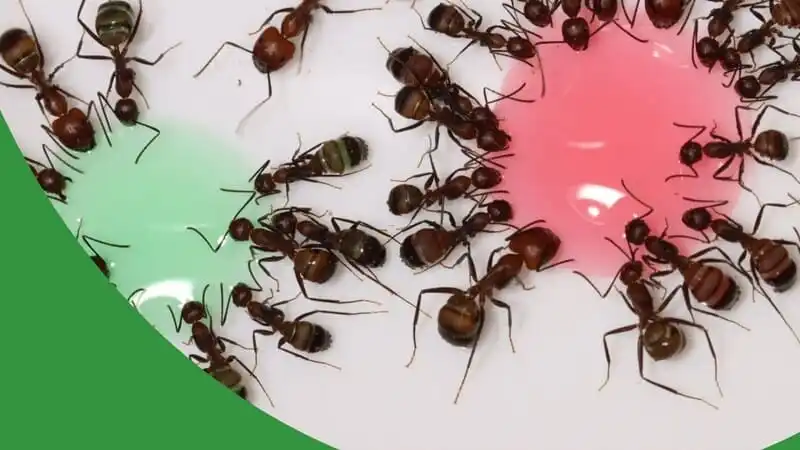
- Offer a constant sugar source, like sugar water, honey diluted with water or a ready-made ant food, ideally in a liquid feeder.
- Remember that sugar fuels the workers, but the brood still needs protein from insects.
- Don't bring aphids or plants from outside into your setup, as they may carry pesticides, mites or other pests.