Nuptial Flight
Definition
The mating event in which winged queens and males leave their colonies, often by the thousands, to find partners from other nests, after which the mated queens land to start new colonies.
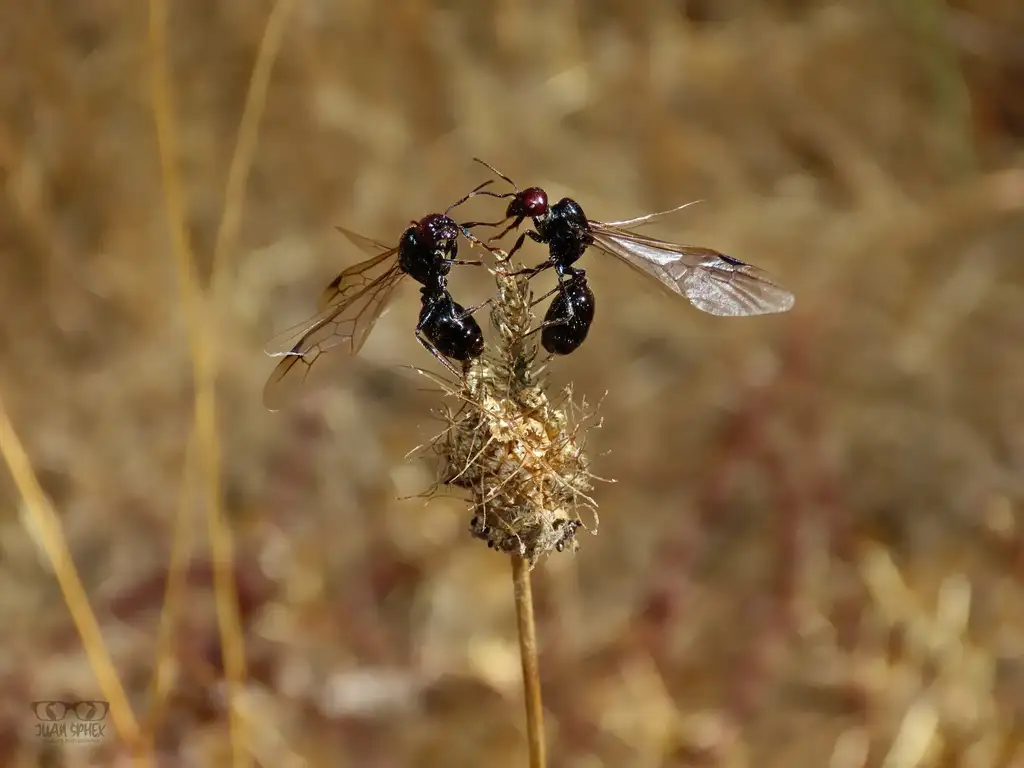
Photo: Juan C. Espinosa, CC BY 4.0
A nuptial flight, also called a mating flight, is where every new ant colony begins. Mature colonies raise winged queens and males, and on the right day they all leave the nest at once and take to the air. Many colonies of the same species fly at the same time, which helps queens meet males from other nests.
During the flight, the winged ants release pheromones to find each other. In many species it's actually the queens that attract the males. After mating, the males usually die, while the queens land, drop their wings and look for a small, safe spot to start a colony.
Flights don't happen randomly. Each species has its own preferred season and conditions, and most swarm when temperature and humidity are just right, very often on warm, humid evenings after rain. Lasius niger, for example, is famous for its huge summer flights that seem to cover entire towns.
In practice
- Learn when your local species fly.
- Bring a few small containers or test tubes with you, and catch more than one queen.
- Check spots where queens land and walk: pavements, walls and the area under bright street lamps.
- Don't expect your captive colony to have a successful nuptial flight indoors. Alates raised in a formicarium can't mate and found colonies there.