Gaster
Definition
The rounded rear part of an ant's body, behind the waist. It holds the crop, the digestive system, the reproductive organs and, in many species, a stinger or acid gland.
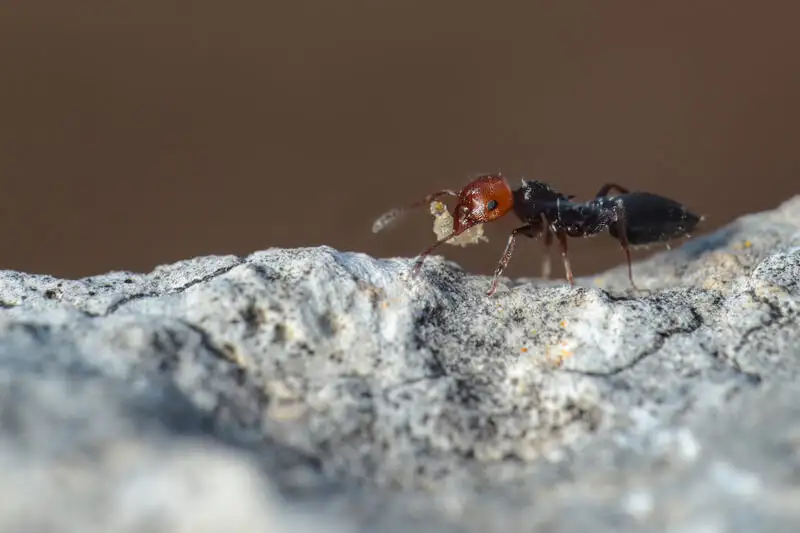
Photo: Charles Galea Bonavia/Wirestock/stock.adobe.com
An ant's body has three main parts: the head, the middle section with the legs, and the gaster. The gaster is the big, rounded part at the back, connected to the rest of the body by the narrow waist, also called the petiole.
People often call it the abdomen, but that's not quite right. In ants, the first segment of the abdomen is fused to the thorax, and one or two more form the waist. The gaster is everything that comes after. Inside, you'll find the crop used to share food, the digestive system, the reproductive organs and, depending on the species, a stinger or a gland that sprays acid.
The gaster is very useful for ant keepers. A queen usually has a much bigger gaster than workers and males, which helps you spot her. Some species are easy to recognize by it too: Crematogaster scutellaris has a black, heart-shaped gaster that it lifts over its body when alarmed.
In practice
- Check a new queen's gaster: if it's large and voluminous compared to her body, she's likely fully claustral; if it's small and thin, she's probably semi-claustral.
- A swollen, almost see-through gaster in workers just means they've filled their crops after a good meal.
- A shrinking, very thin gaster in a founding queen can be a sign she's running out of reserves.
- Be careful handling species that sting or spray from the gaster, like Myrmica or Formica.