Mandibles
Definition
The pair of jaws on the front of an ant's head, used to carry brood and food, dig, cut, crack seeds and defend the colony. Their shape varies a lot between species.
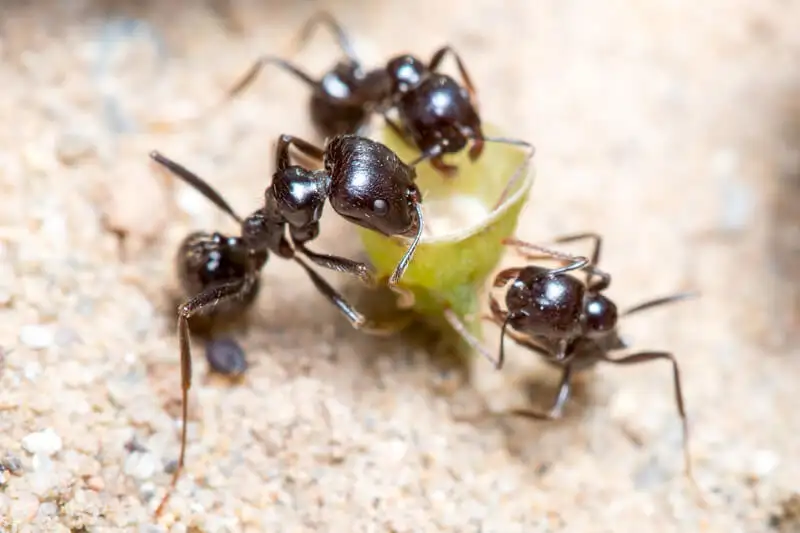
Photo: Jorge/stock.adobe.com
Mandibles are an ant's jaws, and they work a bit like a pair of hands. Ants don't chew the way we do: they use their mandibles to grab, carry, cut, dig and fight. Every time you see a worker moving a larva, dragging a cricket leg or carrying a grain of sand, she's using her mandibles.
Their shape depends on the job. Messor majors have huge, powerful mandibles to crack open seeds. Pheidole pallidula majors use their large, sharp mandibles to break food into pieces for the smaller workers and the queen. Leafcutter ants use theirs to slice leaves, and the trap-jaw ant can snap its mandibles shut at around 140 mph to catch prey. Male ants, on the other hand, usually have weak mandibles that are of little use in a fight.
Strong mandibles also matter for us keepers, because the ants will use them on their nest as well.
In practice
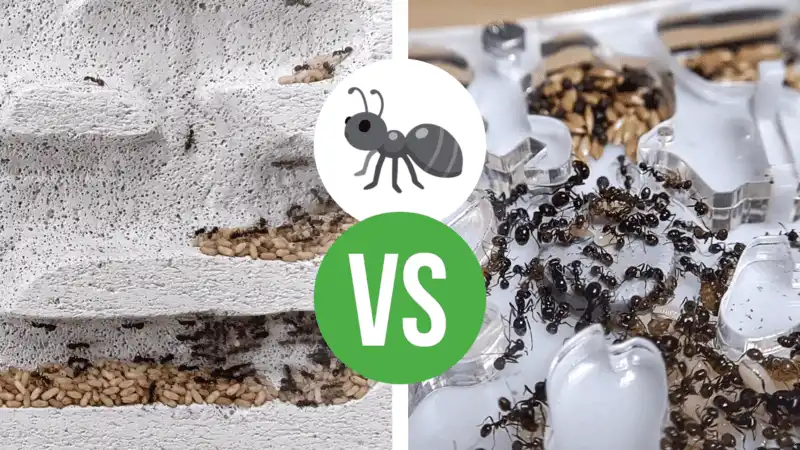
- Messor majors can chew tunnels through soft materials like Ytong, so check for new holes and consider acrylic or a harder material for big colonies.
- Cut large food like crickets in half for small colonies, so the workers can open them with their mandibles.
- Open mandibles and raised gasters are a sign of alarm. Give the colony some space before working on the setup.
- Some species with strong mandibles can give a noticeable bite, so handle setups with care.