Atta cephalotes
(Linnaeus, 1758)
Hairy-headed leafcutter ant
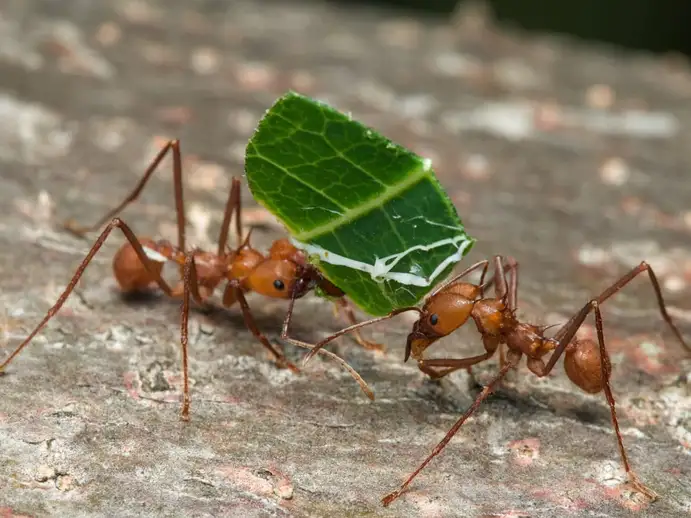
The classic leafcutter: shiny red-orange workers of every size carry cut leaf pieces home to feed a living fungus garden.
Compiled from published sources and keeper reports: I haven't kept this species myself, so treat the care values as starting points.
At a glance
- Nest temperature
- 23–27 °CIn the nest
- Nest humidity
- ≈ 85–95 %In the nest
- Hibernation
- Not needed
- Nuptial flights
- ≈ Apr – JulNight flights
- Workers
- ≈ 2–12 mmmajors up to 18 mm
- Queen
- ≈ 22–30 mmOne queen
- Colony size
- No data yetGrowth: Very fast
- Escape risk
- HighEscape artists: use a closed outworld and a good barrier
Year at a glance
Active season : All year
Nuptial flights : Apr – Jul
- Night flights
- After rain
Months in the native range of the species. The weather decides the exact days, and colonies kept indoors can follow a different rhythm.
How to recognize it
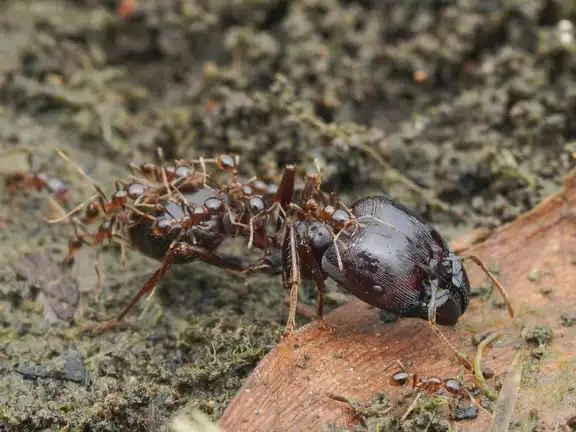
Red-orange workers of every size, with a smooth, shiny patch on the side of the thorax and huge-headed majors that wear a tuft of reddish woolly hair on the face; the similar Atta colombica is maroon, completely matte and has no woolly hair on its majors. Stock sold as cephalotes, including dark or two-colored forms, is not always confirmed, so a hobby colony can differ from this description.
Often confused with
- Atta sexdens
- Atta laevigata
- Atta colombica
- Workers2–12 mm
- Majors≤ 18 mm
- Queen22–30 mm
mm
Biology
- Queens
- One queenEach colony has a single queen: never put two queens together once the first workers arrive.In the glossary
- Colony founding
- Fully claustralThe queen raises her first workers without eating, living off her wing muscles and fat reserves.In the glossary
- Workers
- Many sizesThe workers come in a continuous range of sizes, from small minors to large majors.In the glossary
- Defense
- BitesNo sting: the workers defend the colony by biting.
Native range
- North America
- South America
Belize, Bolivia, Brazil, Colombia, Costa Rica, Ecuador, French Guiana, Guatemala, Honduras, Mexico, Nicaragua, Panama, Peru, Trinidad & Tobago, Venezuela
Taxonomy
Myrmicinae › Attini
Atta
Care at a glance
Difficulty
Why this rating
- Makes it easier: Fully claustral: the queen needs no food until her first workers arrive
- Makes it easier: No hibernation to manage
- Makes it harder: A real escape artist that needs an escape-proof setup
- Makes it harder: Needs a fungus garden fed with fresh leaves every day
- Makes it harder: Grows very fast and needs plenty of protein and space
Food
- Fresh leaves
- Sugar
A fungus farmer: the workers cut fresh leaves to grow the fungus that feeds the whole colony.
Best nests
- 1Acrylic nest
- 2Naturalistic setup
Notes from keepers
Watch out
Heat is a bigger danger than a cool room, and the room thermometer is misleading. One keeper saw the garden shrink week after week and the brood vanish after a heat wave in the room, and the queen of that long-kept colony was later found dead; other keepers report the garden shrinking whenever it gets too warm. Put a probe thermometer inside the fungus chamber, keep heaters from touching the garden and plan for summer cooling.
Tip
Give the fungus air movement, not only holes in the lid. The garden gives off CO2, which sinks, and in one keeper's tank with a single vent at the top the fungus was torn down until more ventilation was added, and experienced keepers advise vents high and low. A small hood over the garden lets the ants build their own humid microclimate; keep liquid water off the fungus and go easy on watery foods such as lettuce.
Watch out
Only cut leaves from places you know are untreated. Sprayed foliage can wipe out a colony, one keeper apparently lost several young queens soon after feeding leaves cut at a forest edge next to a farm field, and sumac is toxic to the fungus. Bramble, rose-family plants, raspberry and beech are the usual staples, so plan the winter supply early and keep the daily ration steady: the queen lays in proportion to the amount of fungus, so a steady ration keeps the colony from outgrowing its space.
Watch out
The workers plug any opening you cut in a cover with grains of substrate within hours, and bigger colonies like to break out. Use a rigid frame and a wide, slippery barrier around every tank and tube run, and open covers slowly.
Related posts
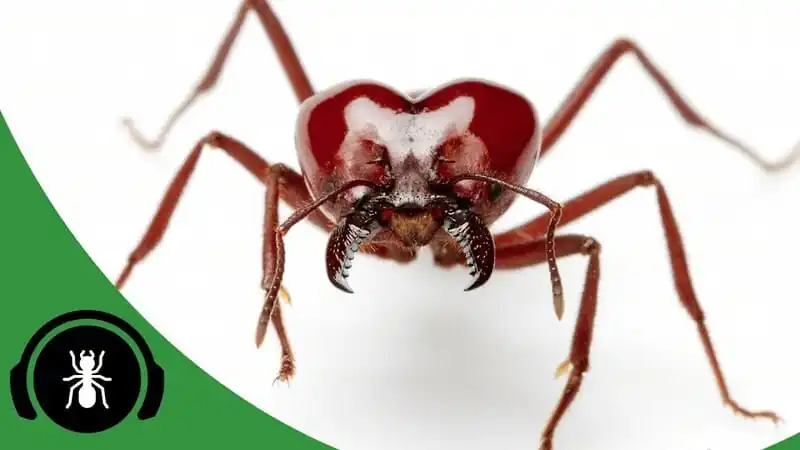
Keeping Leafcutter Ants V2 - The Ant Pod
How to keep leafcutter ants: the best leaves to offer, like bramble and apple, how to prevent escapes and how to keep colony growth under control.
When Ant Colonies Grow Out of Control! - The Ant Pod
What do you do when an ant colony gets too big? Lynn, Jake and Alex cover overcrowding, cleaning large outworlds, diet control and downsizing.

Preparing Ants For Vacation - The Ant Pod
Going on vacation? How to prepare your ant colonies: topping up water, long-lasting food, escape-proof setups, room temperature and someone to check in.
FAQs
10No. The leaf pieces are chewed into a pulp that the fungus grows on. In a study of this very species the larvae got enough energy from the swollen fungus tips called staphylae, but the workers and the queen did not; the workers get much of their energy from plant sap that they drink while they cut and prepare the leaves.
Each size does a different job. The smallest workers, the minims, stay inside to dig and to tend the fungus and the brood, and some ride on leaf pieces, which is thought to protect the carriers from parasitic flies. Medium workers cut and carry the leaves, and the huge-headed majors defend the colony and keep the trails clear. Majors show up only after a colony has grown for a while, so a young colony looks like a crowd of small ants.
Yes, as long as she is mated and still carries the pinch of fungus from her mother's nest. An Atta queen founds her colony sealed in a chamber and lives off her body reserves, so she needs no food, but she has no chance if the fungus is lost or the little garden fails. Keepers who raise one from the start report a first garden and a few dozen workers within weeks, but it takes a lot of time and some queens turn out to be infertile, which is why most buyers prefer an established colony with its fungus. Shipping often crumbles the garden, so many order a spare piece as a backup.
Atta cephalotes workers measure 2–12 mm, with majors up to 18 mm, and the queen measures 22–30 mm.
Just one. Atta cephalotes is monogyne: each colony has a single queen, so never put two queens together once the first workers arrive.
No. Atta cephalotes cannot sting: the workers defend the colony by biting.
In its native range, Atta cephalotes usually flies in Apr – Jul. The weather decides the exact days.
Keep the Atta cephalotes nest at 23–27 °C, with 85–95 % humidity in the brood chambers.
No. Atta cephalotes stays active all year and does not need a winter rest.
Atta cephalotes is not on the EU list of invasive alien species and is not protected in the countries we checked. Rules differ between countries and can change, so check your local laws first.
Sources and review
- 1
- 2Longino: Ants of Costa Rica, Atta cephalotes (range, identification, subterranean refuse dumps, predawn nuptial flights)
Reference · Taxonomy, Biology, Distribution, Nuptial flights
- 3
- 4
- 5
Showing 5 of 33 sources
Last reviewed
- BiologyWell documented
- Care valuesKeeper consensus
- Nuptial flightsKeeper consensus
Legal status
Not on the EU list of invasive alien species and not protected in the countries we checked. Rules differ between countries and can change, so check your local laws before buying or collecting a queen.
Checked on October 11, 2026
All values are starting points: watch your colony and adjust. Found something wrong or missing?
Suggest a correction