Acromyrmex octospinosus
(Reich, 1793)
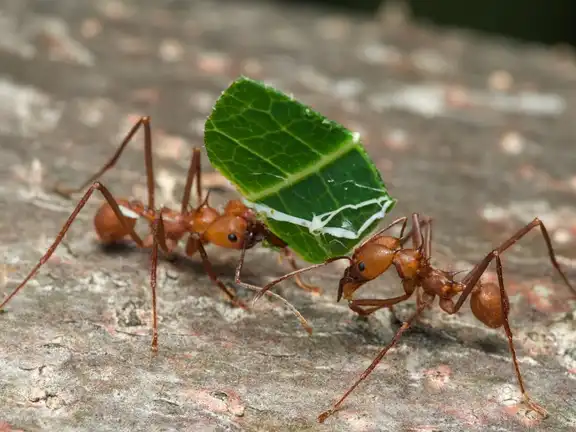
A spiny, rough-skinned leafcutter that farms fungus on roses and bramble and cuts flowers and fruit as eagerly as leaves.
Compiled from published sources and keeper reports: I haven't kept this species myself, so treat the care values as starting points.
At a glance
- Nest temperature
- 23–27 °CIn the nest
- Nest humidity
- ≈ 80–95 %In the nest
- Hibernation
- Not needed
- Nuptial flights
- ≈ May – Jul
- Workers
- ≈ 2–9 mmmajors up to 12 mm
- Queen
- ≈ 12–14 mmOne queen
- Colony size
- ≈ Reaches 20,000 workersGrowth: Fast
- Escape risk
- HighEscape artists: use a closed outworld and a good barrier
Year at a glance
Active season : All year
Nuptial flights : May – Jul
- After rain
Months in the native range of the species. The weather decides the exact days, and colonies kept indoors can follow a different rhythm.
How to recognize it
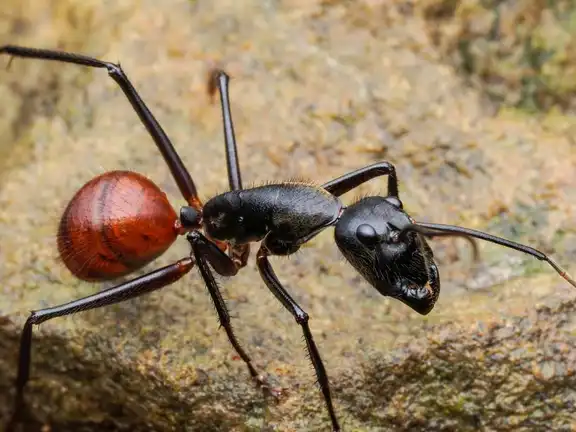
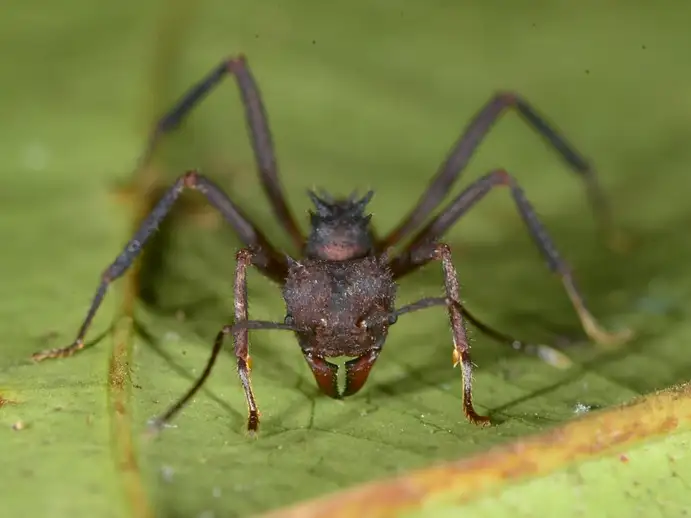
Orange-brown to dark brown workers of several sizes, with a rough, dull body and spines along the back of the thorax, unlike the smoother, shinier Atta. Stock sold under the old name echinatior counts as the same species since a 2025 revision, and workers vary a lot in size, color and spines between populations.
Often confused with
- Acromyrmex insinuator
- Workers2–9 mm
- Majors≤ 12 mm
- Queen12–14 mm
mm
Biology
- Queens
- One queenEach colony has a single queen: never put two queens together once the first workers arrive.In the glossary
- Colony founding
- Semi-claustralThe queen has to leave her chamber to hunt and eat while she raises her first workers.In the glossary
- Workers
- Many sizesThe workers come in a continuous range of sizes, from small minors to large majors.In the glossary
- Defense
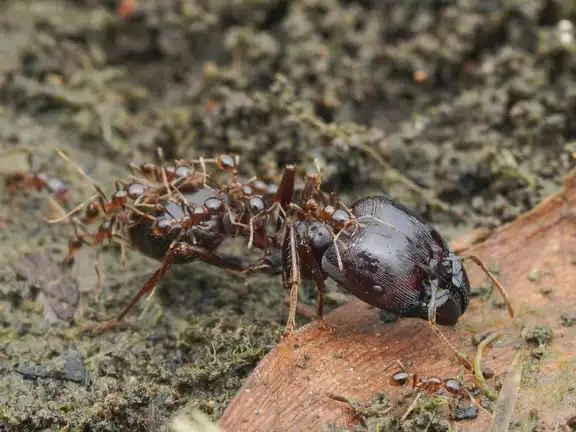
- BitesNo sting: the workers defend the colony by biting.
Native range
- North America
- South America
Brazil, Colombia, Costa Rica, Cuba, Ecuador, French Guiana, Guatemala, Honduras, Mexico, Nicaragua, Panama, Peru, Trinidad & Tobago, Venezuela
Taxonomy
Myrmicinae › Attini
Acromyrmex
Care at a glance
Difficulty
Why this rating
- Makes it easier: No hibernation to manage
- Makes it harder: A real escape artist that needs an escape-proof setup
- Makes it harder: Semi-claustral: the founding queen has to be fed
- Makes it harder: Needs a fungus garden fed with fresh leaves every day
- Makes it harder: Colonies get huge and need room to expand
Food
- Fresh leaves
- Sugar
A fungus farmer: the workers cut fresh leaves to grow the fungus that feeds the whole colony.
Best nests
- 1Acrylic nest
- 2Naturalistic setup
Notes from keepers
Tip
Keep the fungus under a small hood and let the colony set its own humidity. When the air gets too dry the workers may carry the garden to the wettest spot they can find: after one keeper's hygrometer silently failed, they moved most of the fungus under damp rose leaves in the feeding area. Check the hygrometer against a second one, and warm the air around the setup rather than the garden itself.
Watch out
A single sprayed flower can wreck a small colony. After a rose picked on a trip, workers stood motionless or drowned in the sugar water, nearly half of the colony died and the fungus shrank. Only use plants you know are untreated.
Tip
Rose petals and flowers, bramble and privet are the usual staples, and flowers are cut as eagerly as leaves. Winter is the weak point: a colony fed mostly almond flakes saw its fungus shrink by almost half, so plan fresh plants for the cold months, for example potted roses or leaves frozen in the fall, and treat dried petals and oat flakes as a stopgap.
Watch out
Start with a healthy colony. Shipped fungus often arrives crumbled, and one keeper bought a colony whose queen turned out to be unmated, so no brood ever appeared. Ask the seller for a recent photo showing brood, and order a spare piece of fungus as a backup.
Related posts
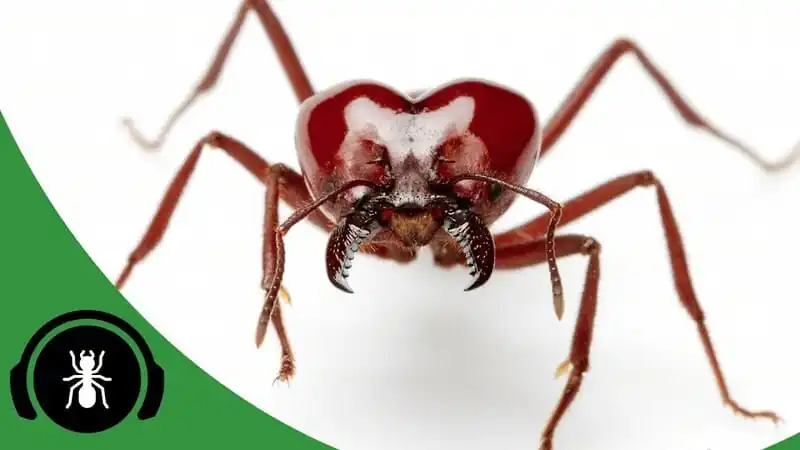
Keeping Leafcutter Ants V2 - The Ant Pod
How to keep leafcutter ants: the best leaves to offer, like bramble and apple, how to prevent escapes and how to keep colony growth under control.

Preparing Ants For Vacation - The Ant Pod
Going on vacation? How to prepare your ant colonies: topping up water, long-lasting food, escape-proof setups, room temperature and someone to check in.
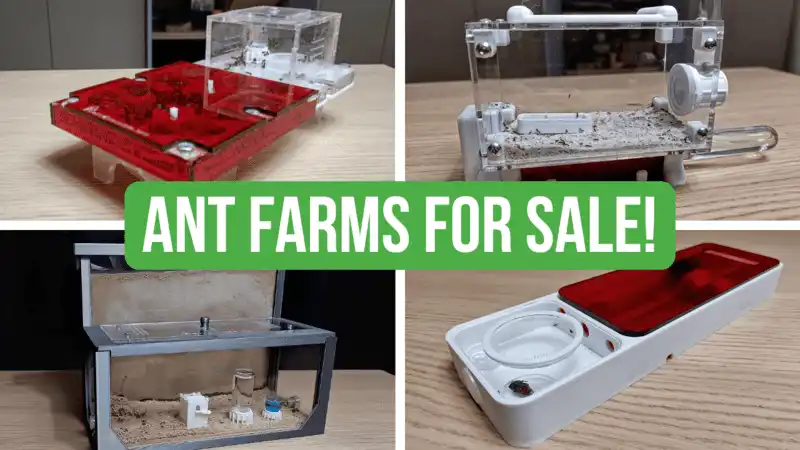
Where To Find Ant Farms For Sale
Wanna know where to find ant farms for sale? In this guide, you will learn about the best places to find ant farms for sale on the web!
FAQs
10Yes, according to a 2025 study. Until then the octospinosus group was split into several species and subspecies, among them echinatior, volcanus, cubanus, ekchuah and inti. A genome-wide study of populations across the whole range found that these names do not mark separate lineages, so they count as one widespread, variable species, and only the social parasite Acromyrmex insinuator is a separate relative. Shops still sell stock under the old names or with cf. in the label, so the name on a colony says little about its origin.
Its colonies are smaller, usually tens of thousands of workers rather than millions, its workers vary less in size, and the body is rougher with more spines on the thorax, while Atta is smoother and shinier. The biggest difference is the start: an Atta queen stays sealed in her chamber, but an Acromyrmex octospinosus foundress goes out to cut leaf pieces for her first garden. In a study in Panama only three to seven workers appeared after about three months and roughly half of the new nests died or were abandoned every month, so the start is risky.
In places, yes. The species is native from Mexico to Brazil, but it was first noticed on Guadeloupe in 1954, has since colonized nearly the whole island and strips crops such as cassava, citrus and yam. It was later found on Saint-Barthélemy and Marie-Galante as well. Live colonies are therefore banned in Guadeloupe and Martinique unless a permit is granted, and a colony should never be released or allowed to escape.
Acromyrmex octospinosus workers measure 2–9 mm, with majors up to 12 mm, and the queen measures 12–14 mm.
Just one. Acromyrmex octospinosus is monogyne: each colony has a single queen, so never put two queens together once the first workers arrive.
No. Acromyrmex octospinosus cannot sting: the workers defend the colony by biting.
In its native range, Acromyrmex octospinosus usually flies in May – Jul. The weather decides the exact days.
Keep the Acromyrmex octospinosus nest at 23–27 °C, with 80–95 % humidity in the brood chambers.
No. Acromyrmex octospinosus stays active all year and does not need a winter rest.
Keeping Acromyrmex octospinosus is restricted in some countries. Check your local laws before buying or collecting a queen.
Sources and review
- 1Mera-Rodríguez, Fernández-Marín and Rabeling (2025), Systematic Entomology 50: Phylogenomic approach to integrative taxonomy resolves a century-old taxonomic puzzle and the evolutionary history of the Acromyrmex octospinosus species complex (echinatior, volcanus and three subspecies are synonyms, facultative polygyny, range)
Paper · Taxonomy, Biology, Distribution
- 2
- 3Longino: Ants of Costa Rica, Acromyrmex octospinosus (identification, nest sites, predawn alates)
Reference · Taxonomy, Biology, Distribution, Nuptial flights
- 4Mikheyev (2008), Biological Invasions 10: History, genetics and pathology of a leaf-cutting ant introduction, a case study of the Guadeloupe invasion
Paper · Taxonomy, Biology, Distribution
- 5
Showing 5 of 39 sources
Last reviewed
- BiologyWell documented
- Care valuesKeeper consensus
- Nuptial flightsFew sources
Legal status
Keeping this species is restricted in some countries. Check your local laws before buying or collecting a queen.
Checked on October 11, 2026
All values are starting points: watch your colony and adjust. Found something wrong or missing?
Suggest a correction