Harpegnathos venator
(Smith, 1858)
Giant jumping ant
A sharp-eyed, sickle-jawed hunter that freezes, wiggles its gaster and then leaps onto its live prey.
Compiled from published sources and keeper reports: I haven't kept this species myself, so treat the care values as starting points.
At a glance
- Nest temperature
- 24–28 °CIn the nest
- Nest humidity
- ≈ 60–80 %In the nest
- Hibernation
- Not needed
- Nuptial flights
- No data yet
- Workers
- ≈ 14–18 mmAll the same size
- Queen
- ≈ 16–20 mmOne or more queens
- Colony size
- ≈ Reaches 400 workersGrowth: Moderate
- Escape risk
- MediumKeep an escape barrier on the outworld
How to recognize it
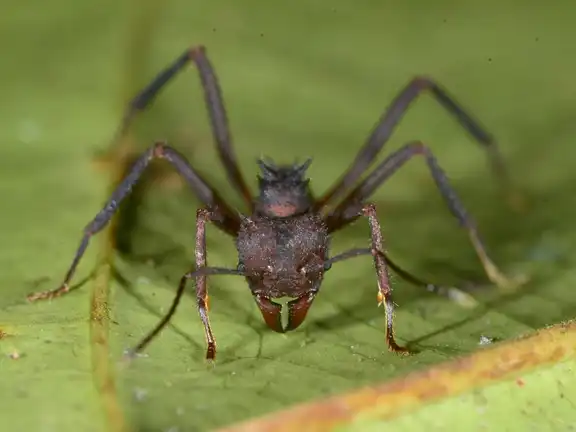
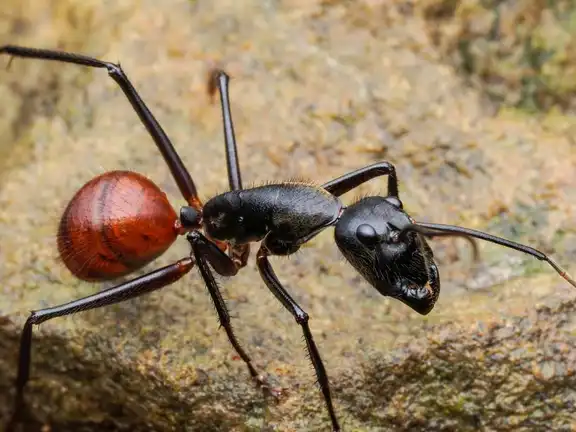
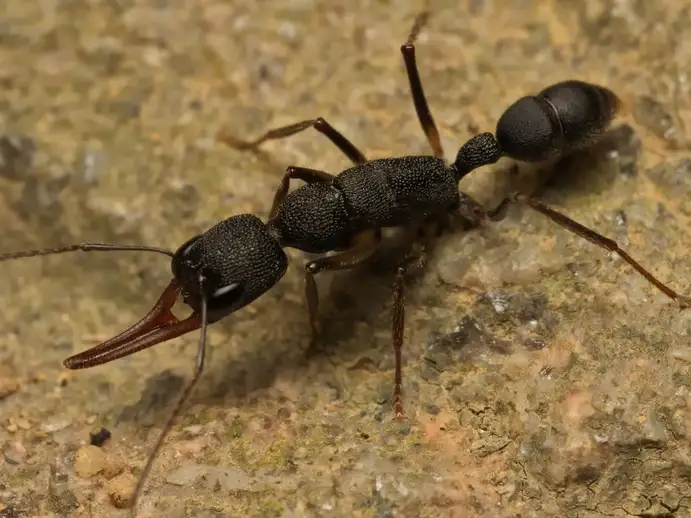
Slender black ants with large eyes, long toothed mandibles that point forward and are reddish-brown like the legs, and a reddish tip on the gaster. All workers are the same size and the queen differs only by a bulkier thorax, while the Indian jumping ant (Harpegnathos saltator) has a reddish thorax and this species has a black head and thorax.
Often confused with
- Harpegnathos saltator
- Workers14–18 mm
- Queen16–20 mm
mm
Biology
- Queens
- One or more queensNew colonies usually start with a single queen, but many grow to hold several queens living together.In the glossary
- Colony founding
- Semi-claustralThe queen has to leave her chamber to hunt and eat while she raises her first workers.In the glossary
- Workers
- All the same sizeAll the workers have about the same size and shape.
- Defense
- Bites · StingsThe workers can sting. It is usually mild for people, but avoid handling them.
Native range
- Asia
Bangladesh, China, Hong Kong SAR China, India, Indonesia, Laos, Malaysia, Myanmar (Burma), Nepal, Thailand, Vietnam
Taxonomy
Ponerinae › Ponerini
Harpegnathos
Care at a glance
Difficulty
Why this rating
- Makes it easier: No hibernation to manage
- Makes it harder: Curious workers: keep an escape barrier on the outworld
- Makes it harder: Semi-claustral: the founding queen has to be fed
- Makes it harder: Needs constant warmth all year round
- Makes it harder: The workers can sting
Food
- Insects
A pure hunter: live or freshly killed insects are the whole diet, with no need for sugar.
Best nests
- 1Ytong nest
- 2Naturalistic setup
- 3Test tube setup
Notes from keepers
Watch out
Offer only live prey. In a field test the workers did not attack cockroaches killed with boiling water, and most keepers report that colonies ignore dead insects. Small live crickets or cockroach nymphs work, some keepers remove the hind jumping legs of the crickets so the ants can catch them, and if the colony ignores one species, try another: one colony refused house crickets but carried a different cricket species straight into the nest.
Tip
Give the nest steady warmth and moist chambers, and keep the arena drier. Keepers who relied on cool room temperature report slow brood and pupae opened and eaten before hatching, while most recent reports of healthy colonies use a heated nest or a warm room.
Watch out
Mites are a recurring killer in the keeping reports, and they can arrive with a shipped colony or on feeder insects. Buy feeder insects from a clean source, check the workers under a magnifier, and avoid a soggy setup, because wet nests and arenas with leftovers are where mites thrive.
Watch out
Expect a shaky start. Shipping is hard on these ants, and some colonies lost most of their workers in transit. Colonies also often arrive with two or three queens, and the dominant one may expel or kill the others once the first larvae hatch, so leave the colony undisturbed until it settles.
Related posts
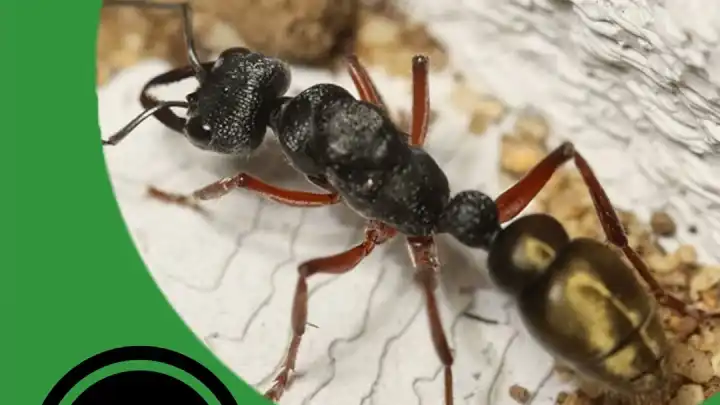
Keeping Semi-Claustral Ants - The Ant Pod
Semi-claustral queens need food from day one. Lynn and Jake share what they learned founding Manica rubida and Myrmica rubra colonies, and how to set them up.
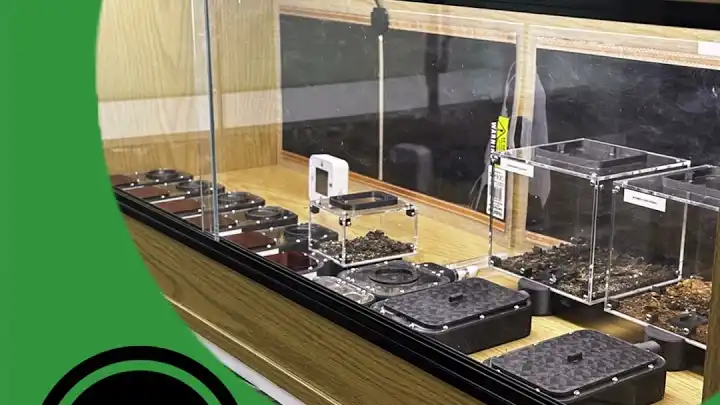
You Should Have A Vivarium! - The Ant Pod
Why a vivarium (VIF) is worth it for exotic ants: heat wires with thermostats, probe placement and how to get your colonies through a heatwave.
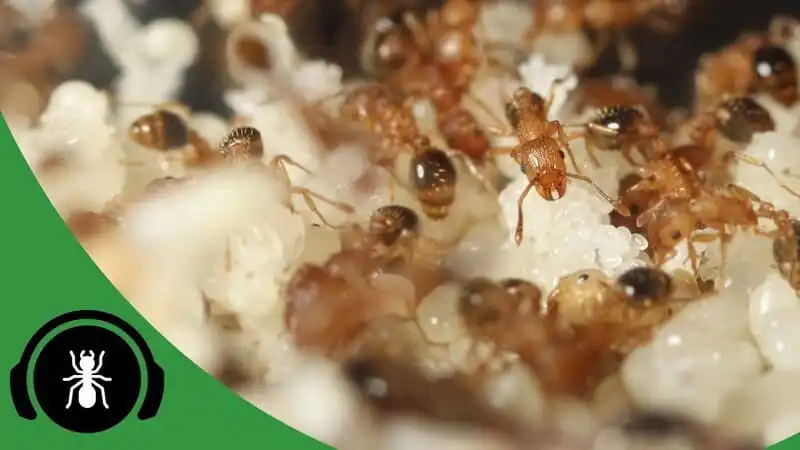
The Best Conditions To Keep Ants - The Ant Pod
Temperature, humidity and pests: heating mats, hydration setups, how to spot and control mites, and why the best setup mimics each species' natural habitat.
FAQs
9It hunts alone and by sight. A worker stays still and quickly shakes her gaster, then jumps onto the prey, clamps it with her mandibles, curls her gaster under it and stings it for about ten seconds to paralyze it before carrying it home. Keepers report jumps of up to about 10 cm, and the ants also leap away when startled, so keep the lid closed while feeding.
Some can, but much less than in the Indian jumping ant. In Harpegnathos saltator, each colony has a single queen, and mated workers called gamergates take over egg laying when she is lost. In a study of H. venator nests in northern Thailand, mated workers laid eggs in only a few colonies that still had a queen, and colonies run only by mated workers were rare. Workers also lay unfertilized trophic eggs that serve as food.
In northern Thailand the nests had a chimney-like entrance with a funnel about 3 cm wide, leading to two or three chambers with flat, smooth floors that the ants decorated with fragments of old cocoons. They are usually dug into soil or clay on shaded banks, which is why keepers use plaster, Ytong or moist loam nests.
Harpegnathos venator workers measure 14–18 mm, and the queen measures 16–20 mm.
One or more. Harpegnathos venator colonies are usually founded by a single queen, but many end up with several queens living together.
Yes. Harpegnathos venator workers can sting. It is usually mild for people, but it's best to avoid handling them.
Keep the Harpegnathos venator nest at 24–28 °C, with 60–80 % humidity in the brood chambers.
No. Harpegnathos venator stays active all year and does not need a winter rest.
Harpegnathos venator is not on the EU list of invasive alien species and is not protected in the countries we checked. Rules differ between countries and can change, so check your local laws first.
Sources and review
- 1
- 2
- 3
- 4AntWiki: Harpegnathos venator (subspecies chapmani and rugosus, distribution by country)
Reference · Taxonomy, Biology, Distribution
- 5GBIF: Harpegnathos venator (Smith, 1858), accepted name and occurrence records by country
Reference · Taxonomy, Distribution
Showing 5 of 29 sources
Last reviewed
- BiologyKeeper consensus
- Care valuesKeeper consensus
- Nuptial flightsFew sources
Legal status
Not on the EU list of invasive alien species and not protected in the countries we checked. Rules differ between countries and can change, so check your local laws before buying or collecting a queen.
Checked on October 11, 2026
All values are starting points: watch your colony and adjust. Found something wrong or missing?
Suggest a correction