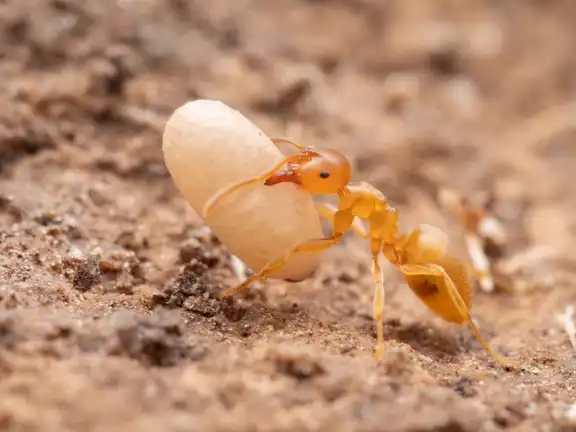
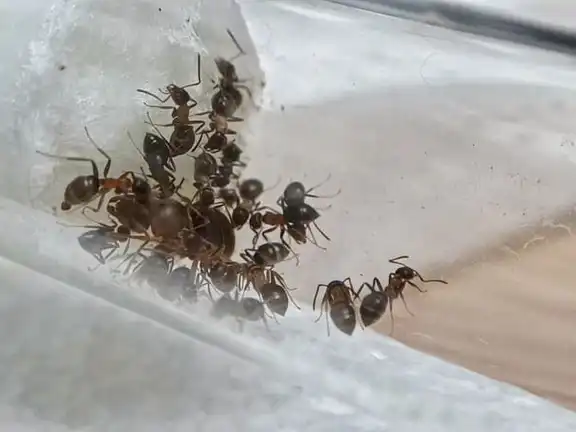
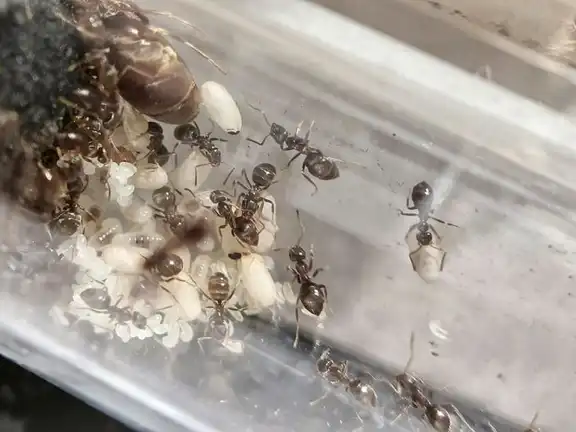
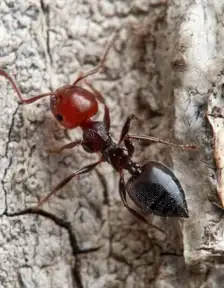
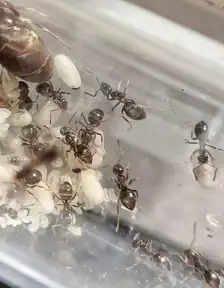
Lasius alienus
(Foerster, 1850)
A small, shy brown Lasius of warm, dry grassland and limestone ground, easily mistaken for the black garden ant.
Compiled from published sources and keeper reports: I haven't kept this species myself, so treat the care values as starting points.
At a glance
- Nest temperature
- ≈ 21–25 °CIn the nest
- Nest humidity
- ≈ 50–60 %In the nest
- Hibernation
- ≈ 5–8 °COct – Mar
- Nuptial flights
- Jul – Sep
- Workers
- ≈ 2–4 mmAll the same size
- Queen
- ≈ 7–9 mmOne queen
- Colony size
- ≈ Reaches 5,000 workersGrowth: Moderate
- Escape risk
- MediumKeep an escape barrier on the outworld
Year at a glance
Hibernation : Oct – Mar
Active season : Apr – Sep
Nuptial flights : Jul – Sep
Months for temperate Europe and the Mediterranean. The weather decides the exact days, so flights can come earlier or later where you live.
How to recognize it
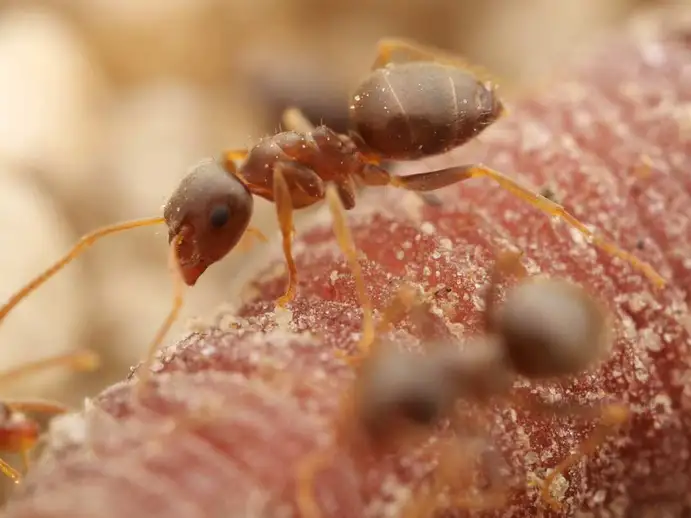
Small workers with a medium to dark brown body and paler, yellowish-brown antennae and lower legs; under a strong lens, the antennal scapes and the hind tibiae show no standing hairs or only a few, while Lasius niger and Lasius platythorax have many. Lasius paralienus, Lasius psammophilus and the invasive Lasius neglectus lack these hairs too, and telling them apart takes measurements of several workers under a microscope.
Often confused with
- Lasius niger
- Lasius paralienus
- Lasius psammophilus
- Lasius platythorax
- Lasius neglectus
- Workers2–4 mm
- Queen7–9 mm
mm
Biology
- Queens
- One queenEach colony has a single queen: never put two queens together once the first workers arrive.In the glossary
- Colony founding
- Fully claustralThe queen raises her first workers without eating, living off her wing muscles and fat reserves.In the glossary
- Workers
- All the same sizeAll the workers have about the same size and shape.
- Defense
- Bites · Sprays formic acidNo sting: the workers bite and spray formic acid, which can sting small cuts.
Native range
- Europe
- Middle East
- Asia
Andorra, Austria, Bulgaria, China, Czechia, France, Georgia, Germany, Greece, Iran, Kazakhstan, Kyrgyzstan, Russia, Slovakia, Spain, Sweden, Türkiye, Ukraine, United Kingdom
Taxonomy
Formicinae › Lasiini
Lasius
Care at a glance
Difficulty
Why this rating
- Makes it easier: Fully claustral: the queen needs no food until her first workers arrive
- Makes it harder: Curious workers: keep an escape barrier on the outworld
- Makes it harder: Needs a cold hibernation, for example in a fridge
Food
- Sugar
- Insects
Sugar or honey water for the workers, and insects as protein for the queen and the brood.
Best nests
Notes from keepers
Watch out
Check the identification before you plan around it. Founding queens are easily mixed up with Lasius niger, and experienced forum members say this ant cannot be named from photos. Wait for normal-sized workers and look at several of them under a strong lens, since the tiny first workers carry fewer hairs. Until then, call the colony Lasius cf. alienus.
Tip
Care is much like Lasius niger: the claustral queen needs no food until her first workers hatch, then offer sugar water or honey and small insects such as fruit flies. In one German keeping report the workers carried small prey into the nest readily but visited the honey only now and then after the first weeks.
Tip
Give it a warm, rather dry nest with one damp corner instead of a nest that is wet throughout. Wild nests sit in sunny, dry grassland and on rocky ground, and shops suggest about 21 to 24 °C in the nest part, with drier air in the outworld than in the nest.
Watch out
Expect a secretive colony. Ant faunas describe it as mainly subterranean and less conspicuous than Lasius niger, and a German keeper found their young colony active only at night and very shy. Cover the nest, check it rarely and keep the escape barrier thick, since one tiny worker got surprisingly far over a thinly coated patch of talc.
Related posts
How To Care for Lasius niger
In this guide, you will learn how to care for Lasius niger! Temperature, humidity, food, hibernation, nest type... and much more!

How To Make a Test Tube Setup - Ant Keeping Basics
In this tutorial you will learn how to make a test tube setup, the best way to create the optimal environment for a newly mated queen ant!
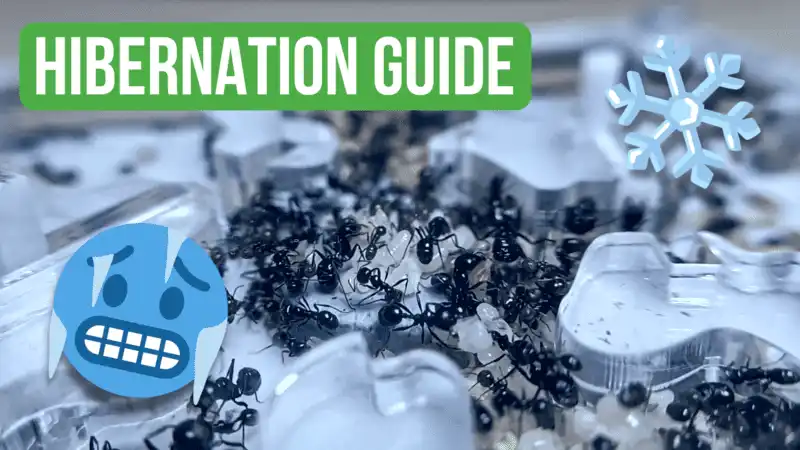
How To Hibernate Your Ants - Hibernation Tutorial
In this guide, we’re going to talk about hibernation: What is it? Why do ants need hibernation? Should I hibernate my ants? Let's see!
FAQs
10Look at several workers under a strong lens. In Lasius alienus the antennal scapes and the hind tibiae have no standing hairs, or only a few near the base of the tibia, while Lasius niger has many standing hairs on all body parts. Lasius alienus workers are also a little smaller, with paler, yellowish-brown tibiae. Do not rely on a queen alone, because Lasius alienus queens normally have a few hairs on the scapes and hind tibiae.
No. For decades, small brown Lasius with few hairs in North America were called Lasius alienus, the cornfield ant. A 2018 study showed that they belong to a separate species, now Lasius americanus, and a 2022 study added that some of them are Lasius ponderosae. The real Lasius alienus is a Eurasian ant not known from North America, so American care sheets under this name describe a different ant.
In warm, dry, open places across temperate Europe and Asia, from northern Spain and southern England to northwestern China, and in Central Europe north to about 53 degrees N. Typical sites are dry grassland, bare rocky ground, orchards, sunny forest edges and open oak woods, and in one study about three quarters of 176 Central European nest sites lay on limestone or chalk. It is absent from Central European towns, where Lasius niger dominates, and on sandy ground Lasius psammophilus usually takes its place.
Lasius alienus workers measure 2–4 mm, and the queen measures 7–9 mm.
Just one. Lasius alienus is monogyne: each colony has a single queen, so never put two queens together once the first workers arrive.
No. Lasius alienus has no sting: the workers bite and spray formic acid, which can sting small cuts.
In temperate Europe and the Mediterranean, Lasius alienus usually flies in Jul – Sep. The weather decides the exact days.
Keep the Lasius alienus nest at 21–25 °C, with 50–60 % humidity in the brood chambers.
Yes. Hibernate Lasius alienus at 5–8 °C, roughly during Oct – Mar.
Lasius alienus is not on the EU list of invasive alien species and is not protected in the countries we checked. Rules differ between countries and can change, so check your local laws first.
Sources and review
- 1
- 2
- 3Seifert (1992), Abhandlungen und Berichte des Naturkundemuseums Görlitz 66: A taxonomic revision of the Palaearctic members of the ant subgenus Lasius s. str. (split into L. alienus, L. paralienus and L. psammophilus, habitats and soils of each, alates found from 9 July to 20 September, workers rarely bite, main host of Lasius jensi)
Paper · Taxonomy, Biology, Distribution, Nuptial flights
- 4
- 5
Showing 5 of 28 sources
Last reviewed
- BiologyKeeper consensus
- Care valuesFew sources
- Nuptial flightsKeeper consensus
Legal status
Not on the EU list of invasive alien species and not protected in the countries we checked. Rules differ between countries and can change, so check your local laws before buying or collecting a queen.
Checked on October 26, 2026
All values are starting points: watch your colony and adjust. Found something wrong or missing?
Suggest a correction