Lasius emarginatus
(Olivier, 1792)
A small, fast-growing Lasius with a reddish thorax that loves to dig tunnels.
Based on my own colonies and checked against AntWiki, AntWeb and published sources.
At a glance
- Nest temperature
- 21–27 °CIn the nest
- Nest humidity
- 50–60 %In the nest
- Hibernation
- 5–8 °COct – Mar
- Nuptial flights
- Jun – Aug
- Workers
- 3–5 mmAll the same size
- Queen
- 7–9 mmOne queen
- Colony size
- No data yetGrowth: Fast
- Escape risk
- MediumKeep an escape barrier on the outworld
Year at a glance
Hibernation : Oct – Mar
Active season : Apr – Sep
Nuptial flights : Jun – Aug
Months for temperate Europe and the Mediterranean. The weather decides the exact days, so flights can come earlier or later where you live.
How to recognize it
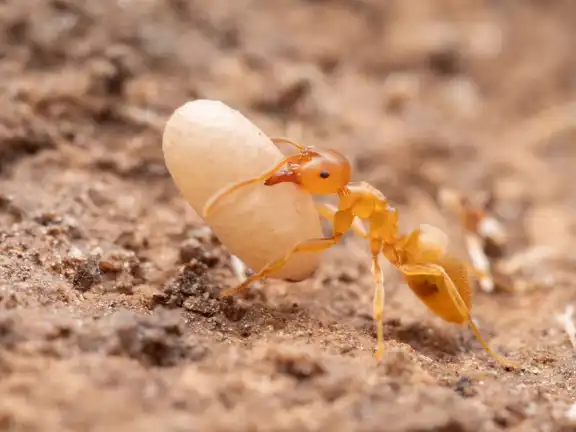
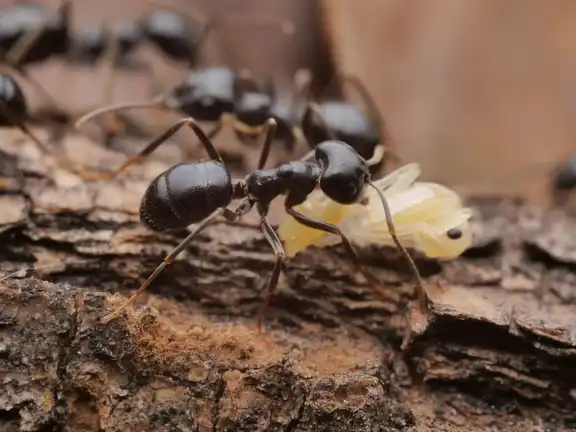
Workers and queens have a clearly reddish thorax between a dark brown head and gaster, which sets them apart from the all-black Lasius niger. They are small, busy ants that dig complex tunnel systems in soil.
Often confused with
- Lasius niger
- Lasius illyricus
- Workers3–5 mm
- Queen7–9 mm
mm
Biology
- Queens
- One queenEach colony has a single queen: never put two queens together once the first workers arrive.In the glossary
- Colony founding
- Fully claustralThe queen raises her first workers without eating, living off her wing muscles and fat reserves.In the glossary
- Workers
- All the same sizeAll the workers have about the same size and shape.
- Defense
- Bites · Sprays formic acidNo sting: the workers bite and spray formic acid, which can sting small cuts.
Native range
- Europe
Austria, France, Germany, Greece, Hungary, Italy, Romania, Spain, Switzerland
Taxonomy
Formicinae › Lasiini
Lasius
Care at a glance
Difficulty
Why this rating
- Makes it easier: Fully claustral: the queen needs no food until her first workers arrive
- Makes it harder: Curious workers: keep an escape barrier on the outworld
- Makes it harder: Needs a cold hibernation, for example in a fridge
Food
- Sugar
- Insects
Sugar or honey water for the workers, and insects as protein for the queen and the brood.
Best nests
From my colonies
Tip
Because the colony grows fast, the brood needs a lot of protein: keep insects like crickets, worms or fruit flies coming alongside the sugar water.
Tip
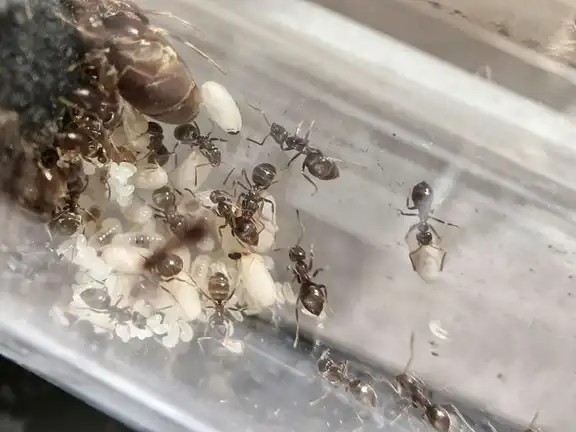
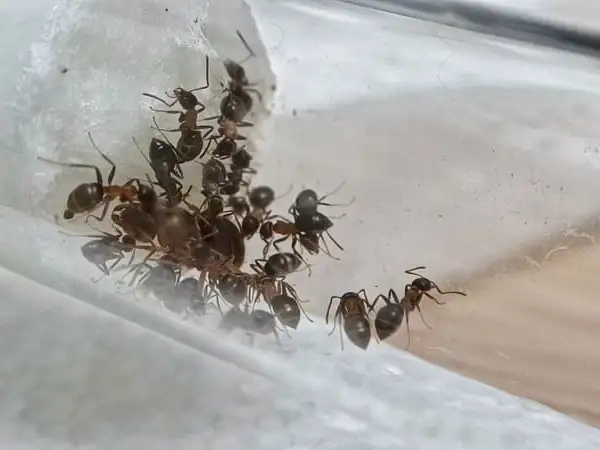
A Ytong nest suits it well: it holds moisture, and the white surface contrasts with the dark head and gaster of the workers, so they are easy to watch.
Watch out
Once the colony passes a certain number of workers, its growth turns exponential, so have a bigger nest and outworld ready before it gets crowded.
Watch out
Don't hibernate it much colder than the recommended range: very low temperatures for a long time can permanently damage the growth of the colony.
Care guide and related posts
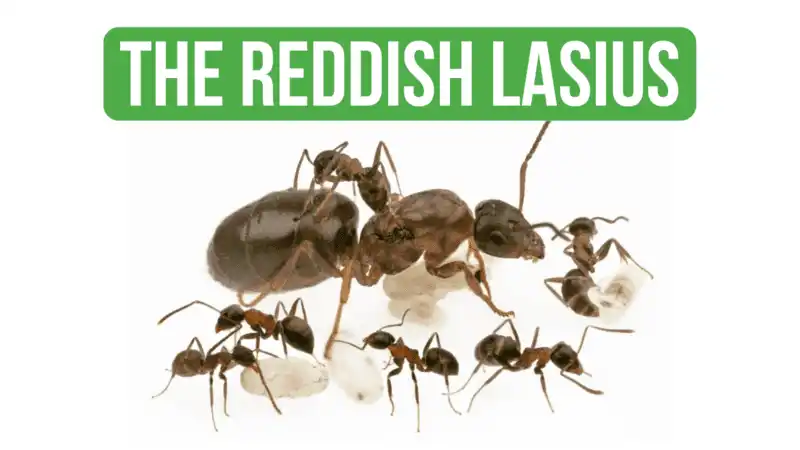
How To Care for Lasius emarginatus
In this guide, you will learn how to care for Lasius emarginatus! Temperature, humidity, food, hibernation, nest type... and much more!
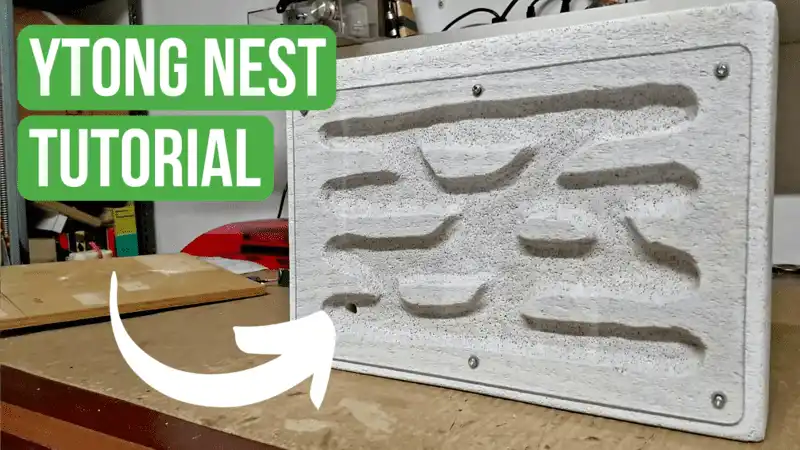
How To Make a Ytong Nest - Ant Keeping Tutorial
In this tutorial, you will learn how to make a Ytong nest for your ant colonies! This is one of the best nest types for many ant species!

How To Hibernate Your Ants - Hibernation Tutorial
In this guide, we’re going to talk about hibernation: What is it? Why do ants need hibernation? Should I hibernate my ants? Let's see!
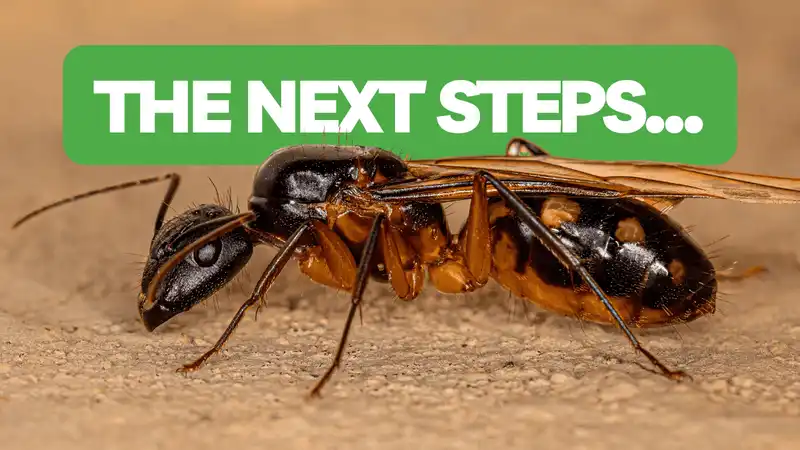
What To Do After Catching Your First Queen Ant!
In this short guide, you’re going to learn what steps you need to take after catching your very first queen ant! Let's get into it!
FAQs
7It is very common in central and southern Europe. It nests in the soil of gardens, under pavements and between cracks in walls, so it is easy to spot even in dense towns and cities.
Not in Europe, where it is a native and harmless ant of gardens and towns. Outside its native range it has been introduced: in New York City it is nicknamed the ManhattAnt, and it has been spreading into New Jersey and onto Long Island.
Lasius emarginatus workers measure 3–5 mm, and the queen measures 7–9 mm.
Just one. Lasius emarginatus is monogyne: each colony has a single queen, so never put two queens together once the first workers arrive.
No. Lasius emarginatus has no sting: the workers bite and spray formic acid, which can sting small cuts.
In temperate Europe and the Mediterranean, Lasius emarginatus usually flies in Jun – Aug. The weather decides the exact days.
Lasius emarginatus is not on the EU list of invasive alien species and is not protected in the countries we checked. Rules differ between countries and can change, so check your local laws first.
Sources and review
Bruma's own colonies
Care
- 1AntWiki: Lasius emarginatus
Reference · Taxonomy, Biology, Distribution
- 2AntWeb: Lasius emarginatus
Reference · Taxonomy, Biology
- 3Wikipedia: Lasius emarginatus
Reference · Biology, Nuptial flights
- 4A taxonomic revision of the Palaearctic members of the subgenus Lasius s.str. (Seifert, Soil Organisms, 2020)
Paper · Taxonomy, Distribution
- 5
Showing 5 of 6 sources
Last reviewed
- BiologyWell documented
- Care valuesKeeper consensus
- Nuptial flightsKeeper consensus
Legal status
Not on the EU list of invasive alien species and not protected in the countries we checked. Rules differ between countries and can change, so check your local laws before buying or collecting a queen.
Checked on October 10, 2026
All values are starting points: watch your colony and adjust. Found something wrong or missing?
Suggest a correction