How To Care for Lasius emarginatus
 Bruma 8 min read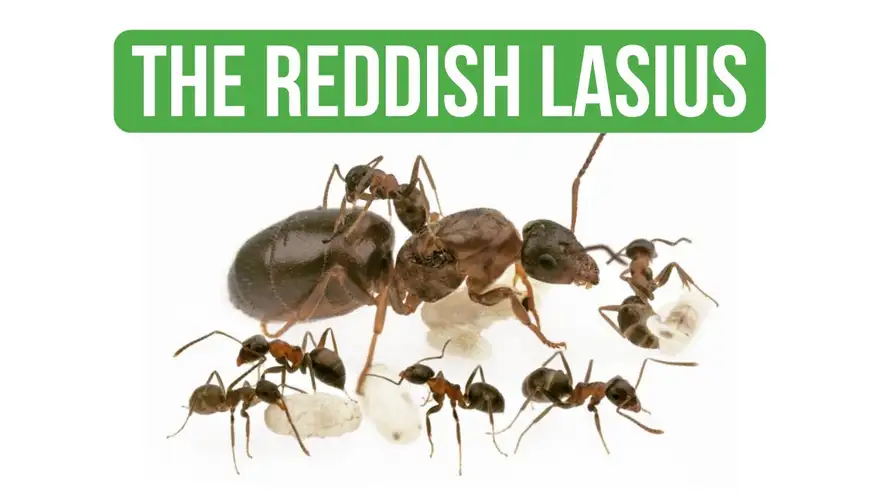
In short
Lasius emarginatus is a fast-growing, beginner-friendly ant found all across Europe: keep the nest at 21–27 °C with 50–60% humidity, feed it sugar and insects, and hibernate the colony at 5–8 °C from late October to early March.
Hi guys! I hope you’re doing well!
Today we're going to learn how to care for a very common species of ant: Lasius emarginatus! By the end of the guide, you will have all the information needed to start growing your own Lasius emarginatus colony all by yourself!
Let’s get right into it!

Download
If you don’t have time right now to read the care guide, don’t worry! You can download it and read it whenever you like! Download the CV of this species by using the button below!
Quick Facts
| Fact | Lasius emarginatus |
|---|---|
| Difficulty | Beginner |
| Native range | Europe |
| Worker size | 3–5 mm |
| Queen size | 7–9 mm |
| Colony structure | Monogyne (one queen) |
| Colony founding | Fully claustral |
| Nuptial flights | June–August |
| Nest temperature | 21–27 °C |
| Nest humidity | 50–60% |
| Hibernation | 5–8 °C, late October to early March |
| Diet | Sugar (honey, sugar water) and insects |
| Best nests | Ytong, sandwich, acrylic |
Introduction
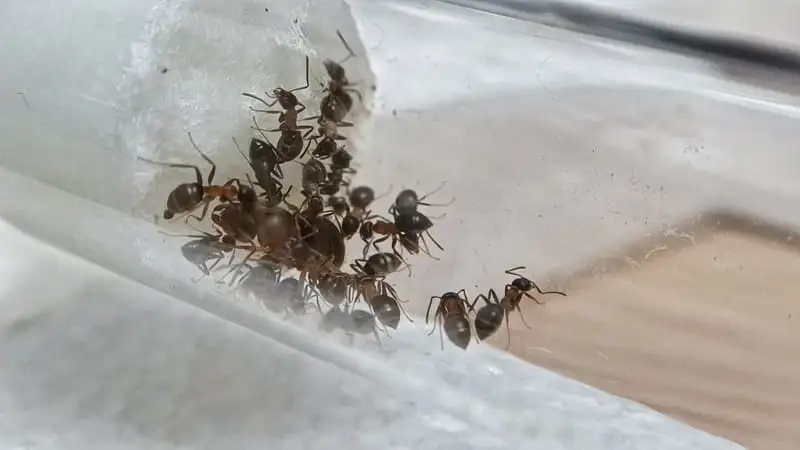
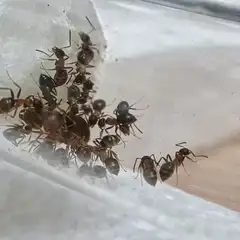
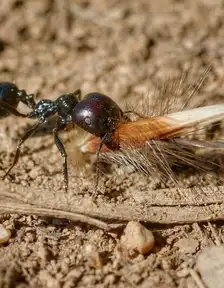
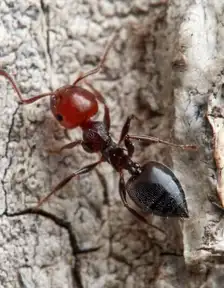
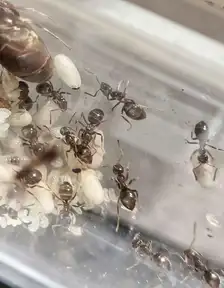
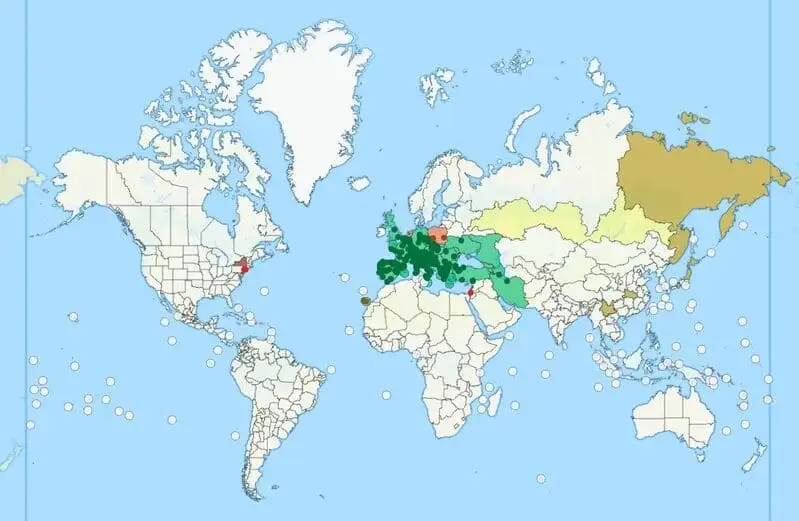
Lasius emarginatus is a small-sized, fast-growing species of ant, very easy to find all across the European continent. Very similar to Lasius niger, this species can be effortlessly recognized by its characteristic reddish thorax, which is very visible in the workers and the queens.
Lasius emarginatus loves to nest in the dirt, where they dig complex and intricate tunnel systems. This species can also easily be found in very dense urban areas, such as small towns and cities, where they nest under sidewalks, in gardens, and between the cracks in the walls.
The workers of this species range between 3 and 5 mm. Just like in the majority of ant species, the queen of Lasius emarginatus is larger than the workers, with a size of approximately 7 to 9 mm.
Lasius emarginatus is monogyne, meaning that the colonies of this species accept only one queen. However, in some rare cases, multiple queens can start a colony together, especially during a very large mating flight.
The nuptial flights of this species usually occur in the summer, between June and August.
Distribution
Temperature
 Ideal range
Just like other species from the same genus, Lasius emarginatus is very adaptable to temperature changes. They do not have very strict temperature requirements, and they can easily be kept at room temperature.
However, if you want to achieve the best results, the ideal temperature for this species is between 21 and 27 degrees Celsius. If you live in a cold area or usually use an air conditioner in the room where your ants are kept, a heat mat or heat cable can be a useful ally.
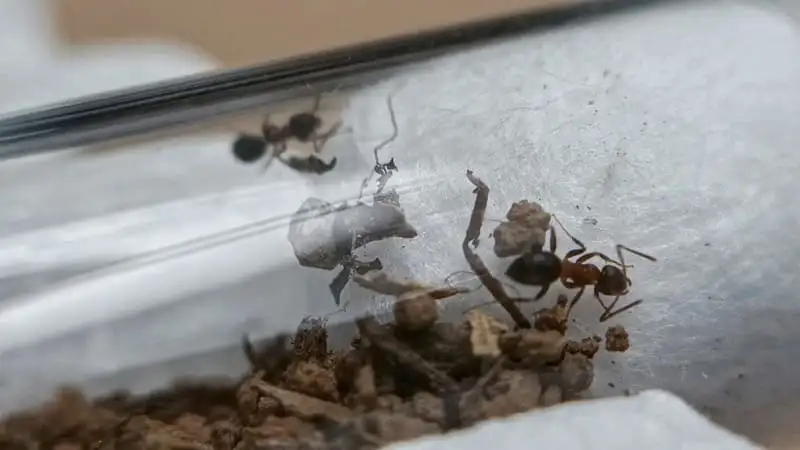
By raising the temperature of the nest, the metabolism of the brood will accelerate, reducing the time needed for the ants to fully develop into adults.
If provided with the right temperature and humidity levels, the colonies of Lasius emarginatus can grow quite fast! Once a certain worker count is reached, the colony starts to grow exponentially, reaching outstanding numbers in just a few years!
Humidity
 Ideal range
They prefer a moisture range that goes from 50% to 60%. One thing to consider is that, like most ant species, Lasius emarginatus doesn’t like extremely dry climates!
If you notice that your nest dries out too quickly, you may have to consider changing the setup a bit. You can rearrange the elements of your formicarium to create an environment that better maintains a stable level of moisture.
If you have a naturalistic setup, you can easily increase the moisture level by spraying some water using a normal spray bottle, like the one used for gardening. You can also add some moisture-retention materials, such as pieces of wood or a bark substrate.
Food
Like almost every ant species, Lasius emarginatus needs a source of sugar for the hard-working workers and some protein for the queen and the brood. Given their fast growth rate, they require quite a lot of protein.
Proteins are the building blocks of every animal body and are essential for the healthy development of ants. The queen needs protein for the production of eggs, which, with a little time and patience, will grow into larvae and then into pupae.
During the ant life cycle from egg to adult worker, the brood needs lots of protein to successfully complete the various stages of development. Once the body of the ant is fully formed, the need for protein fades, and the need for sugar takes its place.
Sugar water should work fairly well, providing the colony with all the energy it needs to create an impressive nest and to bring in heavy pieces of food. Honey is also an extremely good source of healthy sugar, perhaps mixed with some water to make it a little less dense and easier to consume.
But if you want the best possible sugar source, the Ant Antics sugar snaps are the product for you!

With these fantastic colorful little bottles, you can provide your ants with a very high-quality source of sugar, fueling their all-day-long working routine! With the sugar snaps, you can be sure of one thing: your ants are going to love them!
As a source of protein, you can provide them with almost every type of insect. In captivity, you can feed them crickets, different types of worms, and fruit flies, while in the wild they hunt and scavenge small insects and other invertebrates, in short, almost everything they encounter!
If you’re reading this guide, there’s a very high chance you're just starting out and that you just caught or bought your first Lasius emarginatus queen ant. If that’s the case, you don’t have to worry too much about feeding at this stage.
That’s because this species of ant is fully claustral, which means that the queen won’t need to eat for at least a month until she has her first workers. She especially doesn’t need protein right now because she can obtain the protein she needs from the decomposition of her wing muscles.
However, if you like, you can give her a little drop of honey water. This should provide her with the right amount of energy to start her own ant colony!
Hibernation
 Ideal range
Like most European ant species, Lasius emarginatus needs a period of hibernation. They hibernate through the winter, from around late October to early March. They need at least a couple of months of diapause, a biological phase in which the queen doesn’t lay eggs.
This phase is very important for the health of the queen, and it’s the only time in the whole year when she can peacefully take some rest.
For this species, the ideal temperature for hibernation is between 5 and 8 degrees Celsius. I would not suggest going much lower than this, as extremely low temperatures over long periods can cause irreversible damage to the long-term growth of the colony.
If you don’t have an available refrigerator, you can place the colony in the basement or the garage, where the temperature is not too low and not too high.
If you're a beginner ant keeper and this is your first hibernation, I strongly suggest you check out my guide on how to hibernate your ants! Here, I explain in detail every aspect of this complex process called hibernation! What it is, why ants hibernate, and what are the most effective ways to hibernate your beloved ants!
Nest Type
Ytong Nest
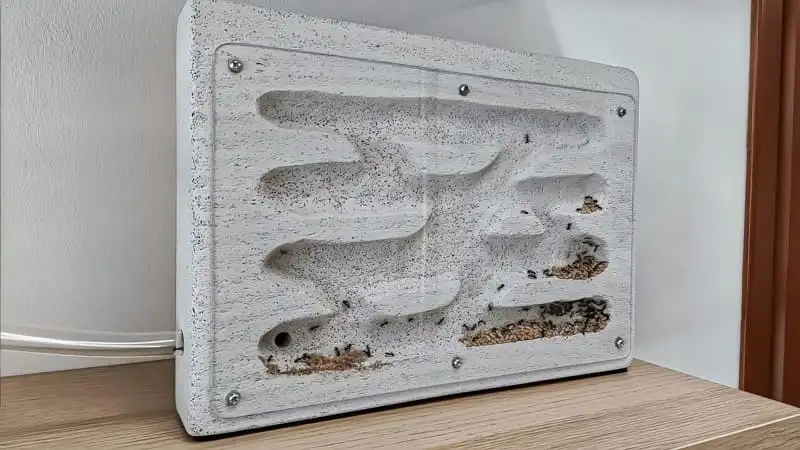
In my opinion, one of the best options when it comes to choosing a formicarium for Lasius emarginatus is a very basic but effective Ytong nest!
If you are new to the hobby and have never heard of it, Ytong is a particular type of aerated concrete, usually used in construction as an insulation material. It is very popular in ant keeping for its moisture-retention properties, and it’s perfect for housing a colony of this species!
Ytong is the perfect material for ant keepers who love to make DIY projects! It has all the characteristics to make it one of the best materials for handmade ant nests: it is extremely easy to sculpt, easy to find in almost every hardware store, and it’s also a very inexpensive material!
If you like the idea of making your own Ytong ant nest, I suggest you check out my tutorial on how to make a Ytong ant nest! In this article, I explain in detail how to make one of these very cool types of nests using basic tools!
Apart from all the other amazing properties of this material, another advantage of using this type of nest is that it creates a strong contrast with the ants. The workers of this species have a dark head and gaster, and since Ytong is almost always completely white, it makes watching the ants extremely easy and enjoyable!
Sandwich Nest
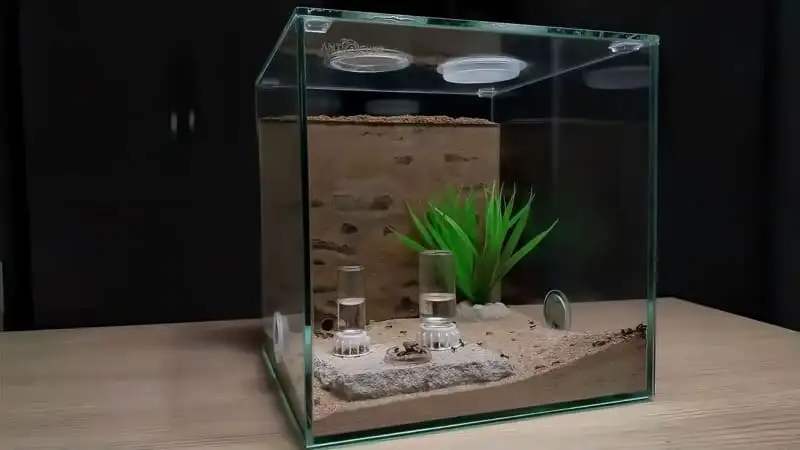
Another valid option for housing this species is a more classic sandwich nest. This very simple type of setup consists of two transparent panels placed close to each other, separated by a small space filled with dirt or sand.
With this cool nest configuration, the ant keeper can watch the ants dig tunnels in the dirt, creating the structure of the formicarium as they please!
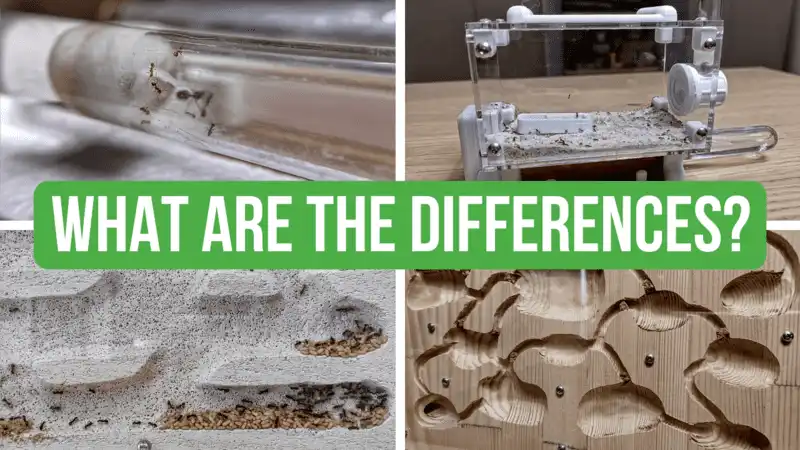
If you are interested in this type of nest, I suggest you check out my ANTCUBE Starter Set Combi review! It’s the amazing glass sandwich nest in the picture above, made by the German company Antstore!
Acrylic Nest

Discount!
Get this extremely cool ant nest on the WaKooshi online shop! Use the discount code BRUMA to get 10% off your entire order!
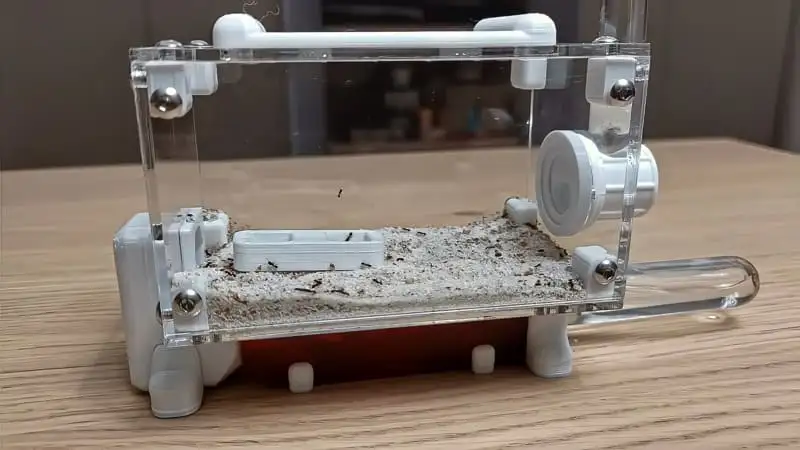
Last but not least, an acrylic ant nest. These particular types of nests are made using some kind of plastic and are optimal for housing almost every species of ant!
They are usually built using 3D printing or laser cutting technology and are extremely easy to find in every online shop dedicated to ant keeping!
If you like this concept, I would suggest you check out this product review! It’s the review of the extremely cool ant nest in the picture above!
I hope you have found this guide helpful!
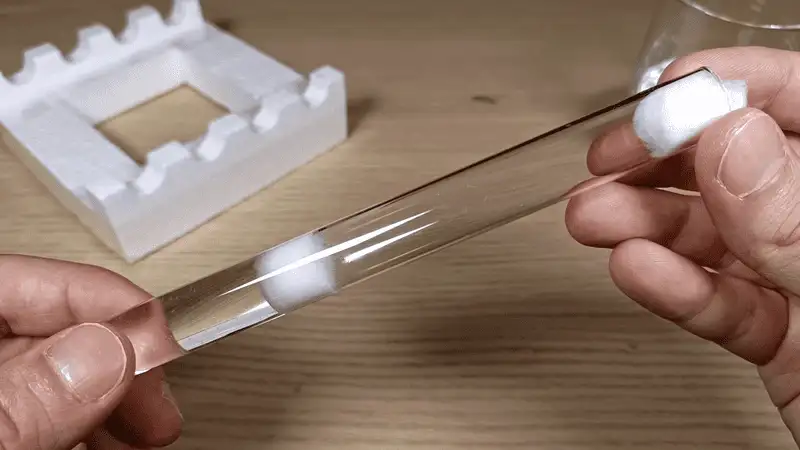
If you just found your queen and want to know how to create the perfect environment for her, check out this guide on how to make a test tube setup! This is the perfect way to start your ant colony!
Sources
FAQs
5The ideal temperature for Lasius emarginatus is between 21 and 27 °C. This species is very adaptable and can be kept at room temperature, but if you live in a cold area, I suggest using a heat mat or heat cable. A warmer nest speeds up brood development, and once the colony takes off, it grows exponentially!
Lasius emarginatus needs sugar for the workers and protein for the queen and the brood. I suggest sugar water or honey mixed with a little water, plus almost any insect, like crickets, worms and fruit flies. A newly founded queen is fully claustral, so she doesn’t need to eat until her first workers arrive.
In my opinion, a Ytong nest is one of the best options for Lasius emarginatus: it holds moisture well, it is cheap and easy to sculpt, and the white material contrasts with the dark ants. A classic sandwich nest filled with dirt or sand and an acrylic nest are also great choices.
Lasius emarginatus prefers humidity levels between 50% and 60% and doesn’t like extremely dry climates. If your nest dries out too quickly, rearrange the setup so it holds moisture better. In a naturalistic setup, I suggest spraying some water with a spray bottle or adding moisture-retention materials like pieces of wood or a bark substrate.
Yes, Lasius emarginatus needs to hibernate from around late October to early March, with at least a couple of months of diapause. The ideal hibernation temperature is between 5 and 8 °C, and I would not go much lower. If you don’t have a refrigerator available, you can place the colony in a basement or garage.

Author
Bruma