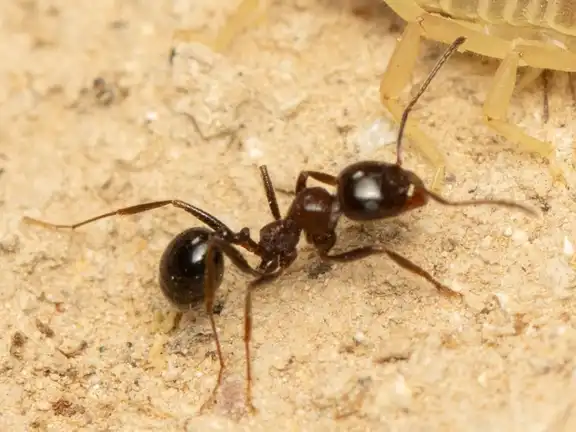
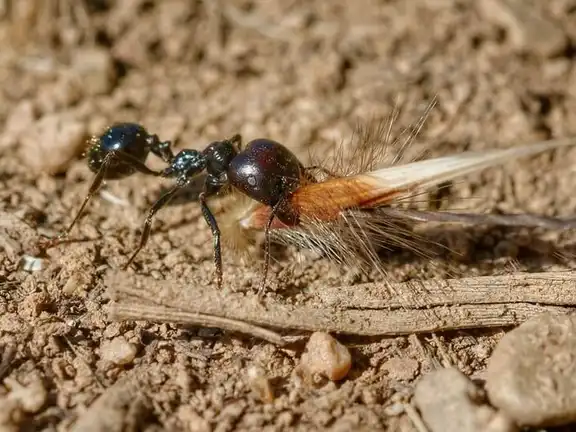
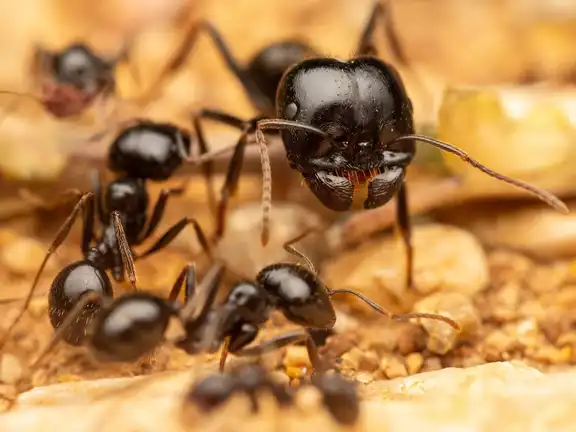
Messor wasmanni
Krausse, 1910
Wasmann's harvester ant
A big-headed seed harvester of sunny Italian and Balkan grasslands, with tidy trails to its nest and a name still written with a cautious cf.
Compiled from published sources and keeper reports: I haven't kept this species myself, so treat the care values as starting points.
At a glance
- Nest temperature
- 22–26 °CIn the nest
- Nest humidity
- 50–70 %Seed granaries: 30–50 %
- Hibernation
- ≈ 12–15 °CDec – Feb
- Nuptial flights
- ≈ Sep – Nov
- Workers
- 4–8 mmmajors up to 10 mm
- Queen
- ≈ 12–14 mmOne queen
- Colony size
- ≈ Reaches 5,000 workersGrowth: Moderate
- Escape risk
- LowCalm ants that rarely try to escape
Year at a glance
Hibernation : Dec – Feb
Active season : Mar – Nov
Nuptial flights : Sep – Nov
- After rain
Months for temperate Europe and the Mediterranean. The weather decides the exact days, so flights can come earlier or later where you live.
How to recognize it
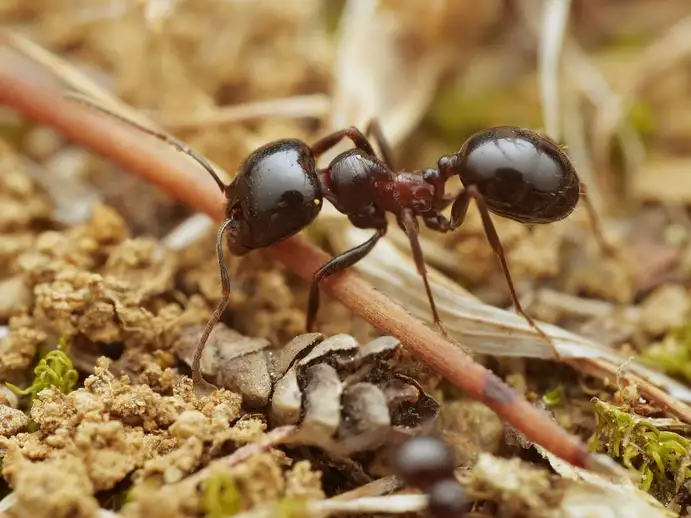
Workers come in many sizes, from small minors to big-headed majors, and the big ones usually have a red thorax and a darker, glossy gaster, never all black like Messor capitatus. Messor minor and reddish Messor bouvieri can be hard to tell apart from it, and cf. in the trade name means the identification is unconfirmed, so this sheet follows the form that European shops sell under it.
Often confused with
- Messor minor
- Messor bouvieri
- Messor capitatus
- Workers4–8 mm
- Majors≤ 10 mm
- Queen12–14 mm
mm
Biology
- Queens
- One queenEach colony has a single queen: never put two queens together once the first workers arrive.In the glossary
- Colony founding
- Fully claustralThe queen raises her first workers without eating, living off her wing muscles and fat reserves.In the glossary
- Workers
- Many sizesThe workers come in a continuous range of sizes, from small minors to large majors.In the glossary
- Defense
- BitesNo sting: the workers defend the colony by biting.
Native range
- Europe
- Middle East
Albania, Bosnia & Herzegovina, Bulgaria, Croatia, France, Greece, Italy, Montenegro, North Macedonia, Slovenia, Türkiye
Taxonomy
Myrmicinae › Stenammini
Messor
Care at a glance
Difficulty
Why this rating
- Makes it easier: Calm workers that rarely try to escape
- Makes it easier: Fully claustral: the queen needs no food until her first workers arrive
- Makes it easier: Stores seeds, so a missed feeding is not a problem
- Makes it harder: Needs a humidity gradient, with dry granaries and humid brood chambers
Food
- Seeds
- Insects
- Sugar
A seed harvester: seeds can feed the whole colony, with insects and sugar as extras.
Best nests
- 1Ytong nest
- 2Acrylic nest
- 3Naturalistic setup
Notes from keepers
Tip
Offer whole seed heads of grasses now and then, not only loose seeds: in the wild these ants pick seeds straight from the plant as well as from the ground.
Tip
Give the colony one dry chamber for the seed store and a separate moist one for the brood, and never spray water into the nest, because wet seeds sprout or mold. Cover every open water spot with small stones or cotton, since Messor workers drown easily.
Watch out
A queen caught after the autumn flight usually starts laying only in spring, after the winter rest, so an empty-looking test tube all winter is normal. Keep it dark and quiet instead of checking on her.
Watch out
Care sheets describe young colonies as very sensitive to light and vibration, so keep the nest dark and on a stable surface instead of a shelf that gets bumped.
Related posts

How To Make a Test Tube Setup - Ant Keeping Basics
In this tutorial you will learn how to make a test tube setup, the best way to create the optimal environment for a newly mated queen ant!

How To Hibernate Your Ants - Hibernation Tutorial
In this guide, we’re going to talk about hibernation: What is it? Why do ants need hibernation? Should I hibernate my ants? Let's see!
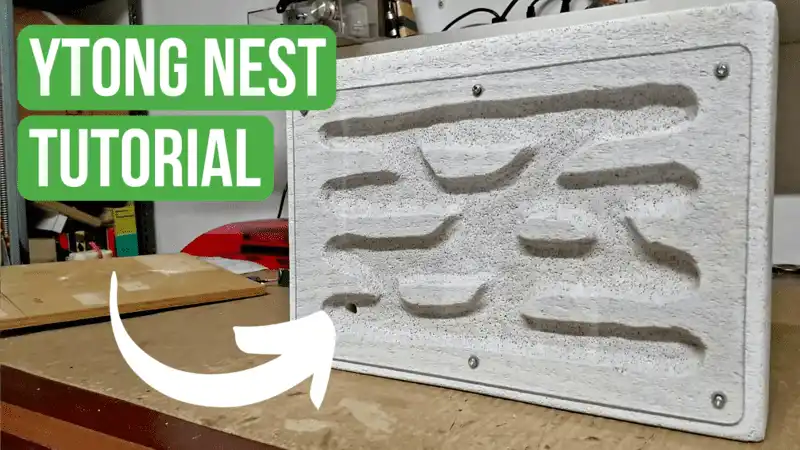
How To Make a Ytong Nest - Ant Keeping Tutorial
In this tutorial, you will learn how to make a Ytong nest for your ant colonies! This is one of the best nest types for many ant species!
FAQs
10The cf. means the identification is likely but not confirmed. Messor wasmanni was described in 1910 from Sardinia as a subspecies of Messor barbarus, and a 2021 study calls it mostly an Eastern Mediterranean species, suspects that some ants with a reddish thorax were taken for it when they are really Messor bouvieri, and says a neotype should be designated to fix the name. Specialists also write Messor cf. wasmanni in their own papers, so the cautious label is honest and not just a shop habit.
A field study on the Croatian island of Cres found that plant material, mostly seeds and fruits, made up the vast majority of what the workers carried home. They took seeds from the ground and straight from the plants. Animal remains such as dead insects and snail shells were only a small share, and the ants were never seen hunting, though they did pick up living snails. The nests are easy to spot because of their clearly marked trunk trails.
In Italy it does. A genetic and morphological study found mixed colonies and gene flow in both directions between Messor minor and Messor cf. wasmanni, with hybrids that appear to be fertile, while Messor capitatus living in the same habitat showed no sign of hybridizing. Some of those colonies held workers that looked intermediate between the species.
Messor wasmanni workers measure 4–8 mm, with majors up to 10 mm, and the queen measures 12–14 mm.
Just one. Messor wasmanni is monogyne: each colony has a single queen, so never put two queens together once the first workers arrive.
No. Messor wasmanni cannot sting: the workers defend the colony by biting.
In temperate Europe and the Mediterranean, Messor wasmanni usually flies in Sep – Nov. The weather decides the exact days.
Keep the Messor wasmanni nest at 22–26 °C, with 50–70 % humidity in the brood chambers.
Yes. Hibernate Messor wasmanni at 12–15 °C, roughly during Dec – Feb.
Messor wasmanni is not on the EU list of invasive alien species and is not protected in the countries we checked. Rules differ between countries and can change, so check your local laws first.
Sources and review
- 1
- 2
- 3
- 4Salata, Lapeva-Gjonova, Georgiadis and Borowiec (2023), ZooKeys 1185: Review of the Messor semirufus complex in Greece (Messor wasmanni listed for the Balkans and western Turkey in the larger, usually bicolored wasmanni complex, whose large workers have a red mesosoma that is never entirely black, and which makes trunk trails)
Paper · Taxonomy, Biology, Distribution
- 5Schifani, Csősz, Viviano and Alicata (2021), Natural History Sciences 8: Ant diversity on the largest Mediterranean islands, with the Messor wasmanni entry (mostly an Eastern Mediterranean species, described from Sardinia, neotype needed, reddish Messor bouvieri taken for it)
Paper · Taxonomy, Distribution
Showing 5 of 30 sources
Last reviewed
- BiologyKeeper consensus
- Care valuesKeeper consensus
- Nuptial flightsKeeper consensus
Legal status
Not on the EU list of invasive alien species and not protected in the countries we checked. Rules differ between countries and can change, so check your local laws before buying or collecting a queen.
Checked on October 11, 2026
All values are starting points: watch your colony and adjust. Found something wrong or missing?
Suggest a correction