Myrmica rubra
(Linnaeus, 1758)
European fire ant
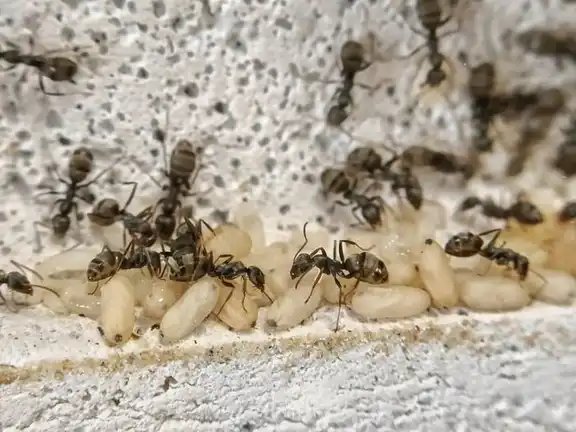
A feisty red ant of damp meadows that lives in sprawling multi-queen colonies and defends its nest with a nettle-like sting.
Compiled from published sources and keeper reports: I haven't kept this species myself, so treat the care values as starting points.
At a glance
- Nest temperature
- 18–25 °CIn the nest
- Nest humidity
- ≈ 50–70 %In the nest
- Hibernation
- ≈ 5–8 °COct – Mar
- Nuptial flights
- Aug – Sep
- Workers
- ≈ 4–6 mmAll the same size
- Queen
- ≈ 5–7 mmSeveral queens
- Colony size
- ≈ Reaches 10,000 workersGrowth: Fast
- Escape risk
- MediumKeep an escape barrier on the outworld
Year at a glance
Hibernation : Oct – Mar
Active season : Apr – Sep
Nuptial flights : Aug – Sep
- Calm weather
Months for temperate Europe and the Mediterranean. The weather decides the exact days, so flights can come earlier or later where you live.
How to recognize it
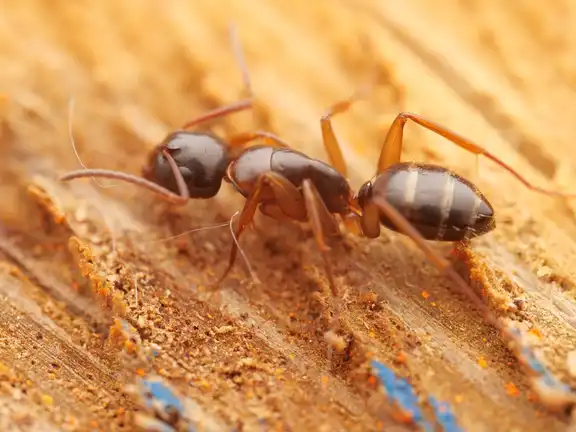
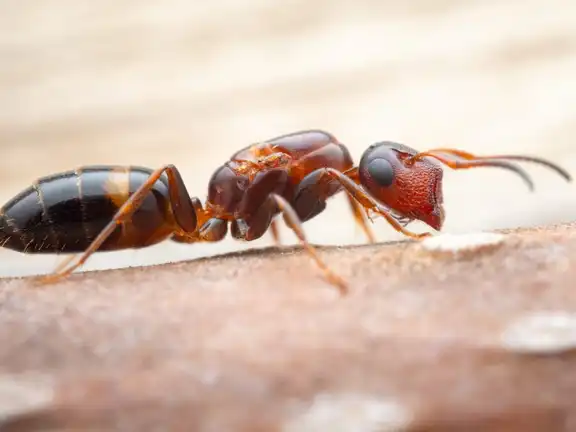
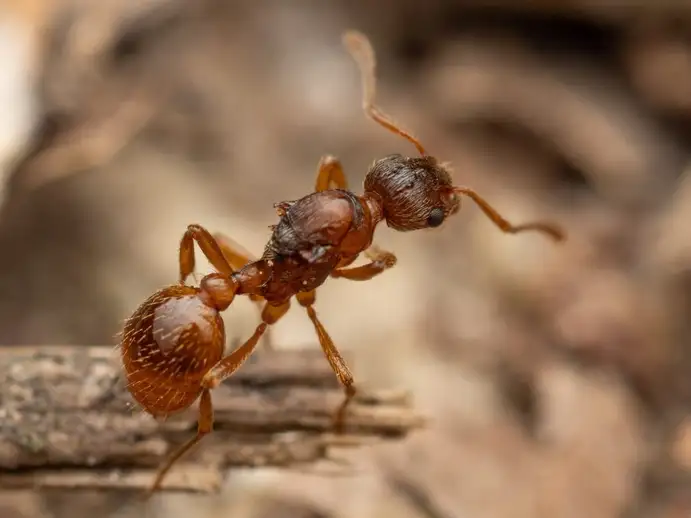
Reddish-brown to rusty-red workers with a darker head, a shiny gaster and two sharp spines on the back of the thorax. They are easy to mix up with other Myrmica such as Myrmica ruginodis, M. scabrinodis and M. sabuleti, so a sure species ID usually needs a microscope, and the queen is only a little bigger than a worker.
Often confused with
- Myrmica ruginodis
- Myrmica scabrinodis
- Myrmica sabuleti
- Workers4–6 mm
- Queen5–7 mm
mm
Biology
- Queens
- Several queensColonies live with several queens, which helps them grow faster.In the glossary
- Colony founding
- Semi-claustralThe queen has to leave her chamber to hunt and eat while she raises her first workers.In the glossary
- Workers
- All the same sizeAll the workers have about the same size and shape.
- Defense
- Bites · StingsThe workers can sting. It is usually mild for people, but avoid handling them.
Native range
- Europe
- Asia
Austria, Belgium, Denmark, Finland, France, Germany, Ireland, Italy, Netherlands, Norway, Poland, Russia, Sweden, Switzerland, United Kingdom
Taxonomy
Myrmicinae › Myrmicini
Myrmica
Care at a glance
Difficulty
Why this rating
- Makes it harder: Curious workers: keep an escape barrier on the outworld
- Makes it harder: Semi-claustral: the founding queen has to be fed
- Makes it harder: Needs a cold hibernation, for example in a fridge
- Makes it harder: Colonies get huge and need room to expand
- Makes it harder: The workers can sting
Food
- Sugar
- Insects
Sugar or honey water for the workers, and insects as protein for the queen and the brood.
Best nests
- 1Ytong nest
- 2Naturalistic setup
- 3Sandwich nest
Notes from keepers
Tip
Keep the nest damp all the time. Keepers favor plaster nests for this species, and a Ytong block that dries out too fast does better standing in a tray of water, so the ants can choose between a wet bottom and a drier top.
Watch out
Heat and dryness are what kill this species. A warm room or a nest that dries out can cause sudden die-offs, so keep the colony in the coolest spot of the home and never let the water reservoir run empty.
Tip
A colony that has lost its queen often accepts a new one, even from another nest, and keepers have merged colonies with only minor scuffles, so a queenless nest is not a lost cause.
Watch out
Founding queens hunt outside the nest and need food from the start, and young queens are rarely found at the flights: the ones seen hunting often already belong to a nest, so catching them is not recommended. That is why keepers usually start with a small colony instead of a single queen.
Related posts
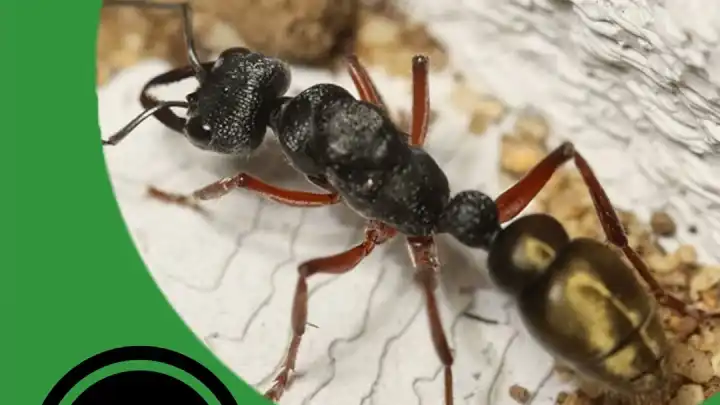
Keeping Semi-Claustral Ants - The Ant Pod
Semi-claustral queens need food from day one. Lynn and Jake share what they learned founding Manica rubida and Myrmica rubra colonies, and how to set them up.

How To Hibernate Your Ants - Hibernation Tutorial
In this guide, we’re going to talk about hibernation: What is it? Why do ants need hibernation? Should I hibernate my ants? Let's see!
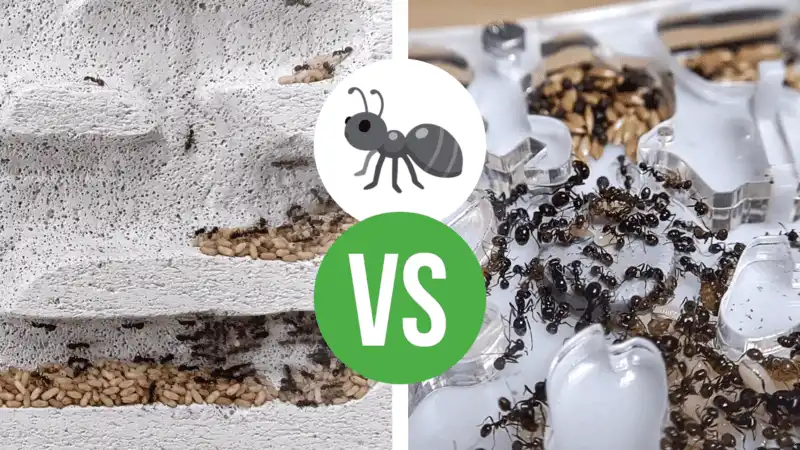
Ytong vs Acrylic - Which Is Better For An Ant Nest?
In this article, we’re going to talk about two of the most popular types of ant nests: acrylic nests and Ytong nests! Let's compare them!
FAQs
10No. The name European fire ant only refers to its painful sting, which keepers compare to a stinging nettle, and the species is only distantly related to the tropical fire ants of the genus Solenopsis. In Europe it is a common ant of damp meadows and gardens, but accidental introductions have made it a pest in parts of northeastern North America and the Pacific Northwest, where dense colonies sting people. For that reason a Myrmica rubra colony should never be released outside its native range.
Often yes. Myrmica rubra is polygyne, and in the wild its colonies take in extra queens and spread over several connected nests. In a study of field-collected colonies, nests without a queen accepted foreign queens more often than nests that still had one. Keepers also report that queens and workers from different nests merged with only minor scuffles, so a queenless colony is the easiest case. Acceptance is never guaranteed, though, and unrelated founding queens put together can fight.
Some colonies raise microgynes, queens that are much smaller than normal and sometimes barely bigger than a worker. They were once described as a separate species, Myrmica microrubra, but genetic work showed that they belong to Myrmica rubra. Later lab experiments found that microgynes act as social parasites of old colonies: nests with microgynes raised fewer workers than nests with normal queens only.
Myrmica rubra workers measure 4–6 mm, and the queen measures 5–7 mm.
Several. Myrmica rubra is polygyne: colonies live with more than one queen, which helps them grow faster.
Yes. Myrmica rubra workers can sting. It is usually mild for people, but it's best to avoid handling them.
In temperate Europe and the Mediterranean, Myrmica rubra usually flies in Aug – Sep. The weather decides the exact days.
Keep the Myrmica rubra nest at 18–25 °C, with 50–70 % humidity in the brood chambers.
Yes. Hibernate Myrmica rubra at 5–8 °C, roughly during Oct – Mar.
Myrmica rubra is not on the EU list of invasive alien species and is not protected in the countries we checked. Rules differ between countries and can change, so check your local laws first.
Sources and review
- 1Collingwood (1979), Fauna Entomologica Scandinavica 8: The Formicidae (Hymenoptera) of Fennoscandia and Denmark, treatment of Myrmica rubra (Plazi TreatmentBank)
Book · Taxonomy, Biology, Distribution, Nuptial flights
- 2formicarium.it: Scheda Myrmica rubra
Care sheet · Care, Biology, Nuptial flights, Distribution
- 3
- 4
- 5
Showing 5 of 35 sources
Last reviewed
- BiologyWell documented
- Care valuesKeeper consensus
- Nuptial flightsWell documented
Legal status
Not on the EU list of invasive alien species and not protected in the countries we checked. Rules differ between countries and can change, so check your local laws before buying or collecting a queen.
Checked on October 11, 2026
All values are starting points: watch your colony and adjust. Found something wrong or missing?
Suggest a correction