Colobopsis truncata
(Spinola, 1808)
European gate-keeper ant
A shy tree dweller whose soldiers, and the queen herself, seal the nest door with flat, plug-shaped heads.
Compiled from published sources and keeper reports: I haven't kept this species myself, so treat the care values as starting points.
At a glance
- Nest temperature
- 21–28 °CIn the nest
- Nest humidity
- ≈ 40–60 %In the nest
- Hibernation
- ≈ 5–10 °CNov – Mar
- Nuptial flights
- Jun – AugNight flights
- Workers
- 3–5 mmmajors up to 6 mm
- Queen
- ≈ 6–8 mmOne queen
- Colony size
- ≈ Reaches 300 workersGrowth: Moderate
- Escape risk
- MediumKeep an escape barrier on the outworld
Year at a glance
Hibernation : Nov – Mar
Active season : Apr – Oct
Nuptial flights : Jun – Aug
- Night flights
Months for temperate Europe and the Mediterranean. The weather decides the exact days, so flights can come earlier or later where you live.
How to recognize it
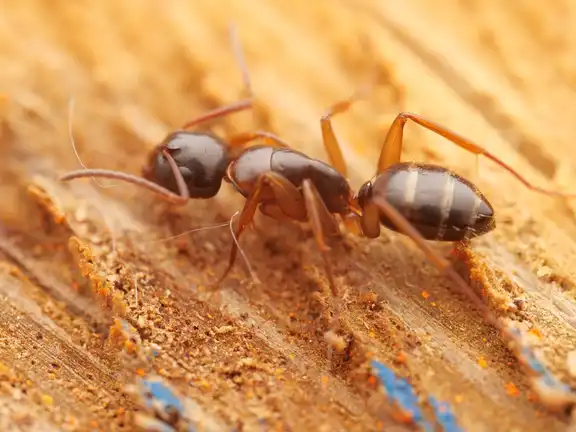
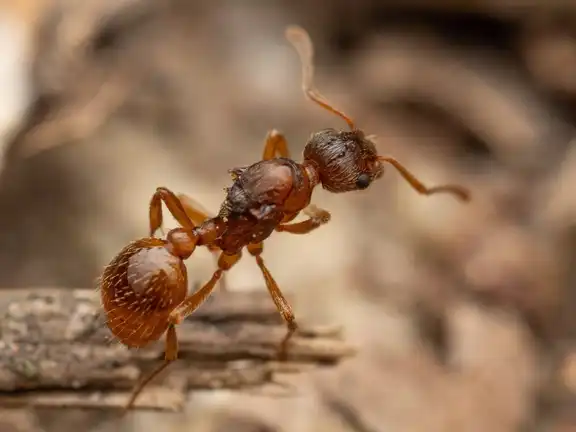
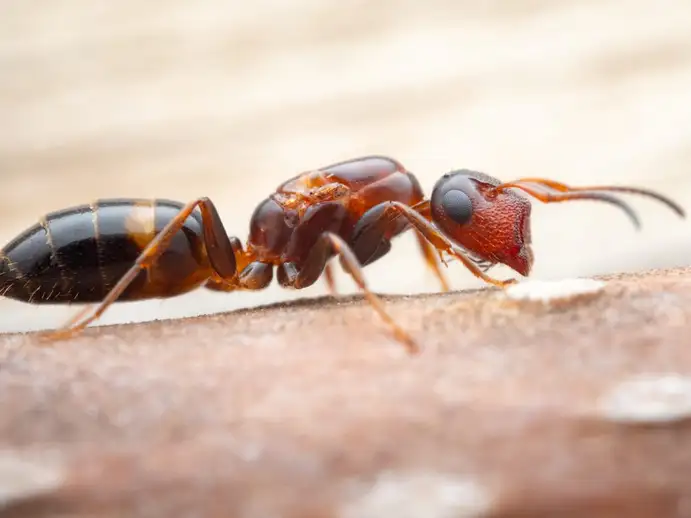
Fast, slender minor workers with a reddish to dark brown head and thorax and a blackish gaster, often with pale dots at its base, live beside a few soldiers and a queen whose flat heads are cut off square at the front like a plug. Dolichoderus quadripunctatus shares its trees and colors, and small Camponotus such as C. lateralis look similar too, but the top edge of a minor's petiole is concave in front view, unlike in Camponotus, and in southern Iberia, Sicily and North Africa the near-identical sister species Colobopsis imitans takes its place.
Often confused with
- Dolichoderus quadripunctatus
- Colobopsis imitans
- Camponotus lateralis
- Workers3–5 mm
- Majors≤ 6 mm
- Queen6–8 mm
mm
Biology
- Queens
- One queenEach colony has a single queen: never put two queens together once the first workers arrive.In the glossary
- Colony founding
- Fully claustralThe queen raises her first workers without eating, living off her wing muscles and fat reserves.In the glossary
- Workers
- Minors and majorsThe workers come in two distinct castes: small minors and big-headed majors.In the glossary
- Defense
- Bites · Sprays formic acidNo sting: the workers bite and spray formic acid, which can sting small cuts.
Native range
- Europe
- Middle East
Austria, Bulgaria, Croatia, Czechia, France, Germany, Greece, Hungary, Italy, Romania, Serbia, Slovakia, Spain, Switzerland, Türkiye
Taxonomy
Formicinae › Camponotini
Colobopsis
Care at a glance
Difficulty
Why this rating
- Makes it easier: Fully claustral: the queen needs no food until her first workers arrive
- Makes it harder: Curious workers: keep an escape barrier on the outworld
- Makes it harder: Needs a cold hibernation, for example in a fridge
Food
- Sugar
- Insects
Sugar or honey water for the workers, and insects as protein for the queen and the brood.
Best nests
- 1Wooden nest
- 2Ytong nest
- 3Naturalistic setup
Notes from keepers
Watch out
Founding queens often fail in a plain test tube. The queens that laid and raised their first workers were given a tiny, dark chamber with a single narrow entrance to guard, such as a hollowed acorn cap, a hollow twig or a short piece of thin tubing, and keepers suspect that the size of the chamber matters more than the material.
Tip
Offer a wooden nest or a set of half oak galls, with the entrance holes drilled in advance as German keepers advise. The ants pick one chamber, add satellite chambers later, and a soldier often sits in the entrance on guard.
Tip
Copy the rhythm of a tree: German keepers describe warm days with clearly cooler nights, and a cold winter, as something the species seems to need, and they advise against a constant living-room climate. Keep a water source available all year, because a dried-out tube or nest killed founding queens and small colonies.
Watch out
Offer honey and sugar water on soaked cotton, never as a free drop, because the workers tend to drown. Keep the escape barrier fresh too, since the fast minors will use any lapse and one neglected colony simply walked out.
Related posts
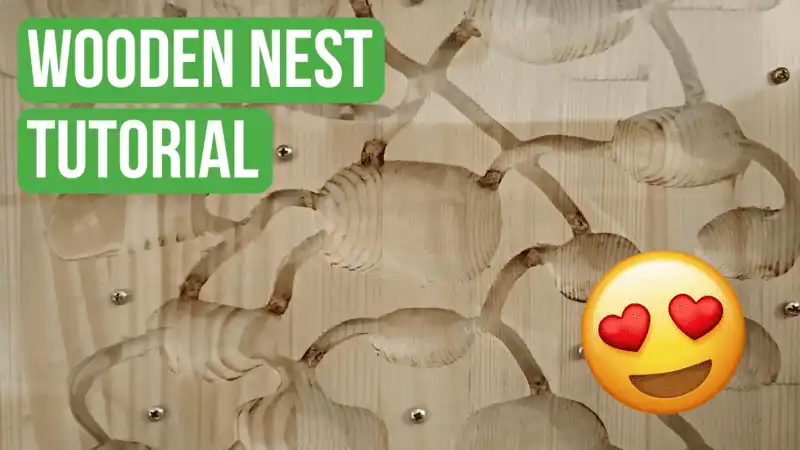
How to Make a Wooden Nest - Ant Keeping Tutorial
In this tutorial, you will learn how to make a wooden nest for your ant colonies! This type of nest is perfect for species that love wood!

How To Hibernate Your Ants - Hibernation Tutorial
In this guide, we’re going to talk about hibernation: What is it? Why do ants need hibernation? Should I hibernate my ants? Let's see!

How To Make a Test Tube Setup - Ant Keeping Basics
In this tutorial you will learn how to make a test tube setup, the best way to create the optimal environment for a newly mated queen ant!
FAQs
10The soldiers and the queen have a flat, cylindrical head, cut off at the front, that is as wide as the nest entrance, so a single ant can block the hole like a cork. The tunnel widens right behind the entrance, so the plug can step back to let nestmates through. A founding queen seals her own chamber, the soldiers take over once they appear, and a wider entrance can be closed by up to three ants at once. The soldiers mostly guard and rarely help with the brood. In oak galls the ants turn the exit hole of the gall wasp into their entrance, and a study found it larger and more central than the one made by a Temnothorax species, which probably suits the plug-headed soldiers.
Old oak galls are ready-made cavities, much like the tunnels of wood-boring beetles and the hollow stems where the species also nests. In a survey of galls in northern Tuscany, Crematogaster scutellaris was the most frequent gall ant, followed by Colobopsis truncata, which dug only a few small chambers into the lower part of the gall. A colony often spreads over several galls on the same tree, so a gall with workers and brood but no queen is not unusual, and keepers have also found lone founding queens in galls and hollow fig twigs.
It depends on where you look. It is a common tree dweller in southern and central Europe, but it lives high in trees and is easy to overlook. In Germany it is on the early-warning list of the national Red List, even though it is frequent in the warm south of the country and further north it turns up only where plant material has carried it. The listing is a warning about wild populations rather than a ban, but German keepers advise thinking twice before keeping it or collecting its queens there.
Colobopsis truncata workers measure 3–5 mm, with majors up to 6 mm, and the queen measures 6–8 mm.
Just one. Colobopsis truncata is monogyne: each colony has a single queen, so never put two queens together once the first workers arrive.
No. Colobopsis truncata has no sting: the workers bite and spray formic acid, which can sting small cuts.
In temperate Europe and the Mediterranean, Colobopsis truncata usually flies in Jun – Aug. The weather decides the exact days.
Keep the Colobopsis truncata nest at 21–28 °C, with 40–60 % humidity in the brood chambers.
Yes. Hibernate Colobopsis truncata at 5–10 °C, roughly during Nov – Mar.
Colobopsis truncata is not on the EU list of invasive alien species and is not protected in the countries we checked. Rules differ between countries and can change, so check your local laws first.
Sources and review
- 1Schifani, Giannetti, Csősz, Castellucci, Luchetti, Castracani, Spotti, Mori and Grasso (2022), Zoological Journal of the Linnean Society 194: Is mimicry a diversification-driver in ants? Biogeography, ecology, ethology, genetics and morphology define a second West-Palaearctic Colobopsis species (Colobopsis imitans lives in the Maghreb, Sicily and southern Iberia, so Co. truncata does not; truncata mimics Dolichoderus quadripunctatus; nuptial flights of the sister species at night)
Paper · Taxonomy, Biology, Distribution, Nuptial flights
- 2
- 3
- 4Wikipedia (German): Stöpselkopfameise (after Seifert: range, nests in beetle tunnels and galls, plugging of the entrances, polydomy, swarming from June to early August)
Reference · Taxonomy, Biology, Distribution, Nuptial flights
- 5
Showing 5 of 36 sources
Last reviewed
- BiologyWell documented
- Care valuesKeeper consensus
- Nuptial flightsKeeper consensus
Legal status
Not on the EU list of invasive alien species and not protected in the countries we checked. Rules differ between countries and can change, so check your local laws before buying or collecting a queen.
Checked on October 11, 2026
All values are starting points: watch your colony and adjust. Found something wrong or missing?
Suggest a correction