Camponotus fedtschenkoi
Mayr, 1877
Yellow carpenter ant
A pale golden carpenter ant from the dry steppes of Central Asia that digs its nest in the ground and comes out at night.
Compiled from published sources and keeper reports: I haven't kept this species myself, so treat the care values as starting points.
At a glance
- Nest temperature
- 24–28 °CIn the nest
- Nest humidity
- 50–70 %In the nest
- Hibernation
- ≈ 15–18 °CDec – Feb · recommended
- Nuptial flights
- ≈ Apr – May
- Workers
- ≈ 4–9 mmmajors up to 12 mm
- Queen
- ≈ 12–14 mmOne queen
- Colony size
- ≈ Reaches 2,000 workersGrowth: Moderate
- Escape risk
- MediumKeep an escape barrier on the outworld
Year at a glance
Hibernation : Dec – Feb
Active season : Mar – Nov
Nuptial flights : Apr – May
Months in the native range of the species. The weather decides the exact days, and colonies kept indoors can follow a different rhythm.
How to recognize it
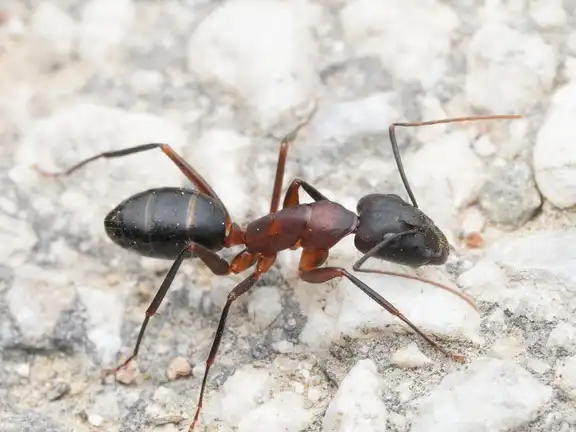
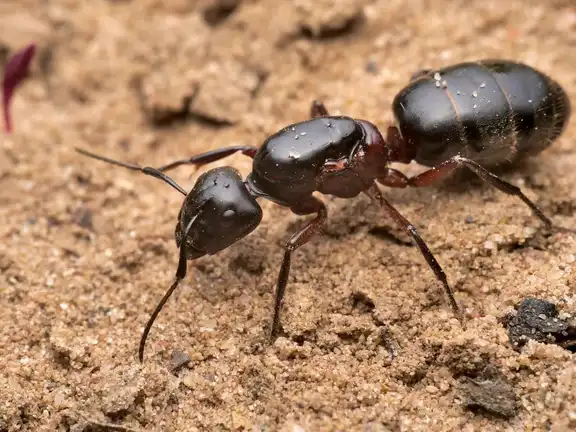
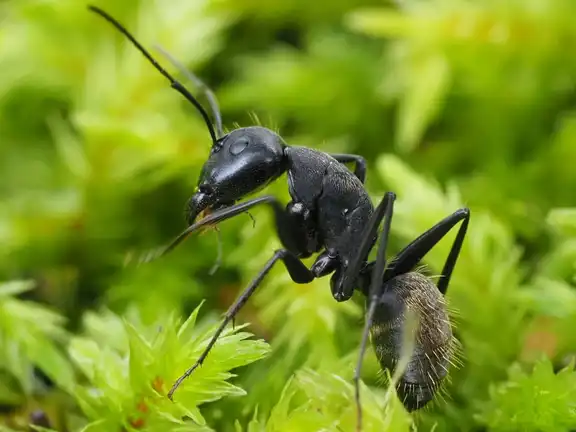
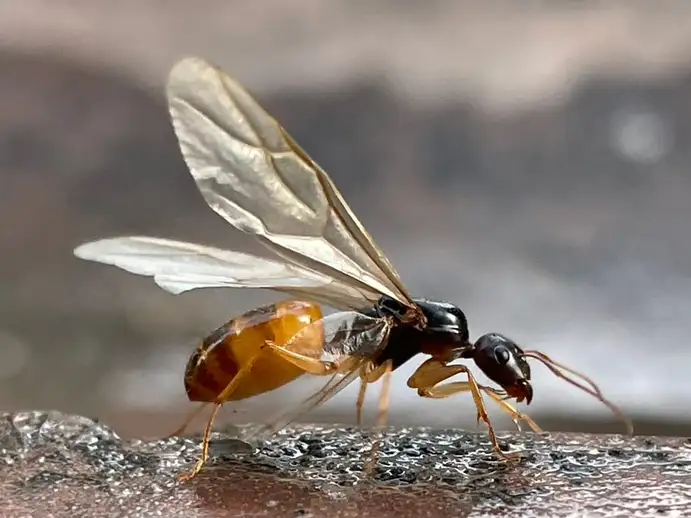
Workers are pale yellow to golden, the larger ones with a dark, often black head, and queens usually have a dark head and thorax with a yellow gaster. The similar Camponotus turkestanus is more uniformly yellow, but colors vary and shops have often mixed up the two names, so a sure identification needs an expert.
Often confused with
- Camponotus turkestanus
- Workers4–9 mm
- Majors≤ 12 mm
- Queen12–14 mm
mm
Biology
- Queens
- One queenEach colony has a single queen: never put two queens together once the first workers arrive.In the glossary
- Colony founding
- Fully claustralThe queen raises her first workers without eating, living off her wing muscles and fat reserves.In the glossary
- Workers
- Many sizesThe workers come in a continuous range of sizes, from small minors to large majors.In the glossary
- Defense
- Bites · Sprays formic acidNo sting: the workers bite and spray formic acid, which can sting small cuts.
Native range
- Asia
- Middle East
Afghanistan, Azerbaijan, China, Iran, Kazakhstan, Kyrgyzstan, Russia, Tajikistan, Turkmenistan, Uzbekistan
Taxonomy
Formicinae › Camponotini
Camponotus
Care at a glance
Difficulty
Why this rating
- Makes it easier: Fully claustral: the queen needs no food until her first workers arrive
- Makes it harder: Curious workers: keep an escape barrier on the outworld
Food
- Sugar
- Insects
Sugar or honey water for the workers, and insects as protein for the queen and the brood.
Best nests
- 1Ytong nest
- 2Acrylic nest
- 3Naturalistic setup
Notes from keepers
Watch out
Never heat the whole nest. In one keeper's journal a heat mat under a young colony was followed by a large die-off that the keeper blamed on overheating or a sudden change, so warm only one side and let the ants choose their spot.
Tip
Give the nest a damp corner and leave the rest dry. These are dry-soil ants, and after one keeper overwatered the nest the workers panicked and started hauling sand around.
Watch out
Start in a small nest and add space only as the colony fills it. A care guide warns that oversized chambers can make the workers leave the queen, and a keeper admitted giving a young colony far too much room.
Tip
Expect the queen to stop laying around midwinter. Some keepers rest the colony cool and others just switch off the heating, but in both cases keep a little sugar water and drinking water on offer, feed less protein and keep a little moisture in the nest until the eggs return.
Related posts

How To Make a Test Tube Setup - Ant Keeping Basics
In this tutorial you will learn how to make a test tube setup, the best way to create the optimal environment for a newly mated queen ant!

How To Hibernate Your Ants - Hibernation Tutorial
In this guide, we’re going to talk about hibernation: What is it? Why do ants need hibernation? Should I hibernate my ants? Let's see!
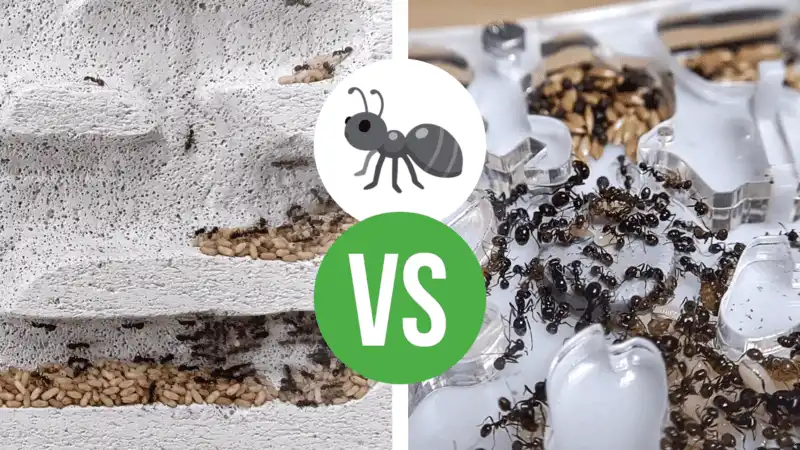
Ytong vs Acrylic - Which Is Better For An Ant Nest?
In this article, we’re going to talk about two of the most popular types of ant nests: acrylic nests and Ytong nests! Let's compare them!
FAQs
10It is hard, and the two names have been mixed up in the trade. French and Russian keepers point to a darker head and thorax in fedtschenkoi queens and majors, while turkestanus is described as uniformly yellow. Colors vary within both species, so a sure answer needs an expert.
No. Despite the name, it is a ground nester of dry steppes, semi-deserts and low mountains. In nature it digs horizontal underground nests, often under stones, with most chambers about half a meter deep and a few tunnels reaching about three meters.
It is a nocturnal species. In nature the workers hunt small insects and spiders at night, and in captivity they tend to stay with the brood in the nest and explore mostly after dark, although they adapt well to indoor light. Small colonies are also shy and need calm surroundings.
Camponotus fedtschenkoi workers measure 4–9 mm, with majors up to 12 mm, and the queen measures 12–14 mm.
Just one. Camponotus fedtschenkoi is monogyne: each colony has a single queen, so never put two queens together once the first workers arrive.
No. Camponotus fedtschenkoi has no sting: the workers bite and spray formic acid, which can sting small cuts.
In its native range, Camponotus fedtschenkoi usually flies in Apr – May. The weather decides the exact days.
Keep the Camponotus fedtschenkoi nest at 24–28 °C, with 50–70 % humidity in the brood chambers.
Not strictly, but it helps. A cooler winter rest at 15–18 °C, roughly during Dec – Feb, keeps Camponotus fedtschenkoi colonies healthy.
Camponotus fedtschenkoi is not on the EU list of invasive alien species and is not protected in the countries we checked. Rules differ between countries and can change, so check your local laws first.
Sources and review
- 1Wikipedia (Russian): Camponotus fedtschenkoi (description, sizes, range, habitat, nest depth, night activity, flight season and synonyms, based on Radchenko 1996 and 1997 and Dlussky and colleagues 1989)
Reference · Taxonomy, Biology, Distribution, Nuptial flights
- 2
- 3
- 4AntCat: Camponotus fedtschenkoi Mayr, 1877
Reference · Taxonomy
- 5AntWiki: Camponotus fedtschenkoi
Reference · Taxonomy, Distribution
Showing 5 of 27 sources
Last reviewed
- BiologyKeeper consensus
- Care valuesKeeper consensus
- Nuptial flightsFew sources
Legal status
Not on the EU list of invasive alien species and not protected in the countries we checked. Rules differ between countries and can change, so check your local laws before buying or collecting a queen.
Checked on October 11, 2026
All values are starting points: watch your colony and adjust. Found something wrong or missing?
Suggest a correction