Camponotus barbaricus
Emery, 1905
A shy, mostly nocturnal giant of the western Mediterranean that starts slowly, then grows into a huge colony once it has real warmth.
Compiled from published sources and keeper reports: I haven't kept this species myself, so treat the care values as starting points.
At a glance
- Nest temperature
- ≈ 25–30 °CIn the nest
- Nest humidity
- ≈ 40–60 %In the nest
- Hibernation
- ≈ 12–18 °CNov – Feb · recommended
- Nuptial flights
- ≈ Jun – AugNight flights
- Workers
- ≈ 6–12 mmmajors up to 16 mm
- Queen
- ≈ 16–18 mmOne queen
- Colony size
- ≈ Reaches 10,000 workersGrowth: Fast
- Escape risk
- MediumKeep an escape barrier on the outworld
Year at a glance
Hibernation : Nov – Feb
Active season : Mar – Oct
Nuptial flights : Jun – Aug
- Night flights
- Hot days
- Calm weather
Months for temperate Europe and the Mediterranean. The weather decides the exact days, so flights can come earlier or later where you live.
How to recognize it
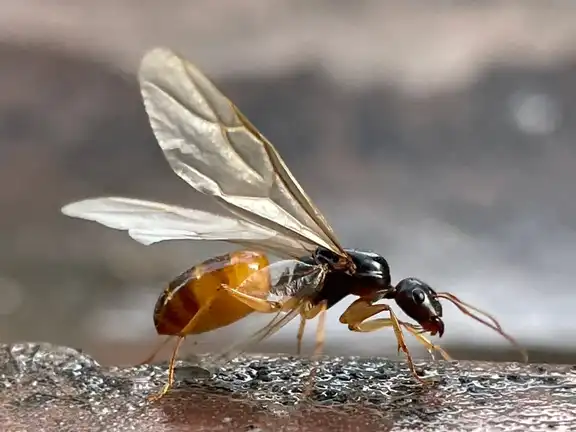
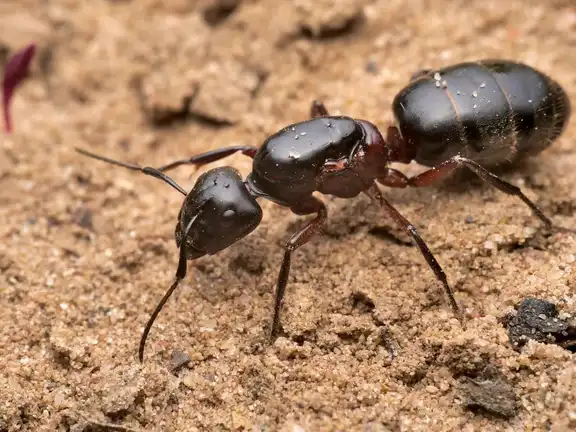
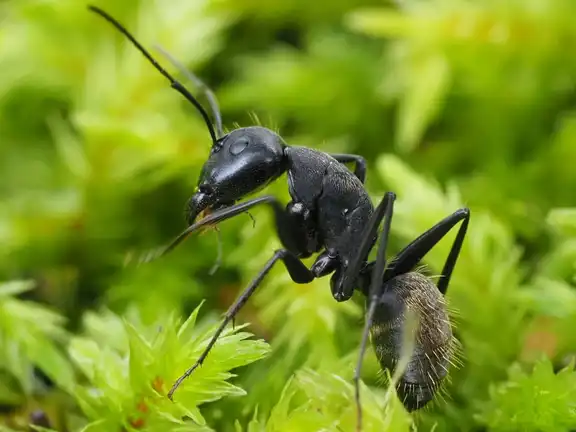
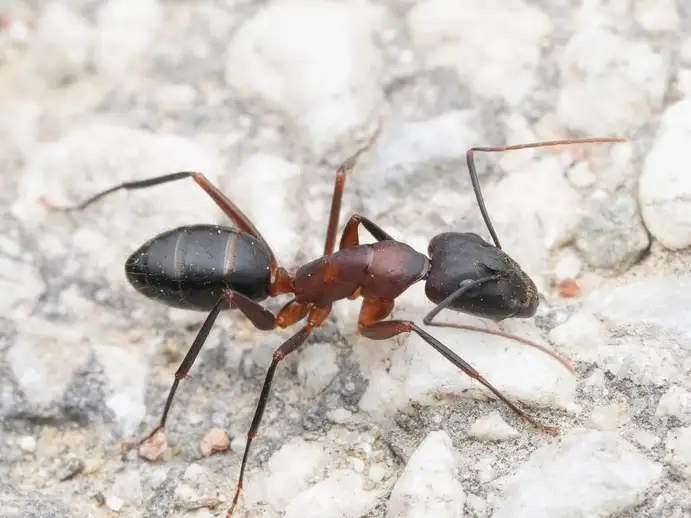
Glossy black workers in many sizes, with a black head and gaster and a thorax that runs from black to dark red or orange between individuals and colonies, so shipments from different places can look quite different. Compared with Camponotus cruentatus the body is shinier and the gaster has no orange band, and since the name also covers regional forms such as the subspecies xanthomelas, the exact identity of shop colonies is rarely certain.
Often confused with
- Workers6–12 mm
- Majors≤ 16 mm
- Queen16–18 mm
mm
Biology
- Queens
- One queenEach colony has a single queen: never put two queens together once the first workers arrive.In the glossary
- Colony founding
- Fully claustralThe queen raises her first workers without eating, living off her wing muscles and fat reserves.In the glossary
- Workers
- Many sizesThe workers come in a continuous range of sizes, from small minors to large majors.In the glossary
- Defense
- Bites · Sprays formic acidNo sting: the workers bite and spray formic acid, which can sting small cuts.
Native range
- Europe
- North Africa
Algeria, Gibraltar, Italy, Libya, Malta, Morocco, Portugal, Spain, Tunisia
Taxonomy
Formicinae › Camponotini
Camponotus
Care at a glance
Difficulty
Why this rating
- Makes it easier: Fully claustral: the queen needs no food until her first workers arrive
- Makes it harder: Curious workers: keep an escape barrier on the outworld
- Makes it harder: Colonies get huge and need room to expand
Food
- Sugar
- Insects
Sugar or honey water for the workers, and insects as protein for the queen and the brood.
Best nests
- 1Ytong nest
- 2Acrylic nest
- 3Naturalistic setup
Notes from keepers
Tip
Heat only one side of the nest. One colony stayed tiny for years at room temperature and took off after a heat mat was added, and since eggs, young larvae and pupae choose different spots, a warm end with a cooler corner works best.
Watch out
Do not rely on smooth glass or a thin coating, because the workers climb vertical glass, walk upside down and in one journal walked straight over a PTFE spray. Keep lids tight with no gaps, and feed in an outworld rather than inside the test tube, where some workers rush out and get lost when it is opened.
Tip
Offer thin liquids. The workers ignore thick honey or syrup when something runnier is available, so dilute honey or maple syrup well, and expect them to lick the juices of fresh insects and soft cat food and leave the solid parts for the trash pile.
Tip
Let the colony move on its own. Keepers report that a forced move stalls development, because the workers move when they outgrow the nest or when conditions turn bad. Attach the new nest to the old one and be patient, since a move can take days.
Related posts

How To Make a Test Tube Setup - Ant Keeping Basics
In this tutorial you will learn how to make a test tube setup, the best way to create the optimal environment for a newly mated queen ant!
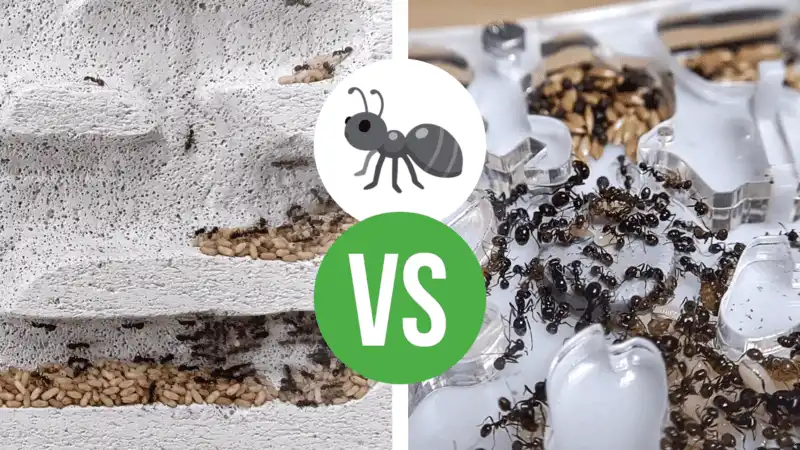
Ytong vs Acrylic - Which Is Better For An Ant Nest?
In this article, we’re going to talk about two of the most popular types of ant nests: acrylic nests and Ytong nests! Let's compare them!

How To Hibernate Your Ants - Hibernation Tutorial
In this guide, we’re going to talk about hibernation: What is it? Why do ants need hibernation? Should I hibernate my ants? Let's see!
FAQs
10Mostly. Small colonies stay hidden by day and come out at dusk, and even in large colonies the biggest workers usually forage at night, while many workers may sit in the open by day once the colony has grown. Some shop sheets say day and night, and a few keepers see single workers walking around by day. Bright light and flashlights upset them, and red foil does not help against a strong light, so a weak red light works best.
Sometimes, but expect a long and risky process. One keeper whose queen died during the winter of 2026 placed a new queen behind a mesh in a small nest inside the colony's outworld, then joined her with pupae and single workers step by step. After more than six months the workers accepted and fed her, although she attacked workers on the way and killed a major. Spanish keepers stress that their Camponotus are strictly monogynous and aggressive when threatened, so most keepers see it as a long shot.
Later than most people expect. In the best-documented colony the first small majors showed up at roughly 50 workers in the first summer, majors almost as big as the queen followed within the first year, and the very largest workers, up to about 18 mm, only appeared in the third year after the colony passed ten thousand workers. A young colony with only small workers is therefore not doing anything wrong.
Camponotus barbaricus workers measure 6–12 mm, with majors up to 16 mm, and the queen measures 16–18 mm.
Just one. Camponotus barbaricus is monogyne: each colony has a single queen, so never put two queens together once the first workers arrive.
No. Camponotus barbaricus has no sting: the workers bite and spray formic acid, which can sting small cuts.
In temperate Europe and the Mediterranean, Camponotus barbaricus usually flies in Jun – Aug. The weather decides the exact days.
Keep the Camponotus barbaricus nest at 25–30 °C, with 40–60 % humidity in the brood chambers.
Not strictly, but it helps. A cooler winter rest at 12–18 °C, roughly during Nov – Feb, keeps Camponotus barbaricus colonies healthy.
Camponotus barbaricus is not on the EU list of invasive alien species and is not protected in the countries we checked. Rules differ between countries and can change, so check your local laws first.
Sources and review
- 1
- 2Catalogue of Life: Camponotus (Tanaemyrmex) barbaricus Emery, 1905
Reference · Taxonomy
- 3AntCat: Camponotus barbaricus Emery, 1905
Reference · Taxonomy
- 4AntWiki: Camponotus barbaricus
Reference · Taxonomy, Distribution
- 5GBIF: Camponotus barbaricus Emery, 1905, occurrence records by country
Reference · Distribution
Showing 5 of 33 sources
Last reviewed
- BiologyKeeper consensus
- Care valuesKeeper consensus
- Nuptial flightsKeeper consensus
Legal status
Not on the EU list of invasive alien species and not protected in the countries we checked. Rules differ between countries and can change, so check your local laws before buying or collecting a queen.
Checked on October 11, 2026
All values are starting points: watch your colony and adjust. Found something wrong or missing?
Suggest a correction