Camponotus ligniperda
(Latreille, 1802)
Brown-black carpenter ant
One of Europe's biggest ants, a glossy red-and-black giant that lives by its own slow seasonal clock.
Compiled from published sources and keeper reports: I haven't kept this species myself, so treat the care values as starting points.
At a glance
- Nest temperature
- 20–25 °CIn the nest
- Nest humidity
- ≈ 50–60 %In the nest
- Hibernation
- ≈ 5–8 °COct – Mar
- Nuptial flights
- May – JunAfternoon flights
- Workers
- ≈ 6–10 mmmajors up to 14 mm
- Queen
- 16–18 mmOne queen
- Colony size
- ≈ Reaches 5,000 workersGrowth: Moderate
- Escape risk
- MediumKeep an escape barrier on the outworld
Year at a glance
Hibernation : Oct – Mar
Active season : Apr – Sep
Nuptial flights : May – Jun
- Afternoon flights
- Hot days
- Humid air
Months for temperate Europe and the Mediterranean. The weather decides the exact days, so flights can come earlier or later where you live.
How to recognize it
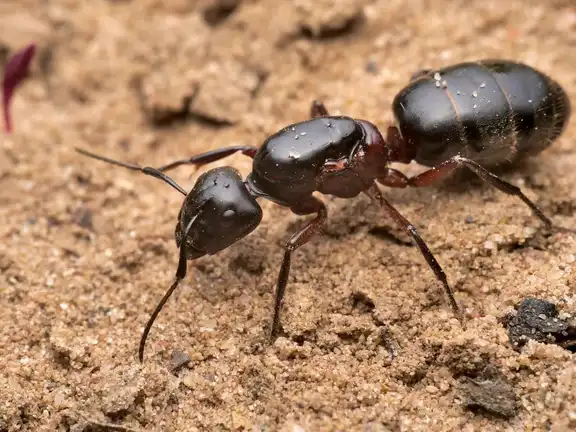
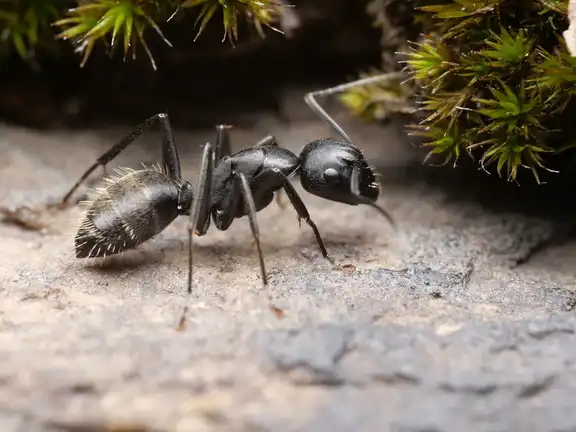
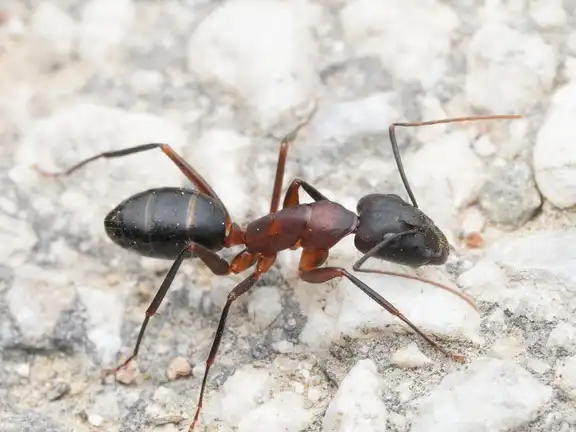
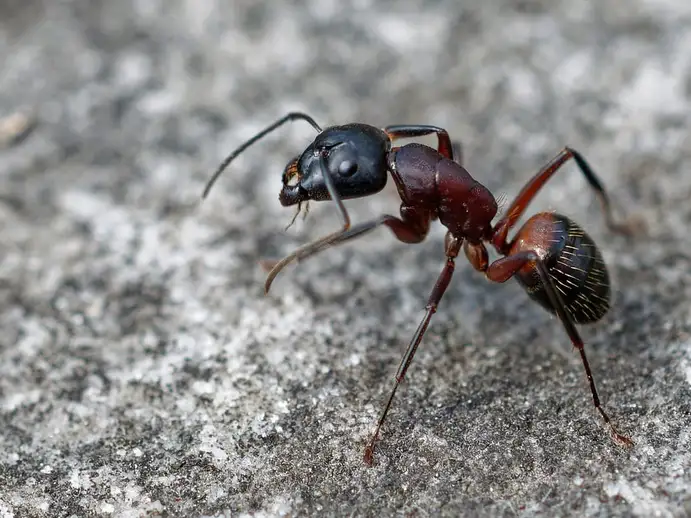
Large, shiny ants with a black head and gaster and a bright red-brown thorax, plus a red tint that often spreads onto the front of the gaster. Workers range from small minors to majors with a huge head, and the brighter color and shinier gaster set them apart from the duller Camponotus herculeanus, which prefers colder, higher forests, although the two can be hard to separate by eye.
Often confused with
- Workers6–10 mm
- Majors≤ 14 mm
- Queen16–18 mm
mm
Biology
- Queens
- One queenEach colony has a single queen: never put two queens together once the first workers arrive.In the glossary
- Colony founding
- Fully claustralThe queen raises her first workers without eating, living off her wing muscles and fat reserves.In the glossary
- Workers
- Many sizesThe workers come in a continuous range of sizes, from small minors to large majors.In the glossary
- Defense
- Bites · Sprays formic acidNo sting: the workers bite and spray formic acid, which can sting small cuts.
Native range
- Europe
- Middle East
Austria, Belgium, Czechia, Denmark, Finland, France, Germany, Hungary, Italy, Norway, Poland, Russia, Spain, Sweden, Switzerland
Taxonomy
Formicinae › Camponotini
Camponotus
Care at a glance
Difficulty
Why this rating
- Makes it easier: Fully claustral: the queen needs no food until her first workers arrive
- Makes it harder: Curious workers: keep an escape barrier on the outworld
- Makes it harder: Needs a cold hibernation, for example in a fridge
Food
- Sugar
- Insects
Sugar or honey water for the workers, and insects as protein for the queen and the brood.
Best nests
- 1Ytong nest
- 2Wooden nest
- 3Naturalistic setup
Notes from keepers
Watch out
Do not keep the colony warm all year. It follows an inner yearly clock, and constant heating can make it wrap up its season early and drift into winter rest in late summer. A small warm corner for the brood is enough.
Tip
Offer a damp chamber next to a drier part of the nest. The ants carry eggs and larvae to the moister spots, and a nest kept completely dry slows the brood down.
Tip
Feed flies, spiders and other soft-bodied insects, which the workers take eagerly. Mealworms get a mixed reception, and one keeper's colony ignored them even when blanched, so keep flies and spiders as the dependable staples.
Watch out
Expect a slow, quiet first year. Founding queens and small colonies are easily stressed by vibrations and light, and the workers often stay hidden, but many colonies multiply from the second or third year on.
Related posts

How To Hibernate Your Ants - Hibernation Tutorial
In this guide, we’re going to talk about hibernation: What is it? Why do ants need hibernation? Should I hibernate my ants? Let's see!
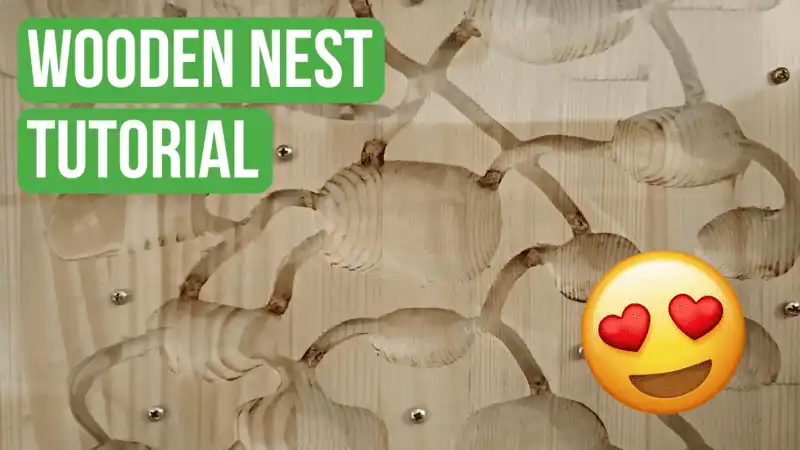
How to Make a Wooden Nest - Ant Keeping Tutorial
In this tutorial, you will learn how to make a wooden nest for your ant colonies! This type of nest is perfect for species that love wood!

How To Make a Test Tube Setup - Ant Keeping Basics
In this tutorial you will learn how to make a test tube setup, the best way to create the optimal environment for a newly mated queen ant!
FAQs
10The species runs on an inner yearly clock rather than on room temperature. Once the brood of the season has pupated, the workers settle in a tight cluster around the queen with full crops, and activity can drop as early as midsummer, even in a warm room. The larvae that are left shrink a little, spend the winter with the colony and grow quickly after the spring wake-up, so this quiet spell is normal.
They never eat wood. They only hollow it out to make room for the nest, and in the wild they mostly nest in the ground, under stones, in dry stumps or in dead, rotting wood. Healthy timber is rarely touched, but carpenter ants do turn up now and then in house beams that are damp or already damaged. A captive colony stays in its formicarium, so the thing to watch is winged queens or males slipping out when they appear, which is why the lid should stay closed.
Yes, but rarely. A 2019 study found hybrid workers in central Europe and estimated that hybridization is very rare. The two species live side by side at roughly one site in ten and swarm at almost the same time, so strong barriers must keep them apart. Only careful measurements of several body features can identify hybrid workers, so a colony that looks halfway between the two is hard to name by eye.
Camponotus ligniperda workers measure 6–10 mm, with majors up to 14 mm, and the queen measures 16–18 mm.
Just one. Camponotus ligniperda is monogyne: each colony has a single queen, so never put two queens together once the first workers arrive.
No. Camponotus ligniperda has no sting: the workers bite and spray formic acid, which can sting small cuts.
In temperate Europe and the Mediterranean, Camponotus ligniperda usually flies in May – Jun. The weather decides the exact days.
Keep the Camponotus ligniperda nest at 20–25 °C, with 50–60 % humidity in the brood chambers.
Yes. Hibernate Camponotus ligniperda at 5–8 °C, roughly during Oct – Mar.
Camponotus ligniperda is not on the EU list of invasive alien species and is not protected in the countries we checked. Rules differ between countries and can change, so check your local laws first.
Sources and review
- 1
- 2
- 3Seifert (2019), Insectes Sociaux 66: Hybridization in the European carpenter ants Camponotus herculeanus and C. ligniperda
Paper · Taxonomy, Biology, Nuptial flights
- 4
- 5Umweltbundesamt (German Environment Agency): wood-destroying ants, Braunschwarze Rossameise (Camponotus ligniperda)
Reference · Biology, Distribution
Showing 5 of 29 sources
Last reviewed
- BiologyWell documented
- Care valuesKeeper consensus
- Nuptial flightsWell documented
Legal status
Not on the EU list of invasive alien species and not protected in the countries we checked. Rules differ between countries and can change, so check your local laws before buying or collecting a queen.
Checked on October 11, 2026
All values are starting points: watch your colony and adjust. Found something wrong or missing?
Suggest a correction