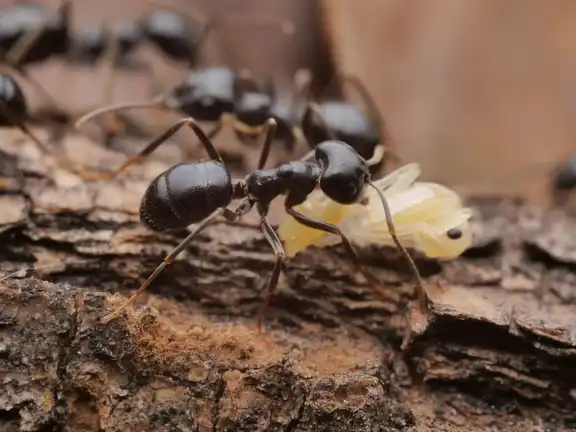
Manica rubida
(Latreille, 1802)
A big, rusty-red mountain hunter that heaps crater-like mounds around its nest entrances, stings like a wasp and punishes mistakes in the founding stage.
Compiled from published sources and keeper reports: I haven't kept this species myself, so treat the care values as starting points.
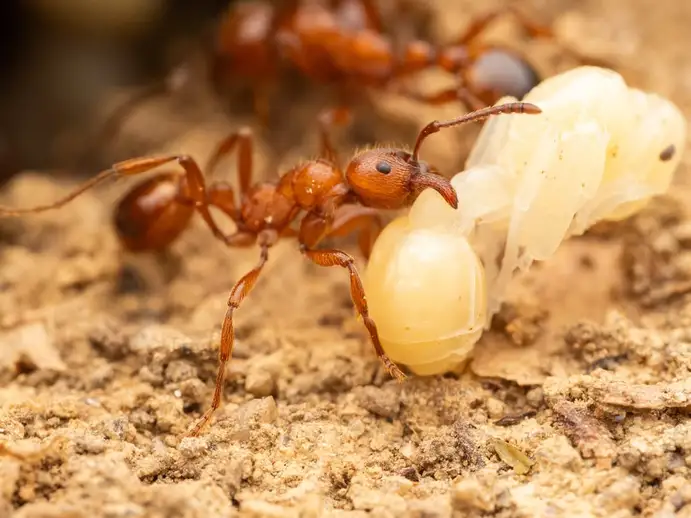
At a glance
- Nest temperature
- ≈ 20–28 °CIn the nest
- Nest humidity
- ≈ 50–70 %In the nest
- Hibernation
- ≈ 5–10 °COct – Mar · recommended
- Nuptial flights
- Apr – JunMorning flights
- Workers
- ≈ 5–9 mmAll the same size
- Queen
- 10–13 mmOne or more queens
- Colony size
- ≈ Reaches 3,000 workersGrowth: Fast
- Escape risk
- MediumKeep an escape barrier on the outworld
Year at a glance
Hibernation : Oct – Mar
Active season : Apr – Sep
Nuptial flights : Apr – Jun
- Morning flights
- Hot days
Months for temperate Europe and the Mediterranean. The weather decides the exact days, so flights can come earlier or later where you live.
How to recognize it
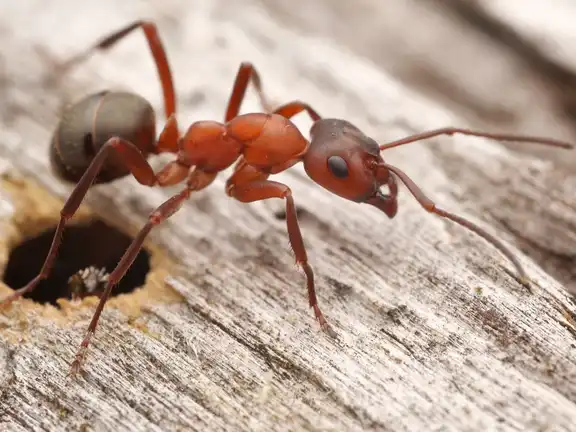
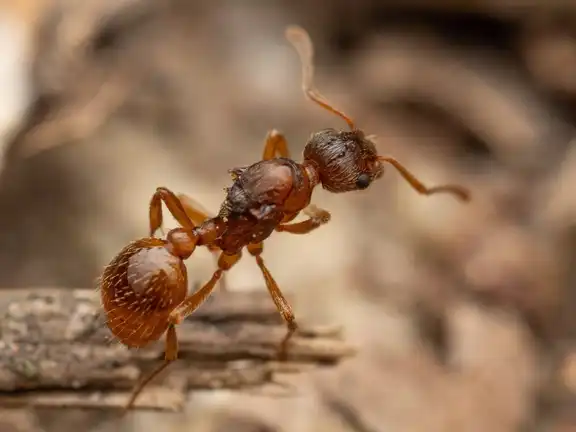
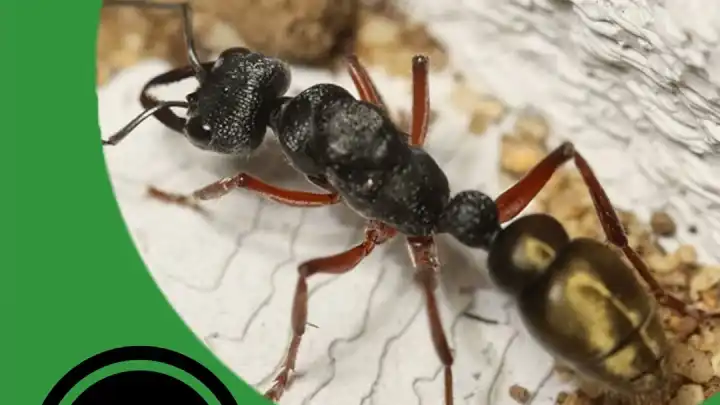
Large, slender workers in amber to reddish-brown with a darker head and a very shiny gaster that is darker at the rear; they look like oversized Myrmica but have no long spines on the back of the thorax. The excavated soil is piled into a crater around the nest entrance, which also gives a colony away in the field.
Often confused with
- Workers5–9 mm
- Queen10–13 mm
mm
Biology
- Queens
- One or more queensNew colonies usually start with a single queen, but many grow to hold several queens living together.In the glossary
- Colony founding
- Semi-claustralThe queen has to leave her chamber to hunt and eat while she raises her first workers.In the glossary
- Workers
- All the same sizeAll the workers have about the same size and shape.
- Defense
- Bites · Painful stingThe sting is very painful and can cause strong reactions: always handle the colony with care.
Native range
- Europe
- Middle East
Austria, Bulgaria, Czechia, France, Georgia, Germany, Italy, Poland, Romania, Serbia, Slovakia, Slovenia, Switzerland, Türkiye, Ukraine
Taxonomy
Myrmicinae › Myrmicini
Manica
Care at a glance
Difficulty
Why this rating
- Makes it harder: Curious workers: keep an escape barrier on the outworld
- Makes it harder: Semi-claustral: the founding queen has to be fed
- Makes it harder: The workers can sting
Food
- Sugar
- Insects
Sugar or honey water for the workers, and insects as protein for the queen and the brood.
Best nests
- 1Ytong nest
- 2Naturalistic setup
- 3Test tube setup
Notes from keepers
Watch out
Founding queens hunt for themselves, so make sure they can reach food from the first day: a small outworld or very regular feeding, and once the first larvae appear a small protein piece she can carry at least once a day. Keepers who raised many colonies feed once or twice a day at that stage.
Tip
Offer a gradient from damp to fairly dry instead of a soaked nest. A keeper who gave a colony three chambers from wet to nearly dry found it living in the driest one, but small colonies are also very sensitive to a nest that dries out.
Tip
Give the brood a warm spot, for example a heating cable under one chamber, and let the rest of the setup stay cooler. In one long diary pupae failed at a constant mild temperature, and some queens kept at ordinary room temperature would not lay until they were warmed.
Watch out
Never put founding queens together. Two queens housed in one tube began killing each other and had to be separated, so start every queen in her own setup.
Related posts

The Manica rubida Challenge - The Ant Pod
Experienced keeper Antramblings on breeding Manica rubida: habitat, feeding, the group breeding challenge and the ethics of breeding ants for sale.
Keeping Semi-Claustral Ants - The Ant Pod
Semi-claustral queens need food from day one. Lynn and Jake share what they learned founding Manica rubida and Myrmica rubra colonies, and how to set them up.

How To Hibernate Your Ants - Hibernation Tutorial
In this guide, we’re going to talk about hibernation: What is it? Why do ants need hibernation? Should I hibernate my ants? Let's see!
FAQs
10Manica and Myrmica are sister genera, and Manica rubida is the only Manica in Europe. Its workers are clearly bigger and more slender than Myrmica rubra workers and lack the long spines on the back of the thorax. The keeping differs too: Myrmica rubra is a damp-meadow ant with huge multi-queen colonies and is comparatively forgiving, while Manica rubida lives on sunny mountain slopes, mostly has a single queen, and is demanding to get started.
Some colonies in the French Alps were found to raise microgynes next to normal queens. These small winged queens are about the size of a worker, never took part in the nuptial flight, overwintered in the nest and kept their wings until spring. They behaved like workers, foraging and carrying brood, and almost none of the microgynes that were dissected had been mated. Their role in the colony is still unclear.
It is widespread in European mountain ranges: a 2023 study compiled 611 records spread from river valleys to high alpine slopes, and the species is not on the international Red List. It can still be scarce locally, for example in the Bohemian-Moravian Highlands, and Germany's red-list compilations place it on the warning list or among the threatened species because suitable open habitats are shrinking. So collect only a few queens at the flight and never dig up nests.
Manica rubida workers measure 5–9 mm, and the queen measures 10–13 mm.
One or more. Manica rubida colonies are usually founded by a single queen, but many end up with several queens living together.
Yes, and it hurts. Manica rubida workers have a very painful sting that can cause strong reactions in sensitive people, so always handle the colony with care.
In temperate Europe and the Mediterranean, Manica rubida usually flies in Apr – Jun. The weather decides the exact days.
Keep the Manica rubida nest at 20–28 °C, with 50–70 % humidity in the brood chambers.
Not strictly, but it helps. A cooler winter rest at 5–10 °C, roughly during Oct – Mar, keeps Manica rubida colonies healthy.
Manica rubida is not on the EU list of invasive alien species and is not protected in the countries we checked. Rules differ between countries and can change, so check your local laws first.
Sources and review
- 1Lenoir et al. (2010), Journal of Insect Science 10: Microgynous queens in the Palearctic ant Manica rubida, dispersal morphs or social parasites? (habitat, colony structure, semi-claustral founding, flights in the French Alps)
Paper · Taxonomy, Biology, Distribution, Nuptial flights
- 2
- 3Ameiseninfos.de: Manica rubida, Aufzucht- und Ameisenhaltungsbericht (several years of keeping, winter rest, moisture choice, escape behavior)
Care sheet · Care, Biology, Nuptial flights
- 4formicarium.it forum: [diario] Manica rubida (two-year diary by a moderator)
Forum · Care, Biology
- 5
Showing 5 of 32 sources
Last reviewed
- BiologyWell documented
- Care valuesKeeper consensus
- Nuptial flightsKeeper consensus
Legal status
Not on the EU list of invasive alien species and not protected in the countries we checked. Rules differ between countries and can change, so check your local laws before buying or collecting a queen.
Checked on October 11, 2026
All values are starting points: watch your colony and adjust. Found something wrong or missing?
Suggest a correction