Novomessor cockerelli
(André, 1893)
Desert harvester ant
A leggy desert scavenger whose workers team up to haul prey far too big for a single ant.
Compiled from published sources and keeper reports: I haven't kept this species myself, so treat the care values as starting points.
At a glance
- Nest temperature
- ≈ 27–32 °CIn the nest
- Nest humidity
- ≈ 50–70 %In the nest
- Hibernation
- Not needed
- Nuptial flights
- ≈ Jul – AugEvening flights
- Workers
- ≈ 7–10 mmAll the same size
- Queen
- ≈ 11–14 mmOne queen
- Colony size
- ≈ Reaches 5,000 workersGrowth: Fast
- Escape risk
- MediumKeep an escape barrier on the outworld
Year at a glance
Active season : All year
Nuptial flights : Jul – Aug
- Evening flights
- After rain
Months in the native range of the species. The weather decides the exact days, and colonies kept indoors can follow a different rhythm.
How to recognize it
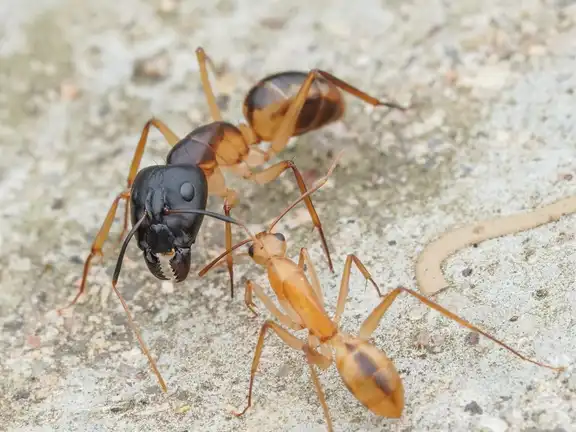
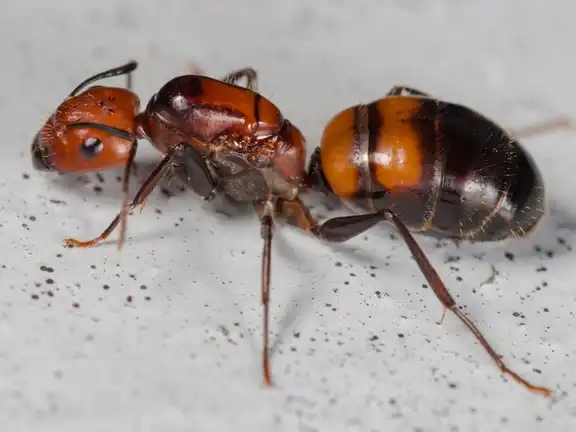
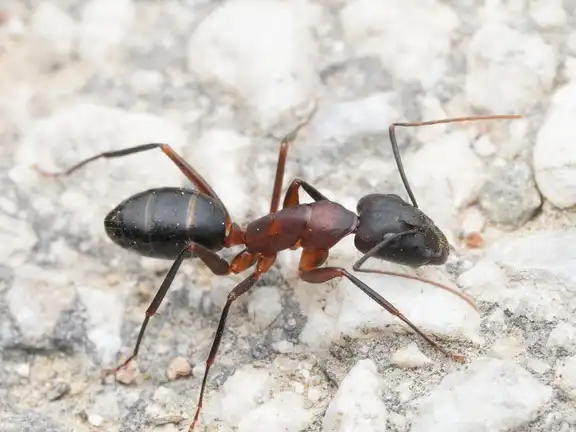
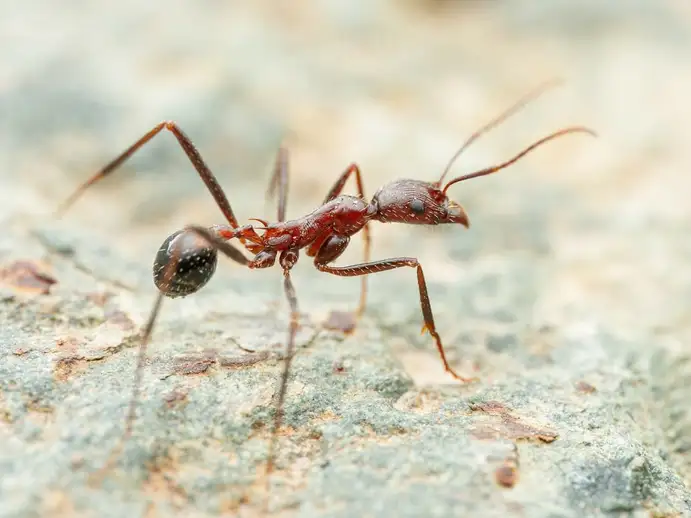
Large, slender, long-legged ants, brown to reddish-brown with a blackish gaster, a long narrow head and two spines on the back of the thorax. Novomessor albisetosus looks very similar and is told apart by the shape of the head, so check the head before assuming which of the two you have.
Often confused with
- Novomessor albisetosus
- Workers7–10 mm
- Queen11–14 mm
mm
Biology
- Queens
- One queenEach colony has a single queen: never put two queens together once the first workers arrive.In the glossary
- Colony founding
- Fully claustralThe queen raises her first workers without eating, living off her wing muscles and fat reserves.In the glossary
- Workers
- All the same sizeAll the workers have about the same size and shape.
- Defense
- BitesNo sting: the workers defend the colony by biting.
Native range
- North America
Mexico, United States
Taxonomy
Myrmicinae › Stenammini
Novomessor
Care at a glance
Difficulty
Why this rating
- Makes it easier: Fully claustral: the queen needs no food until her first workers arrive
- Makes it easier: No hibernation to manage
- Makes it harder: Curious workers: keep an escape barrier on the outworld
- Makes it harder: Needs constant warmth all year round
Food
- Insects
- Sugar
Sugar or honey water for the workers, and insects as protein for the queen and the brood.
Best nests
- 1Ytong nest
- 2Acrylic nest
- 3Naturalistic setup
Notes from keepers
Tip
Heat is the main lever. Keep part of the nest hot and leave a cooler, moister corner: colonies kept at room temperature stagnate, while warm ones raise new workers in about a month. Keep the heat source away from the water reservoir so no condensation forms.
Watch out
Feed more protein than seeds. The workers take insects much more readily than seeds and do not build up food stores like their seed-hoarding relatives, so long gaps between feedings are risky. Some keepers lost freshly hatched workers in small colonies without ever finding the cause; fattier prey and more warmth were the usual suggestions. Clear leftovers within a day, because rotting protein brings mites and mold.
Watch out
These are desert ants, so keep most of the nest on the dry side and offer only a small moist retreat for the brood. An over-watered nest made one colony abandon it, and keepers stress that these ants like it dry.
Watch out
Fast, agile and endlessly curious, they test every edge of the outworld, so use a snug lid and a reliable barrier such as fluon, and renew it regularly.
Related posts
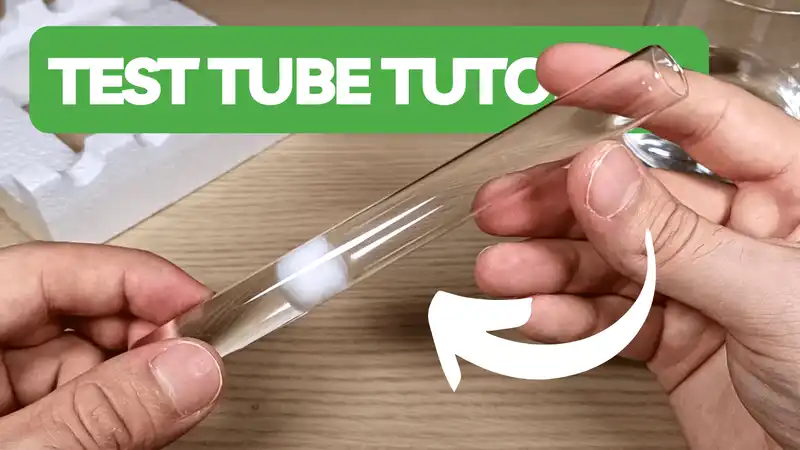
How To Make a Test Tube Setup - Ant Keeping Basics
In this tutorial you will learn how to make a test tube setup, the best way to create the optimal environment for a newly mated queen ant!
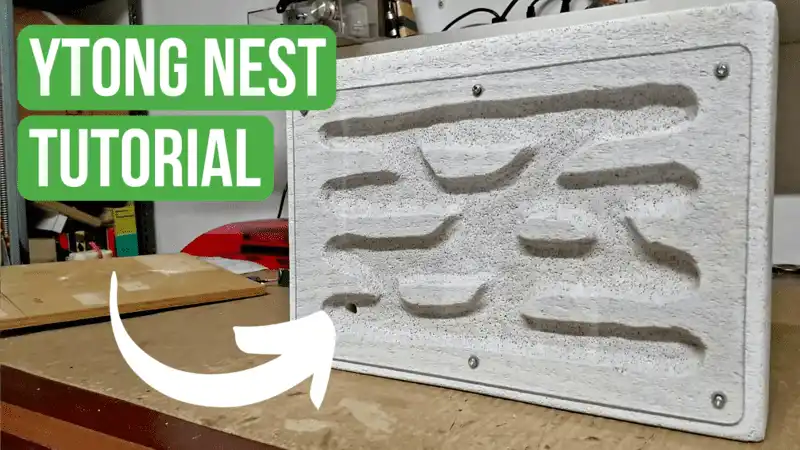
How To Make a Ytong Nest - Ant Keeping Tutorial
In this tutorial, you will learn how to make a Ytong nest for your ant colonies! This is one of the best nest types for many ant species!
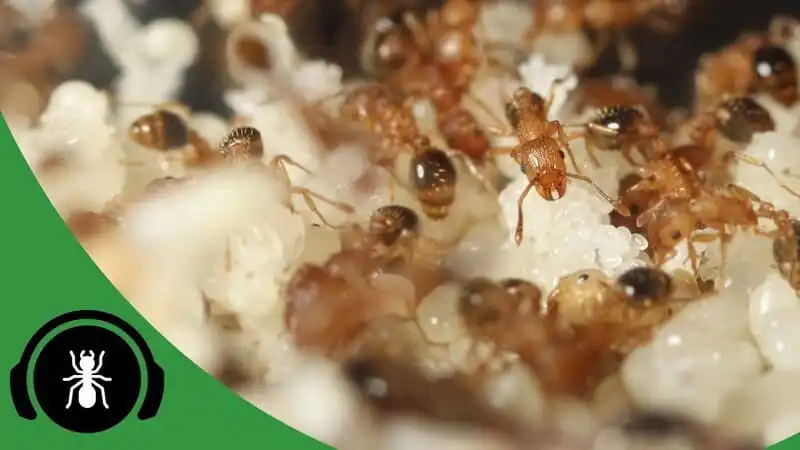
The Best Conditions To Keep Ants - The Ant Pod
Temperature, humidity and pests: heating mats, hydration setups, how to spot and control mites, and why the best setup mimics each species' natural habitat.
FAQs
10A scout that finds an item too large to move alone calls nestmates with chemical and sound signals, and a small team gathers around the load, with the porters pulling it backward toward the nest. In experiments with this species a lone ant carrying its share of a load was faster than any group, so working in a group does not make each porter quicker; it lets the colony bring home big prey that no single worker could move.
Not mouth to mouth. In the lab, food exchange by regurgitation did not occur in this species, and while the queen is present the workers lay only trophic eggs, which appear to be her main source of food. The queen therefore depends on a well-fed colony that can produce them. If she is lost, some workers start laying eggs that develop only into males, and the colony dies out once those males have emerged and the workers have reached the end of their lives.
Only in part, despite its common name. In the Chihuahuan Desert nearly half of what its workers collected was insects or insect parts, while its close relative Novomessor albisetosus collected far fewer. Keepers see the same pattern: it takes protein eagerly, rarely stockpiles seeds and sometimes ignores a seed mix, although a few shops say seeds can make up about half of the diet. Offer seeds as a supplement, not as the main food.
Novomessor cockerelli workers measure 7–10 mm, and the queen measures 11–14 mm.
Just one. Novomessor cockerelli is monogyne: each colony has a single queen, so never put two queens together once the first workers arrive.
No. Novomessor cockerelli cannot sting: the workers defend the colony by biting.
In its native range, Novomessor cockerelli usually flies in Jul – Aug. The weather decides the exact days.
Keep the Novomessor cockerelli nest at 27–32 °C, with 50–70 % humidity in the brood chambers.
No. Novomessor cockerelli stays active all year and does not need a winter rest.
Novomessor cockerelli is not on the EU list of invasive alien species and is not protected in the countries we checked. Rules differ between countries and can change, so check your local laws first.
Sources and review
- 1
- 2
- 3
- 4
- 5
Showing 5 of 30 sources
Last reviewed
- BiologyWell documented
- Care valuesKeeper consensus
- Nuptial flightsKeeper consensus
Legal status
Not on the EU list of invasive alien species and not protected in the countries we checked. Rules differ between countries and can change, so check your local laws before buying or collecting a queen.
Checked on October 11, 2026
All values are starting points: watch your colony and adjust. Found something wrong or missing?
Suggest a correction