Camponotus nicobarensis
Mayr, 1865
Nicobar carpenter ant
An adaptable, fast-growing carpenter ant from Asia that forages mostly by night and does not need a winter rest.
Compiled from published sources and keeper reports: I haven't kept this species myself, so treat the care values as starting points.
At a glance
- Nest temperature
- 22–28 °CIn the nest
- Nest humidity
- ≈ 50–70 %In the nest
- Hibernation
- Not needed
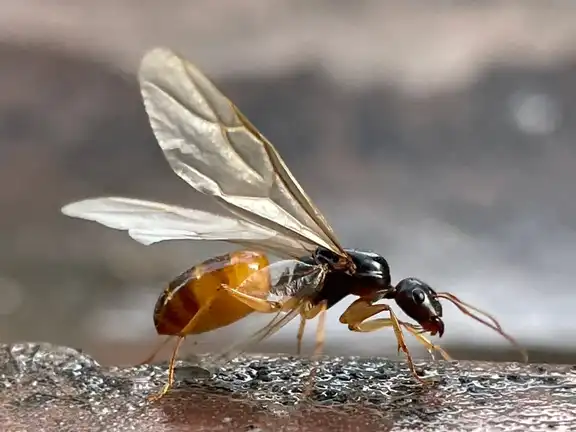
- Nuptial flights
- ≈ Mar – Jun
- Workers
- ≈ 5–8 mmmajors up to 12 mm
- Queen
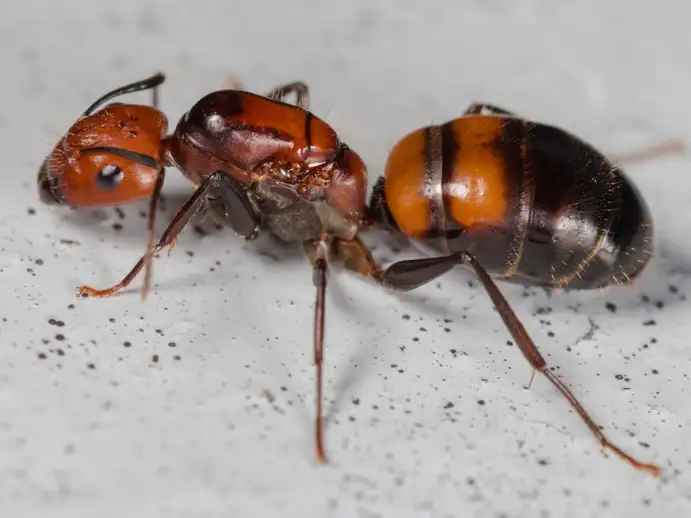
- ≈ 14–16 mmOne queen
- Colony size
- ≈ Reaches 10,000 workersGrowth: Very fast
- Escape risk
- HighEscape artists: use a closed outworld and a good barrier
Year at a glance
Active season : All year
Nuptial flights : Mar – Jun
Months in the native range of the species. The weather decides the exact days, and colonies kept indoors can follow a different rhythm.
How to recognize it
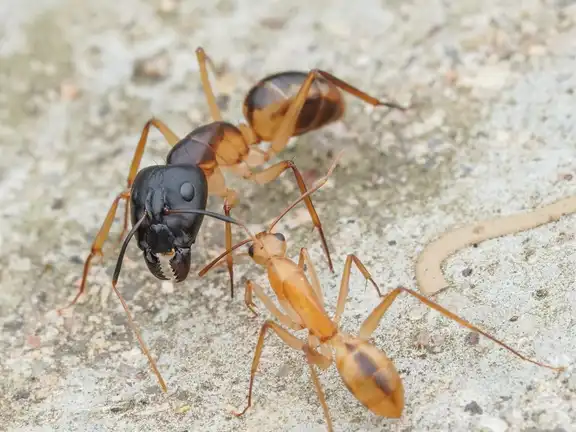
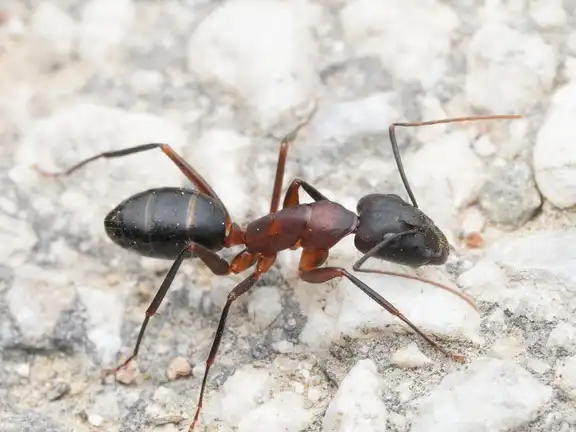
Brown to reddish-brown workers of many sizes, from small minors to much larger majors, with long, dense, erect hairs all over the body. The gaster is plain brownish, not banded in black and yellow like the similar Camponotus habereri, and colors vary with the origin of the stock, which is why some shops list it as 'cf. nicobarensis'.
Often confused with
- Camponotus habereri
- Camponotus exiguoguttatus
- Workers5–8 mm
- Majors≤ 12 mm
- Queen14–16 mm
mm
Biology
- Queens
- One queenEach colony has a single queen: never put two queens together once the first workers arrive.In the glossary
- Colony founding
- Fully claustralThe queen raises her first workers without eating, living off her wing muscles and fat reserves.In the glossary
- Workers
- Many sizesThe workers come in a continuous range of sizes, from small minors to large majors.In the glossary
- Defense
- Bites · Sprays formic acidNo sting: the workers bite and spray formic acid, which can sting small cuts.
Native range
- Asia
Bangladesh, Bhutan, China, Hong Kong SAR China, India, Indonesia, Laos, Macao SAR China, Malaysia, Myanmar (Burma), Taiwan, Thailand, Vietnam
Taxonomy
Formicinae › Camponotini
Camponotus
Care at a glance
Difficulty
Why this rating
- Makes it easier: Fully claustral: the queen needs no food until her first workers arrive
- Makes it easier: No hibernation to manage
- Makes it harder: A real escape artist that needs an escape-proof setup
- Makes it harder: Grows very fast and needs plenty of protein and space
- Makes it harder: Colonies get huge and need room to expand
Food
- Sugar
- Insects
Sugar or honey water for the workers, and insects as protein for the queen and the brood.
Best nests
- 1Ytong nest
- 2Acrylic nest
- 3Wooden nest
Notes from keepers
Watch out
Treat them as climbers: keepers report workers walking up glass and even jumping. Use a tight lid with a barrier such as paraffin oil or Fluon, and seal every gap, because some ants died squeezing between a Ytong nest and the glass.
Tip
Offer sugar as syrup or sugar water on a piece of cotton or in a feeder, not as open drops: the workers run through the drops, stick and drown, and one keeper lost several that way. Taste varies between colonies, and some ignored plain sugar water but loved invert syrup, so try a second sweet food if one is refused.
Tip
Do not keep the nest constantly wet. Keepers describe the species as dry-loving, one colony preferred a nest block that had not been rewetted for weeks, and a soaked nest risks mold, so give drinking water and let part of the nest stay dry.
Watch out
Do not add a second queen. Some populations are reported to have several queens, but experienced keepers say a queen put into an established colony is usually killed. Documented exceptions are rare, such as a colony of only about two dozen workers that accepted a replacement queen soon after losing its own.
Related posts
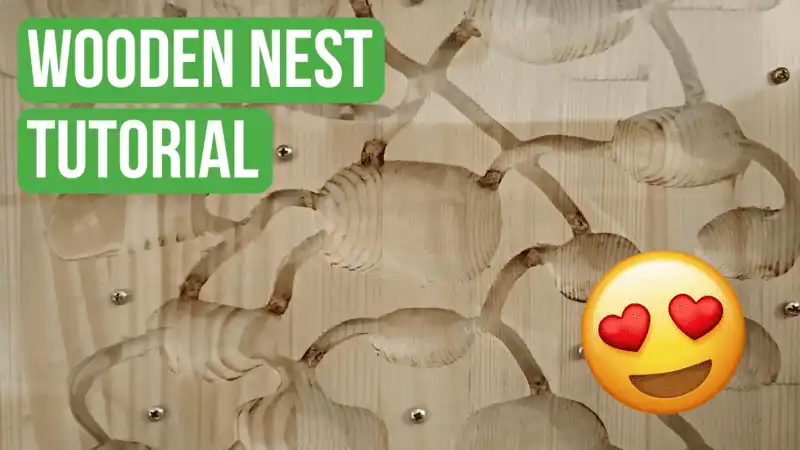
How to Make a Wooden Nest - Ant Keeping Tutorial
In this tutorial, you will learn how to make a wooden nest for your ant colonies! This type of nest is perfect for species that love wood!
When Ant Colonies Grow Out of Control! - The Ant Pod
What do you do when an ant colony gets too big? Lynn, Jake and Alex cover overcrowding, cleaning large outworlds, diet control and downsizing.
The Best Conditions To Keep Ants - The Ant Pod
Temperature, humidity and pests: heating mats, hydration setups, how to spot and control mites, and why the best setup mimics each species' natural habitat.
FAQs
10No. Gustav Mayr described it in 1865 from Kar Nicobar, which gave it its name, but it lives across South and Southeast Asia and southern China, from India and Bangladesh through Myanmar, Thailand and Vietnam to Hong Kong and Taiwan. Some shops label their colonies 'cf. nicobarensis', which means the identification is not fully certain.
Mostly at night, especially while the colony is small. The workers forage mainly after dark and stay in the nest by day, but they are also seen foraging in daylight, and keepers report that bigger colonies become active around the clock.
Yes, it is a very flexible nester. In nature it uses dead tree trunks, rotting wood, bamboo stems and even spaces under stones, and keepers house it in cork, plaster, concrete, wooden and acrylic nests. A documented colony in Warsaw left its formicarium after nearly five years, settled in an empty ceramic teapot on a kitchen counter and later moved into a second one, raising brood in both.
Camponotus nicobarensis workers measure 5–8 mm, with majors up to 12 mm, and the queen measures 14–16 mm.
Just one. Camponotus nicobarensis is monogyne: each colony has a single queen, so never put two queens together once the first workers arrive.
No. Camponotus nicobarensis has no sting: the workers bite and spray formic acid, which can sting small cuts.
In its native range, Camponotus nicobarensis usually flies in Mar – Jun. The weather decides the exact days.
Keep the Camponotus nicobarensis nest at 22–28 °C, with 50–70 % humidity in the brood chambers.
No. Camponotus nicobarensis stays active all year and does not need a winter rest.
Camponotus nicobarensis is not on the EU list of invasive alien species and is not protected in the countries we checked. Rules differ between countries and can change, so check your local laws first.
Sources and review
- 1
- 2
- 3AntCat: Camponotus nicobarensis Mayr, 1865
Reference · Taxonomy
- 4AntWiki: Camponotus nicobarensis
Reference · Taxonomy, Distribution
- 5AntMaps (GABI database): Camponotus nicobarensis, native records by region
Reference · Distribution
Showing 5 of 25 sources
Last reviewed
- BiologyKeeper consensus
- Care valuesKeeper consensus
- Nuptial flightsKeeper consensus
Legal status
Not on the EU list of invasive alien species and not protected in the countries we checked. Rules differ between countries and can change, so check your local laws before buying or collecting a queen.
Checked on October 11, 2026
All values are starting points: watch your colony and adjust. Found something wrong or missing?
Suggest a correction