Pheidole pallidula
(Nylander, 1849)
Big-headed ant
Tiny minors, big-headed majors and a real talent for escaping.
Based on my own colonies and checked against AntWiki, AntWeb and published sources.
At a glance
- Nest temperature
- 21–28 °CIn the nest
- Nest humidity
- 60–70 %In the nest
- Hibernation
- 12–16 °CNov – Mar
- Nuptial flights
- May – Aug
- Workers
- 2–4 mmmajors up to 6 mm
- Queen
- 7–8 mmOne or more queens
- Colony size
- Reaches 1,000 workersGrowth: Very fast
- Escape risk
- HighEscape artists: use a closed outworld and a good barrier
Year at a glance
Hibernation : Nov – Mar
Active season : Apr – Oct
Nuptial flights : May – Aug
Months for temperate Europe and the Mediterranean. The weather decides the exact days, so flights can come earlier or later where you live.
How to recognize it
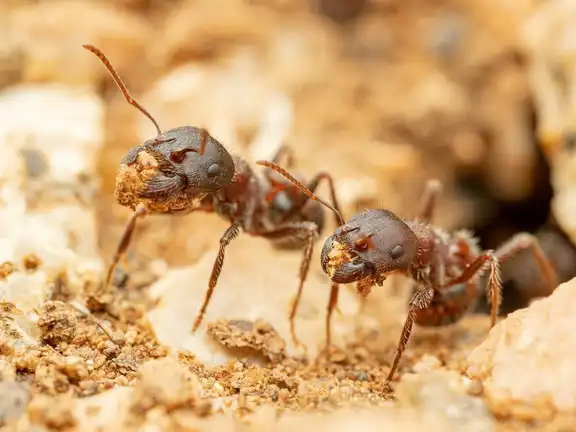
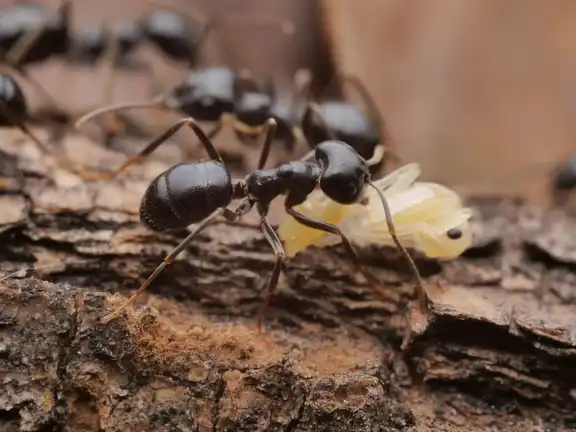
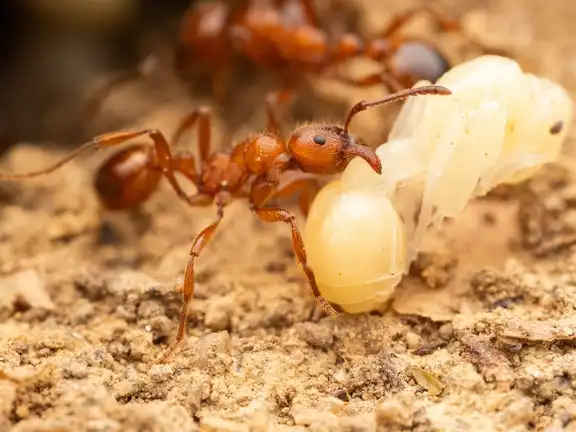
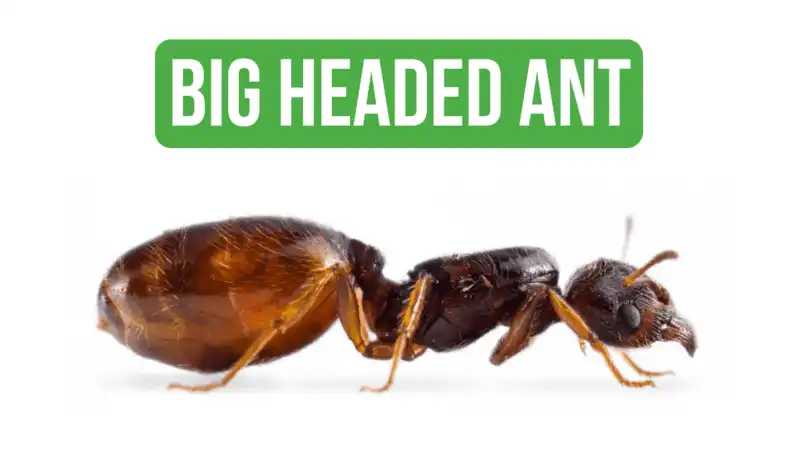
Light yellowish to reddish-brown workers of two kinds: small, quick minors and majors whose head looks far too big for their body. The majors carry strong, sharp jaws.
Often confused with
- Pheidole megacephala
- Pheidole teneriffana
- Workers2–4 mm
- Majors≤ 6 mm
- Queen7–8 mm
mm
Biology
- Queens
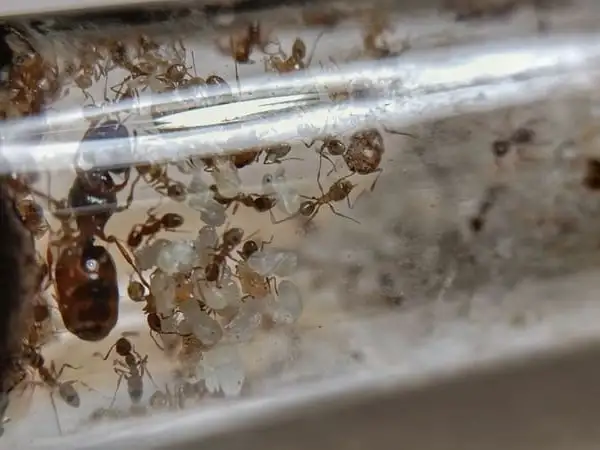
- One or more queensNew colonies usually start with a single queen, but many grow to hold several queens living together.In the glossary
- Colony founding
- Fully claustralThe queen raises her first workers without eating, living off her wing muscles and fat reserves.In the glossary
- Workers
- Minors and majorsThe workers come in two distinct castes: small minors and big-headed majors.In the glossary
- Defense
- BitesNo sting: the workers defend the colony by biting.
Native range
- Europe
- North Africa
Algeria, France, Italy, Morocco, Portugal, Spain, Tunisia
Taxonomy
Myrmicinae › Attini
Pheidole
Care at a glance
Difficulty
Why this rating
- Makes it easier: Fully claustral: the queen needs no food until her first workers arrive
- Makes it easier: Stores seeds, so a missed feeding is not a problem
- Makes it harder: A real escape artist that needs an escape-proof setup
- Makes it harder: Grows very fast and needs plenty of protein and space
Food
- Sugar
- Insects
- Seeds
A seed harvester: seeds can feed the whole colony, with insects and sugar as extras.
Best nests
- 1Acrylic nest
- 2Naturalistic setup
From my colonies
Tip
Offer a few small seeds next to the sugar and insects: the big-headed majors crack them open so the whole colony can eat the soft part inside.
Tip
They like consistently moist chambers. If the nest dries out too quickly, rearrange the setup so it holds moisture better: in a naturalistic setup, a piece of wood or a bark substrate helps.
Watch out
They are notorious escape artists and the minors are tiny, so use a tightly layered acrylic nest, or an enclosure with no gaps between its parts for a naturalistic setup.
Watch out
A normal refrigerator is too cold for their winter rest: a cool basement, garage or unheated room is a better place to hibernate them.
Care guide and related posts
How To Care for Pheidole pallidula
In this guide you will learn how to care for Pheidole pallidula! Temperature, humidity, food, hibernation, nest type... and much more!
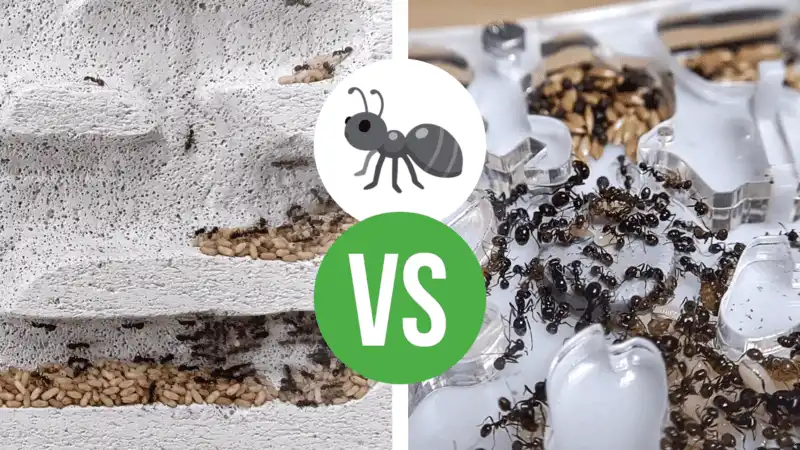
Ytong vs Acrylic - Which Is Better For An Ant Nest?
In this article, we’re going to talk about two of the most popular types of ant nests: acrylic nests and Ytong nests! Let's compare them!

How To Hibernate Your Ants - Hibernation Tutorial
In this guide, we’re going to talk about hibernation: What is it? Why do ants need hibernation? Should I hibernate my ants? Let's see!
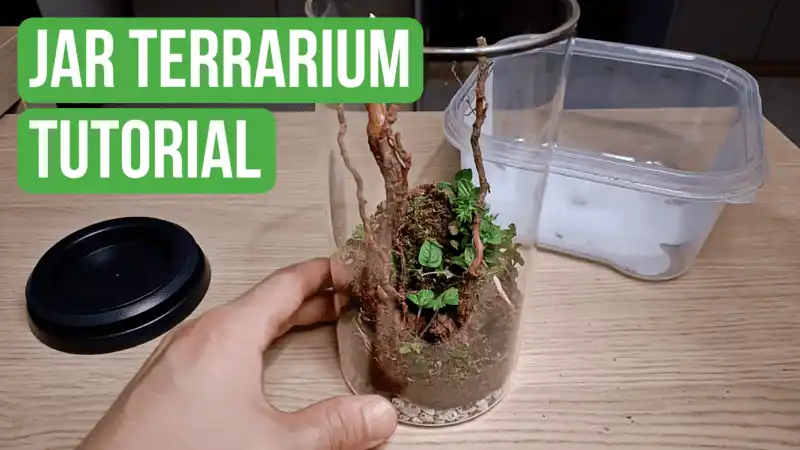
How To Make a Jar Terrarium
In this short guide, you're going to learn how to build a very simple jar terrarium, a really cool decoration for your room!
FAQs
7The small minors do most of the foraging, while the majors use their large, sharp mandibles to break food down for the smaller workers and the queen. They are also the ones that crack open the seeds, so the rest of the colony can reach the soft part inside.
In two ways. A queen can found a new colony on her own after a nuptial flight. Colonies with several queens can also spread by budding, where a freshly mated queen leaves with a group of workers and settles in a new nest nearby.
Pheidole pallidula workers measure 2–4 mm, with majors up to 6 mm, and the queen measures 7–8 mm.
One or more. Pheidole pallidula colonies are usually founded by a single queen, but many end up with several queens living together.
No. Pheidole pallidula cannot sting: the workers defend the colony by biting.
In temperate Europe and the Mediterranean, Pheidole pallidula usually flies in May – Aug. The weather decides the exact days.
Pheidole pallidula is not on the EU list of invasive alien species and is not protected in the countries we checked. Rules differ between countries and can change, so check your local laws first.
Sources and review
Bruma's own colonies
Care
- 1AntWiki: Pheidole pallidula
Reference · Taxonomy, Biology, Distribution
- 2AntWeb: Pheidole pallidula
Reference · Taxonomy, Biology
- 3
- 4
- 5Wikipedia: Pheidole pallidula
Reference · Taxonomy, Biology, Distribution
Showing 5 of 8 sources
Last reviewed
- BiologyWell documented
- Care valuesWell documented
- Nuptial flightsKeeper consensus
Legal status
Not on the EU list of invasive alien species and not protected in the countries we checked. Rules differ between countries and can change, so check your local laws before buying or collecting a queen.
Checked on October 10, 2026
All values are starting points: watch your colony and adjust. Found something wrong or missing?
Suggest a correction