Solenopsis fugax
(Latreille, 1798)
Thief ant
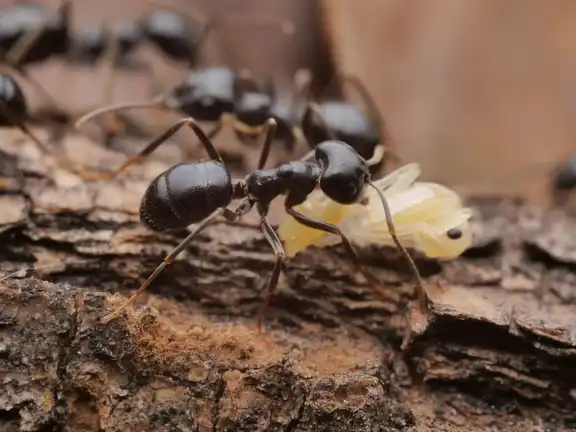
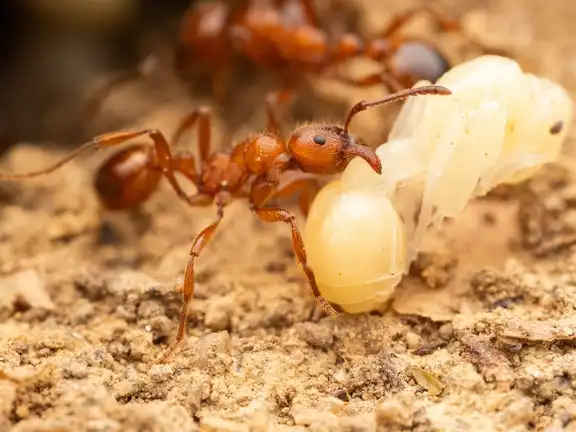
A tiny underground thief that tunnels into the nests of bigger ants to steal their brood, and slips through almost any gap.
Compiled from published sources and keeper reports: I haven't kept this species myself, so treat the care values as starting points.
At a glance
- Nest temperature
- 21–28 °CIn the nest
- Nest humidity
- ≈ 50–70 %In the nest
- Hibernation
- ≈ 5–10 °CNov – Feb · recommended
- Nuptial flights
- Aug – OctAfternoon flights
- Workers
- ≈ 1.5–2.5 mmAll the same size
- Queen
- ≈ 4–6.5 mmOne or more queens
- Colony size
- No data yetGrowth: Moderate
- Escape risk
- HighEscape artists: use a closed outworld and a good barrier
Year at a glance
Hibernation : Nov – Feb
Active season : Mar – Oct
Nuptial flights : Aug – Oct
- Afternoon flights
- Hot days
Months for temperate Europe and the Mediterranean. The weather decides the exact days, so flights can come earlier or later where you live.
How to recognize it
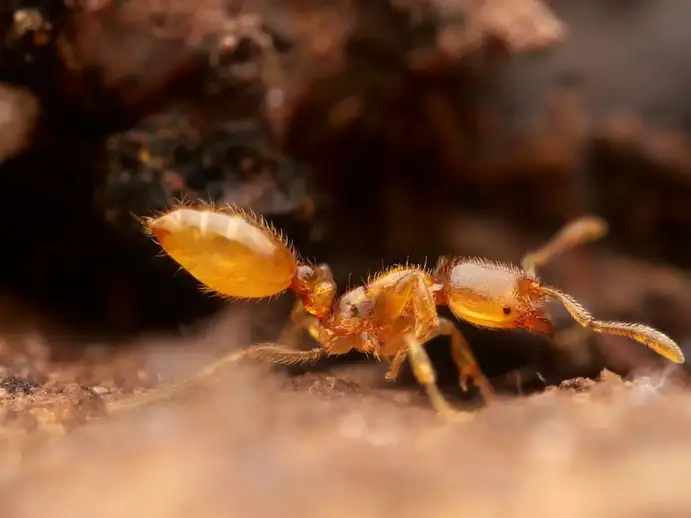
Tiny pale yellow to brownish-yellow workers with minute eyes that live underground and are rarely seen at the surface, while the queens are far bigger, usually dark brown to blackish, and are easily mistaken for Tetramorium or Plagiolepis queens. Several European thief ants look almost the same, so a sure name needs a microscope.
Often confused with
- Solenopsis juliae
- Tetramorium caespitum
- Plagiolepis pygmaea
- Workers1.5–2.5 mm
- Queen4–6.5 mm
mm
Biology
- Queens
- One or more queensNew colonies usually start with a single queen, but many grow to hold several queens living together.In the glossary
- Colony founding
- Fully claustralThe queen raises her first workers without eating, living off her wing muscles and fat reserves.In the glossary
- Workers
- All the same sizeAll the workers have about the same size and shape.
- Defense
- Bites · StingsThe workers can sting. It is usually mild for people, but avoid handling them.
Native range
- Europe
- North Africa
- Middle East
- Asia
Austria, Belgium, Czechia, France, Germany, Greece, Hungary, Italy, Netherlands, Poland, Spain, Switzerland, Türkiye, Ukraine, United Kingdom
Taxonomy
Myrmicinae › Solenopsidini
Solenopsis
Care at a glance
Difficulty
Why this rating
- Makes it easier: Fully claustral: the queen needs no food until her first workers arrive
- Makes it harder: A real escape artist that needs an escape-proof setup
- Makes it harder: The workers can sting
Food
- Insects
- Sugar
Sugar or honey water for the workers, and insects as protein for the queen and the brood.
Best nests
Notes from keepers
Watch out
Do not trust plaster, hot glue or even silicone to hold these workers: an experienced keeper reports that they dig through all three, that only masonry filler lasted, and that the escapes then come through tube connections and glass joints. Seal every join and keep the whole setup inside a closed box.
Watch out
Never place the nest next to a Lasius or Formica colony. An experienced Italian keeper warns that thief ants find a way to their neighbors and carry off the brood, however much food they get.
Tip
Founding is the hard part and many queens die. Keepers get better results when the test tube holds a layer of moist soil or clay, or is closed with a pierced plastic cap backed by cotton, which keeps the air humid. An experienced Italian keeper also advises leaving the young colony in its tube until it is far bigger than other ants would need.
Tip
Feed in micro-portions: tiny prey such as fruit flies, springtails or pieces of mosquito, and only a very small drop of diluted honey on cotton, because the workers drown easily.
Related posts
What To Do After Catching Your First Queen Ant!
In this short guide, you’re going to learn what steps you need to take after catching your very first queen ant! Let's get into it!
How To Make a Test Tube Setup - Ant Keeping Basics
In this tutorial you will learn how to make a test tube setup, the best way to create the optimal environment for a newly mated queen ant!
Ytong vs Acrylic - Which Is Better For An Ant Nest?
In this article, we’re going to talk about two of the most popular types of ant nests: acrylic nests and Ytong nests! Let's compare them!
FAQs
10In nature the workers dig very narrow tunnels from their own nest into the nests of larger ants such as Lasius and Formica, too narrow for the hosts to follow. Through them they steal eggs, larvae and food, and they discharge a long-lasting repellent from their poison glands to keep the defenders away. Raiding is not their only food source, though: they also scavenge, tend root aphids and hunt small soil animals, and keepers raise colonies without any host colony.
It belongs to the same genus as the fire ants, but it is a different, tiny species. The invasive fire ants on the EU list are Solenopsis geminata, S. invicta and S. richteri, and the thief ant is not one of them. It is native to Europe, found from southern England and southern Sweden down to the Mediterranean and east to the Caucasus and the Caspian steppes.
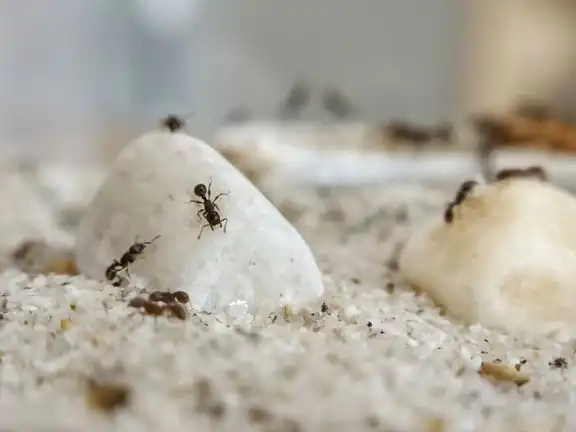
They live almost entirely underground and are rarely seen at the surface. In an Italian diary, a colony whose nest was far from the arena never came out, could not be fed and died after a year, so bring the food right to the nest entrance, with tiny prey and a very small drop of honey, and check that the workers really take it.
Solenopsis fugax workers measure 1.5–2.5 mm, and the queen measures 4–6.5 mm.
One or more. Solenopsis fugax colonies are usually founded by a single queen, but many end up with several queens living together.
Yes. Solenopsis fugax workers can sting. It is usually mild for people, but it's best to avoid handling them.
In temperate Europe and the Mediterranean, Solenopsis fugax usually flies in Aug – Oct. The weather decides the exact days.
Keep the Solenopsis fugax nest at 21–28 °C, with 50–70 % humidity in the brood chambers.
Not strictly, but it helps. A cooler winter rest at 5–10 °C, roughly during Nov – Feb, keeps Solenopsis fugax colonies healthy.
Solenopsis fugax is not on the EU list of invasive alien species and is not protected in the countries we checked. Rules differ between countries and can change, so check your local laws first.
Sources and review
- 1Csősz, Seifert, László, Yusupov and Herczeg (2023), ZooKeys 1187: Broadly sympatric occurrence of two thief ant species Solenopsis fugax and S. juliae in the East European Pontic-Caspian region (neotype of S. fugax, true cleptobiont that also scavenges, tends aphids and hunts soil animals, microgynes and macrogynes)
Paper · Taxonomy, Biology, Distribution
- 2BWARS: Solenopsis fugax (Orledge 2020, after Collingwood 1979 and Seifert 1996: raids through narrow tunnels, mating flights in September and October, claustral founding or budding)
Reference · Biology, Distribution, Nuptial flights
- 3
- 4formicarium.it: Scheda Solenopsis fugax
Care sheet · Care, Biology, Nuptial flights, Distribution
- 5
Showing 5 of 28 sources
Last reviewed
- BiologyWell documented
- Care valuesKeeper consensus
- Nuptial flightsWell documented
Legal status
Not on the EU list of invasive alien species and not protected in the countries we checked. Rules differ between countries and can change, so check your local laws before buying or collecting a queen.
Checked on October 11, 2026
All values are starting points: watch your colony and adjust. Found something wrong or missing?
Suggest a correction